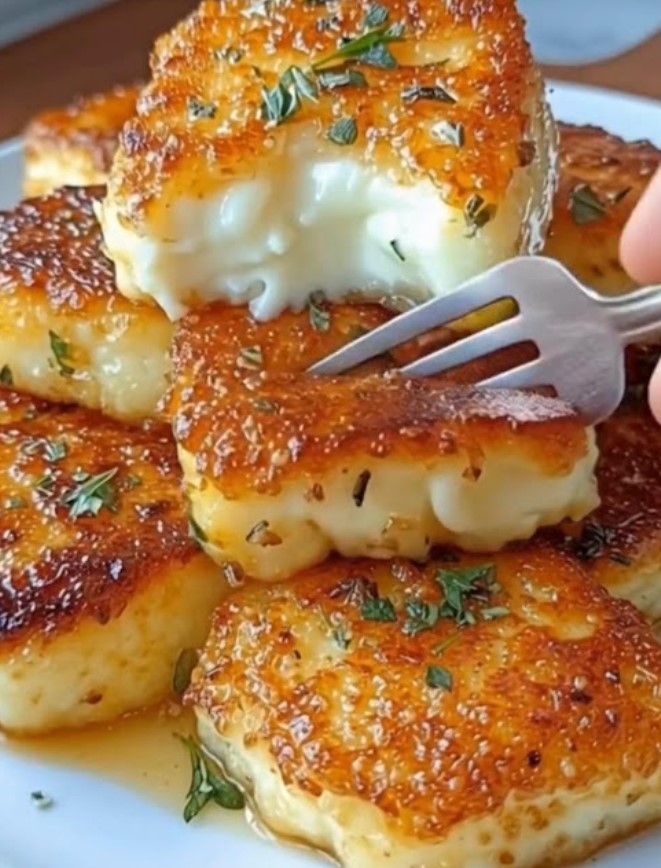
This 3-ingredient pan-fried halloumi recipe is a perfect example of how simplicity can deliver bold flavor and satisfying texture. Halloumi’s unique ability to hold its shape when heated makes it ideal for frying, resulting in a beautifully golden exterior and a soft, slightly chewy center. With minimal preparation and just a few minutes of cooking time, this dish comes together effortlessly and works well as an appetizer, side dish, or light main.
Ingredients (Serves 2–4) :
- 225 g (8 oz) halloumi cheese, sliced about ½ inch thick
- 1 tablespoon olive oil or butter
- Optional seasoning: dried oregano, fresh thyme, or freshly ground black pepper
Instructions :
Step 1: Prepare the Halloumi
Remove the halloumi from its packaging and slice it evenly. Pat each slice dry with paper towels to remove excess moisture. This step is important, as dry surfaces allow the cheese to brown properly instead of steaming in the pan.
Step 2: Heat the Pan
Place a non-stick or cast-iron skillet over medium heat. Add the olive oil or butter and allow it to heat until it lightly coats the surface of the pan and begins to shimmer.
Step 3: Fry the Halloumi
Arrange the halloumi slices in a single layer in the hot pan, making sure they are not overcrowded. Let them cook undisturbed for about 2–3 minutes, or until a deep golden crust forms. Flip the slices carefully and cook the second side for another 2–3 minutes until evenly browned.
Step 4: Season (Optional)
If using herbs or pepper, sprinkle them over the halloumi during the final minute of cooking. The heat will release their aroma and enhance the natural saltiness of the cheese.
Step 5: Serve Immediately
Remove the halloumi from the pan and transfer it to a serving plate. Pan-fried halloumi is best enjoyed hot, when the exterior is crisp and the interior is tender.
Serving Suggestions
Pan-fried halloumi pairs well with a wide variety of dishes. Serve it alongside fresh salads, roasted or grilled vegetables, or grain bowls for a balanced meal. It can also be placed inside wraps or sandwiches, served with flatbread, or enjoyed on its own with a squeeze of lemon for brightness.
Tips for Best Results
- Always dry the halloumi thoroughly before frying to achieve a crisp crust.
- Cook over medium heat to prevent burning while allowing proper browning.
- Avoid overcrowding the pan; fry in batches if necessary.
- Serve immediately, as halloumi firms up as it cools.
Storage
This dish is best eaten fresh. If needed, leftovers can be stored in an airtight container in the refrigerator for up to two days. Reheat briefly in a hot pan to restore some of the crisp texture.
Conclusion :
This 3-ingredient pan-fried halloumi recipe is a reminder that cooking does not need to be complicated to be rewarding. With only a few basic components and a simple technique, it delivers impressive flavor, texture, and visual appeal. The contrast between the crisp, golden exterior and the warm, tender interior makes halloumi uniquely satisfying, especially when served fresh from the pan.
What truly sets this dish apart is its flexibility. It can be prepared in minutes for a quick meal, dressed up as an elegant appetizer, or incorporated into more elaborate dishes such as salads, grain bowls, wraps, or vegetable plates. Because the recipe relies on technique rather than heavy seasoning, it provides a blank canvas that can easily be adapted to suit different tastes, cuisines, and occasions. A touch of herbs, a squeeze of citrus, or a drizzle of honey or olive oil can transform it each time you make it.
Beyond convenience and flavor, this recipe encourages confidence in the kitchen. Mastering a simple preparation like pan-fried halloumi builds an understanding of heat, timing, and texture — skills that translate well to many other dishes. It also offers a dependable solution when time is limited but quality still matters.
Whether you are cooking for yourself, sharing a meal with family, or serving guests, pan-fried halloumi delivers satisfying results with minimal effort. Its simplicity, versatility, and bold character make it a valuable addition to any home cook’s repertoire, proving that sometimes the most memorable dishes are the ones that let great ingredients speak for themselves.