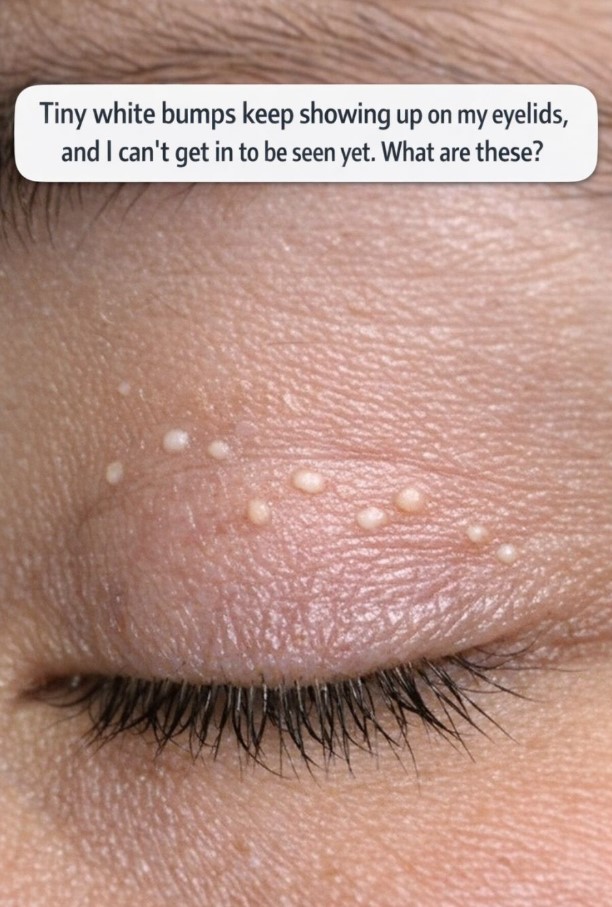
Finding small white bumps on your eyelids can be surprising and uncomfortable — especially if you can’t get in to see a doctor right away. Because the skin around your eyes is delicate, bumps there often feel more noticeable than bumps elsewhere on the body. The good news is that many common eyelid bumps are harmless and treatable at home. This guide explains what these bumps might be, why they form, and safe ways to manage them until you’re able to see a healthcare professional.
What These Tiny White Bumps Could Be
There are a few common non-serious causes of small white bumps around or on the eyelids:
1. Milia
Milia are tiny, painless white or yellowish bumps that often appear around the eyes or on the cheeks. They happen when dead skin cells become trapped under the surface of the skin.
- Who gets them? People of all ages can get milia, including babies and adults.
- What do they look like? Small, firm, white or yellowish dots that don’t open when squeezed.
2. Chalazion (Blocked Oil Gland)
A chalazion starts when an oil gland in your eyelid becomes clogged. It may begin as a tiny white bump and grow larger over time.
- How it feels: Often not painful at first — just a firm lump.
- Location: Inner part of the eyelid where oil glands are located.
3. Stye (Infected Eyelash Follicle)
A stye looks a bit like a white bump at first, but it’s actually a red, painful lump caused by a blocked or infected eyelash follicle.
- Signs: Tenderness, swelling, and sometimes a visible white or yellow head.
- Pain: More likely to be painful and tender than milia or chalazion.
4. Fordyce Spots
These are small, pale bumps that can appear on lips or eyelids. They are harmless and caused by visible oil glands.
- Not itchy or painful: They’re usually just noticeable by appearance.
5. Allergic Reaction or Irritation
Sometimes tiny bumps or raised skin appear if the eyelid skin reacts to a product like makeup, cleanser, or sunscreen.
- Triggers: New cosmetics, skincare products, rubbing eyes, pollen.
How to Tell the Difference
A few clues can help you figure out what the bumps are:
| Feature | Milia | Chalazion | Stye | Allergic Irritation |
|---|---|---|---|---|
| Pain | No | Usually no | Yes or tender | Sometimes itchy |
| Size | Very small | Can get larger | Can be large and tender | Small, scattered |
| Tenderness | No | Slight | Yes | Itchy or irritated |
| Redness | Minimal | Mild | Often present | Often present |
| Discharge | No | Rare | Possible pus | No |
While this table can help you think about what it might be, it’s not a diagnosis — only a clinician can diagnose you for sure.
Why These Bumps Form
Understanding the basic reasons these bumps occur helps you take the right approach.
Oil or Keratin Blockage
Your eyelids have tiny oil glands that help lubricate your eyes. When these glands or pores get blocked, trapped oil or dead skin can form a bump.
Bacterial Presence
A bacterial buildup around an eyelash follicle can lead to irritation and infection, triggering a stye.
Sensitive Skin Response
Eyelid skin is thin and sensitive. A new product — or rubbing and touching — can lead to irritation and small bumps.
What You Can Do Safely at Home
If the bumps are not painful and don’t seem to be infected, there are some gentle steps you can try while you wait to see a provider:
Warm Compresses
Warm compresses are one of the simplest and most helpful things you can do.
How to do it:
- Wet a clean washcloth with warm (not hot) water.
- Wring out the excess water.
- Place it over your closed eye for 5–10 minutes.
- Repeat 2–3 times daily.
Warmth helps soften oils and encourages natural drainage of blocked glands.
Gentle Eyelid Hygiene
Keeping the eyelid area clean can prevent further irritation.
- Wash hands before touching your eyes.
- Use a mild, fragrance-free cleanser or baby shampoo diluted with water and gently clean your eyelids.
- Rinse well with clean water.
Avoid scrubbing hard — delicate eyelid skin can be easily irritated.
Avoid Picking or Squeezing
It might be tempting, but squeezing bumps can cause irritation, infection, or scarring. Never use tweezers or sharp objects near your eyes.
Check Your Products
If you recently started a new makeup, cleanser, or lotion and the bumps appeared afterward, stop using that product to see if the condition improves.
When to Seek Medical Care
There are times when a bump on the eyelid deserves medical attention sooner:
🔹 If the bump becomes very painful
🔹 If redness or swelling spreads
🔹 If you develop pus or discharge
🔹 If your vision changes
🔹 If a bump grows quickly or doesn’t improve after a week of home care
🔹 If you have a fever or feel generally unwell
A clinician can properly diagnose your situation and may recommend treatments such as prescription ointments, draining a chalazion, or ruling out less common conditions.
What Your Clinician Might Recommend
Depending on the type of bump, care options vary:
Milia
A clinician can remove milia painlessly in a quick in-office procedure if needed, though many resolve on their own.
Chalazion
If warm compresses alone don’t help, gentle lid massage after a compress or a minor office procedure to drain the gland may be suggested.
Stye
A stye might clear up with warm compresses and lid hygiene, but some cases need antibiotic ointment or drainage.
Irritation or Allergy
Your clinician may identify the trigger and suggest avoiding it, plus recommend a gentle, eyelid-safe cleanser.
Tips to Help Prevent Future Bumps
Here are ways to reduce the chances of bumps forming again:
✔ Wash hands before touching your face
✔ Clean eyelids gently daily
✔ Remove all eye makeup before bed
✔ Use hypoallergenic products around the eyes
✔ Avoid rubbing your eyes
✔ Clean makeup brushes regularly
Good eyelid hygiene can make a big difference, especially if you’re prone to blocked glands or irritation.
Conclusion :
Tiny white bumps on the eyelids can be surprising, but in many cases they’re harmless and caused by common issues like blocked oil glands, mild irritation, or buildup of skin cells. Milia, small cysts, and blocked glands often improve with gentle warming and consistent eyelid hygiene. Painful, red, or rapidly growing bumps may be a stye or infected gland and benefit from earlier care.
While these tips can help you manage symptoms safely at home, it’s always best to follow up with a healthcare professional if you’re unsure what’s causing the bumps or if they persist. Your eyes are delicate, and personalized care ensures you get the right treatment for your specific situation.
Manage gently, avoid squeezing or harsh products, and keep your eyelids clean — simple habits that make a big difference in eyelid health. If the bumps stick around or you’re concerned, booking a visit with a healthcare provider will help you get clear answers and proper care.