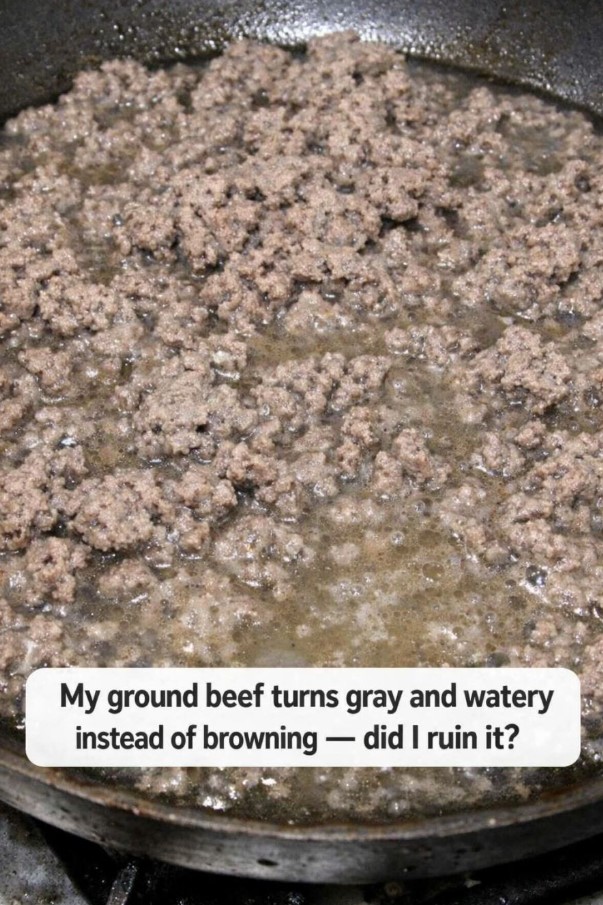
If you’ve ever tried cooking ground beef on the stove and watched it turn gray and watery instead of that nice browned color you were expecting, you’re not alone. This is a common question in kitchens everywhere — and the good news is that it doesn’t always mean your meat is bad. There are several natural explanations for why ground beef can act this way, and understanding them can help you cook more confidently.
In this article we’ll explain:
- Why ground beef sometimes turns gray and watery
- How browning normally works
- What affects color and texture while cooking
- How to tell if it’s safe or not
- Tips for better browning every time
- Proper cooking and storage practices
- A conclusion that wraps it all up
How Browning Happens in the First Place
When you cook ground beef on a hot pan, the goal for many recipes is browning. Browning doesn’t just make the meat look appealing — it also develops rich flavor.
Here’s what’s happening:
✔ When meat touches a very hot surface, proteins and sugars undergo a chemical change called the Maillard reaction.
✔ This produces brown color and deeper savory taste.
✔ To get this reaction, moisture must evaporate quickly so the meat’s surface can get dry enough to brown.
If moisture stays on the surface, browning can’t happen. Instead, the meat steams — and that’s when you see gray and watery beef.
Why Ground Beef Sometimes Turns Gray and Watery
Several factors can make ground beef resist browning:
1. Too Much Moisture in the Pan
Ground beef naturally contains water, but if:
- The meat was frozen and not fully thawed,
- You rinsed it before cooking,
- You added it to a cold or crowded pan,
… then excess liquid stays in the pan and steam prevents browning.
Steam + moisture = gray beef, not brown.
2. Pan Temperature Is Too Low
Browning needs a hot surface. If your pan isn’t hot enough, the meat just cooks without browning.
👩🍳 Fix: Preheat the pan so it’s hot before you add the beef. A little sizzle tells you it’s ready.
3. The Meat Is Lean
Very lean ground beef (like 90% lean or higher) has less fat and sometimes releases more water than fattier beef as it heats up.
- More fat = quicker browning
- More water = slower browning and more steam
For good browning, meat with 80/20 or 85/15 lean-to-fat ratio usually performs best.
4. You Didn’t Drain Off Water
As ground beef warms up, it releases liquid:
- Water from the meat itself
- Fat that melts as it heats
If you don’t let the water evaporate, the meat will steam instead of browning.
Tip: Tilt the pan and spoon off excess liquid a few times while cooking.
5. You Stir Too Much
Frequent stirring slows down the heating process.
When you want browning:
- Let the meat sit for a bit in contact with the hot surface
- Then stir or flip pieces so more surface gets browned
Constant stirring keeps it in a moist environment, which stops browning.
Is Gray, Watery Ground Beef Safe to Eat?
Usually, yes — it’s safe if the following are true:
✔ The meat was fresh when you started
✔ It was not past its “use by” date
✔ It smells normal (not sour or off)
✔ It was stored properly before cooking
✔ It reaches a safe internal temperature when cooked
When Ground Beef Might Be Unsafe
Watch for these signs:
❌ A strong sour, rotten, or “off” smell
❌ Slimy or sticky texture before cooking
❌ Unpleasant smell after cooking
❌ Meat was left out at room temperature for hours
❌ Color is unusual in the packaging (like green or brown with an odor)
If any of those happen, stop and don’t eat it. Foodborne bacteria can grow in unsafe conditions, and that’s what can make you sick.
How to Turn Watery Beef Into Flavorful Browned Meat
Here’s a step-by-step way to get better browning and less water in your ground beef:
1. Thaw Fully Before Cooking
If your beef was frozen, allow it to thaw in the refrigerator overnight. This reduces excess water.
2. Heat the Pan First
Put your pan on medium-high heat for a couple of minutes before adding anything.
3. Don’t Crowd the Pan
If you add too much meat at once, the pieces steam instead of brown. Cook in batches if needed.
4. Let Water Evaporate
At the start of cooking:
- Let the liquid come out,
- Tilt the pan and pour off excess,
- Then let the remaining meat contact the hot surface so it can brown.
5. Use the Right Fat
If your meat is too lean, add a small amount of oil to help conduct heat and encourage browning.
6. Pat the Meat Dry
Using a paper towel, gently blot the surface of thawed ground beef before it goes into the pan. This removes surface moisture that can cause steaming.
Other Reasons Your Ground Beef Could Be Watery
While moisture during cooking is most common, here are a few additional factors:
Salt Draws Out Water
If you salt your meat too early, salt pulls water to the surface. Add salt after the meat starts to brown for best results.
Cold Meat in a Cold Pan
If meat goes into a cold pan, the temperature rises slowly and gives moisture time to release before browning starts.
Always preheat!
Lean Meat Pumps Out Water
Very lean beef has less fat, so water released during heating sits in the pan longer.
More fat helps absorb heat and encourages evaporation faster.
How to Tell If Ground Beef Is Still Good
Before you even turn on the stove, check these:
✔ Look
- Fresh ground beef is red (unless vacuum-packed off color is normal)
- Inside the package, it may look a bit darker — that’s normal
✔ Smell
If it smells sour, rotten, or “chemical,” don’t use it.
✔ Touch
It should feel moist, not sticky or slimy.
✔ Expiration
If it’s past the use-by date, don’t risk it.
Why Browning Matters in Cooking
Browning ground beef adds:
🌟 Flavor — thanks to chemical reactions that create savory notes
🌟 Texture — browned surfaces are firmer and more appealing
🌟 Aroma — browned meat smells deeper and more satisfying
Steaming doesn’t produce these effects — so gray, watery meat tastes milder and less rich.
But it’s still safe as long as it’s been handled properly.
What to Do With Gray, Watery Beef If You’re Worried About Flavor
If you end up with watery cooked beef that didn’t brown well, you can still make it taste great:
Turn It Into a Sauce Base
Add:
- Tomatoes or tomato sauce
- Onions and garlic
- Herbs and spices
Simmer until flavors deepen — the liquid becomes part of the dish.
Make a Stew or Chili
Stews and chilis benefit from cooking with liquid, so gray, watery beef won’t hurt the final result.
Use in Tacos or Burritos
Add taco seasoning and simmer to reduce liquid before serving.
Add Veggies
Bell peppers, onions, carrots, mushrooms — they absorb liquid and add flavor.
Common Mistakes That Keep Ground Beef from Browning
Here’s a quick list of things that stop browning:
❌ Putting meat in a cold pan
❌ Overcrowding the pan
❌ Not draining excess liquid
❌ Stirring constantly
❌ Adding salt too early
❌ Using very lean meat without any added fat
Fixing just one of these can make a big difference in results.
Conclusion :
Watching your ground beef turn gray and watery instead of browning can be disappointing, but it’s usually not a sign that the meat is spoiled. Most of the time it’s caused by moisture, pan temperature, or cooking technique — things that can be managed with a few simple adjustments.
Understanding how browning works helps you get better texture and richer flavor. If the beef was fresh, smelled normal, and reached a safe temperature while cooking, it’s generally safe to eat even if it looks gray and watery. In dishes where browning isn’t critical, like sauces, stews, or tacos, you can still use that meat effectively.
By preheating your pan, letting moisture evaporate, not overcrowding the skillet, and using meat with a bit of fat, you’ll see better browning next time. But whether it browns or not, safety comes first — and proper storage, handling, and cooking temperature are the real keys to safe, delicious meals.