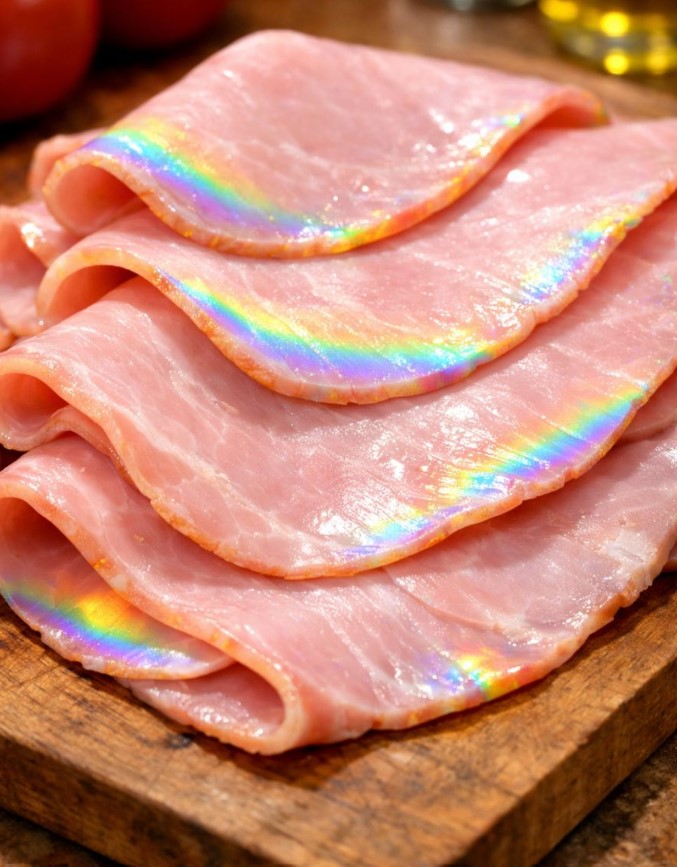
You open the fridge, take out a package of deli ham, and notice something unexpected: a rainbow-like shimmer across the surface of the slices. It can look strange, even alarming, and it’s natural to wonder whether the meat has spoiled or become unsafe to eat.
The good news is that in most cases, this colorful shine is completely normal and does not mean the ham has gone bad. Understanding why it happens and how to recognize true spoilage can help you decide whether your food is still safe.
What Causes the Rainbow-Like Shine on Ham?
The rainbow sheen seen on deli ham is usually caused by how light reflects off the surface of the meat, not by bacteria or decay.
Ham is made up of tightly aligned muscle fibers. When the meat is sliced very thinly, as deli meats often are, those fibers form a smooth, uniform surface. When light hits that surface, it can bend and reflect in different directions, creating a shimmering or rainbow-colored appearance. This effect is known as iridescence.
This same phenomenon can be seen on other smooth surfaces, such as CDs or soap bubbles. In meat, it is purely visual and has nothing to do with spoilage.
Why Deli Meats Show This Effect More Often
Several factors make deli ham more likely to display a rainbow shine:
- Thin slicing exposes muscle fibers in a way that reflects light more clearly
- Cured and cooked meats have smoother surfaces than raw meat
- Firm muscle structure allows light to reflect evenly
- Dark or pink meat color makes the sheen more noticeable
Because of this, the effect is common in ham, roast beef, and corned beef, but rarely seen in ground meats.
Does the Rainbow Shine Mean the Ham Is Unsafe?
No — the rainbow shine alone does not mean the ham is unsafe. If the ham:
- Smells normal
- Feels moist but not slimy
- Has no unusual gray, green, or brown patches
- Has been stored properly and used within a safe timeframe
then it is generally safe to eat, even if it looks shiny or colorful.
How to Tell the Difference Between Harmless Shine and Spoilage
While iridescence is harmless, there are real signs of spoilage you should never ignore.
Signs the Ham Is Still Safe
- Mild, meaty smell
- Normal texture
- Pink or rosy color
- Rainbow sheen that changes with light angle
Signs the Ham Has Gone Bad
- Sour, rotten, or strong unpleasant odor
- Slimy or sticky surface
- Dull gray, green, or brown discoloration
- Visible mold growth
If you notice any of the spoilage signs above, the meat should be discarded immediately, regardless of appearance.
Why Cooking Changes the Appearance
If the rainbow sheen makes you uncomfortable, lightly heating the ham can reduce or eliminate the effect. Cooking disrupts the surface structure of the meat, preventing light from reflecting in the same way. This does not mean the meat was unsafe before cooking — it simply alters how the surface looks.
Proper Storage Helps Prevent Confusion
To keep deli ham fresh and easier to evaluate:
- Store it in an airtight container
- Keep it refrigerated at a consistent cold temperature
- Use within a few days after opening
- Avoid repeated exposure to air and light
Proper storage won’t prevent iridescence entirely, but it helps maintain quality and freshness.
Common Myths About Shiny Meat
- “Rainbow meat is spoiled” — Not true
- “The shine means chemicals were added” — False
- “It’s mold starting to grow” — Mold looks fuzzy or spotty, not shiny
The rainbow effect is simply physics at work.
Conclusion :
A rainbow-like shine on deli ham may look unusual, but in most cases it is completely harmless. The effect is caused by light reflecting off the smooth, thinly sliced muscle fibers and does not indicate spoilage or contamination. If the ham smells fresh, feels normal, and shows no signs of slime or discoloration, it is safe to eat despite the shimmering appearance.
The best way to judge deli meat is by using your senses — smell, touch, and overall appearance — rather than relying on color alone. When true spoilage signs appear, it’s best to discard the meat, but a simple rainbow sheen is nothing to worry about.