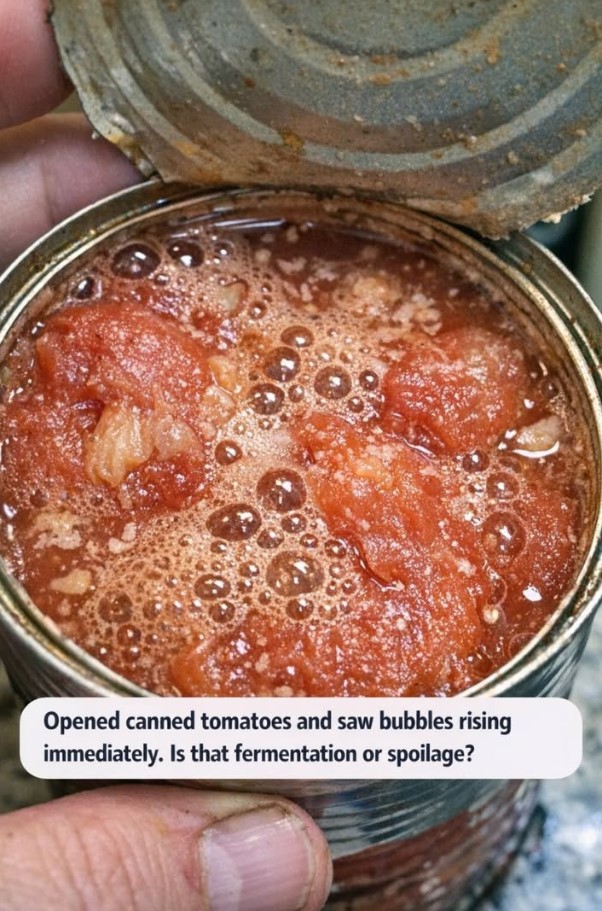
Opening a can of tomatoes and immediately seeing bubbles rise can be surprising — it might make you wonder if something unexpected is happening inside the can. Bubbles in food often trigger thoughts of fermentation, pressure, or spoilage, so it’s natural to be cautious. This article explains what those bubbles likely indicate, whether the product is safe to eat, and how to tell if something is truly wrong with your canned tomatoes.
Canned tomatoes are acidic and part of a tightly sealed environment. In a properly sealed can, there should be no fermentation happening. Bubbles can occur for a few reasons — some harmless, others worth paying attention to. Understanding what causes them and how to assess food safety helps you make a confident decision about whether to use the product.
Why You Might See Bubbles When Opening Canned Tomatoes
1. Release of Built-In Pressure
Canned foods are sealed under heat during processing. Sometimes, small pockets of air or dissolved gases remain trapped in the food or can lining. When you open the can, the change in pressure can cause these gases to escape, and you might see bubbles rise to the top.
This is similar to opening a carbonated drink — the pressure release makes bubbles form even though nothing is fermenting.
2. Dissolved Gases in the Tomatoes
Tomatoes naturally contain water and tiny amounts of dissolved air or gases from plant tissues. When the can is opened and the pressure changes, these gases can form bubbles. This doesn’t mean anything harmful is occurring.
Is It Fermentation? Not Usually
Fermentation is a process carried out by microorganisms such as yeast or bacteria converting sugars into gases and acids. For fermentation to occur in a food product, the environment must allow those microbes to grow.
In the case of commercially canned tomatoes:
- The canning process heats the food to high temperatures that kill bacteria and yeast.
- The can is hermetically sealed so no new microbes can enter.
- The acidity of tomatoes discourages microbial growth.
So while fermentation can occur in homemade food stored improperly, it is not expected in a properly sealed commercial can. Seeing bubbles immediately upon opening is most often just the result of pressure release or dissolved gases, not active fermentation.
When Bubbles Could Be a Sign of Spoilage
Even though bubbles at first opening are often harmless, they can sometimes be a sign that something is wrong — especially if combined with other unusual signs.
Signs to Watch For
If you notice any of the following in addition to bubbles, it’s best not to use the product:
- Bad smell — a sour, pungent, or off odor that doesn’t smell like tomatoes
- Foam or froth on the surface after opening that persists
- Slimy or sticky texture
- Bulging or dented can before opening
- Liquid that looks cloudy or discolored
- Mold or unusual particles floating
These can indicate that the seal failed, spoilage bacteria grew, or the product is unsafe.
Why These Signs Matter
A properly canned tomato product should open with a neutral or slight tomato aroma and look consistent with tomato juice or sauce. If the environment has changed in the can (due to contamination or seal failure), bacteria or mold can produce gas, foam, or disagreeable smells.
This is different from harmless pressure release bubbles; the context and other signs are what tell you if something is wrong.
Safe Ways to Evaluate Canned Tomatoes
When you open a can and see bubbles, use your senses to decide if the product is usable:
Smell
Take a careful sniff — if it smells fresh, like tomatoes, it’s more likely fine. If it smells sour, fermented, or unpleasant, don’t use it.
Appearance
Tomato liquid should look like tomato juice or sauce. If it’s cloudy, foamy, or shows floating film or mold, that’s a red flag.
Texture
Feel a spoonful gently (after taking a sniff and seeing appearance). If it feels slimy or unusually sticky, discard it.
Can Condition
Before opening a can, check for any bulges, dents, rust, or leaking. A compromised can may no longer be sterile and safe.
Why Pressure Can Build Up Inside a Can
Canning involves heating food to kill microbes, then sealing it. During this process:
- Heat expands air and liquid slightly inside the sealed container.
- As the product cools before sealing completes, minor pressure differences can remain.
- When the can is opened, that pressure equalizes, and gases escape.
This release can show up as small bubbles, similar to opening a carbonated beverage. It does not mean something has started fermenting — it’s just gas escaping after being trapped under pressure.
This is particularly common with foods that have a lot of liquid, like tomato products.
When to Be Especially Cautious
If the can showed any signs of damage before opening, such as:
- Push-in lid
- Severe dent on the seam
- Rust or moisture around the edges
These may signify that the vacuum seal failed or was compromised. In such cases, internal spoilage is more likely, and bubbles may be accompanied by other spoilage signs.
Always trust your senses and the condition of the container — if something seems off, it’s safer to discard the food.
Tips for Using Canned Tomatoes Safely
- Check the can before purchase: Look for dents, bulges, or rust.
- Store at room temperature: Avoid exposing cans to extreme heat or cold before opening.
- Use within a few days after opening: Once opened, transfer to a covered container in the fridge and use quickly.
- Cook thoroughly: Heating tomatoes in sauces, soups, or dishes adds another safety layer and improves flavor.
Conclusion :
Seeing bubbles when you first open a can of tomatoes can be surprising, but in most cases it is simply gas released from pressure change or dissolved air being freed — not fermentation or spoilage. Commercially canned foods are processed to eliminate active microbes, and a brief burst of bubbles on opening is often harmless.
The key to determining safety is using your senses: if the product smells fresh, looks normal, and the can wasn’t damaged, you can confidently use the tomatoes. However, if you notice foul odors, foam, cloudiness, slimy textures, or an abnormal can condition, it’s best to discard the product.
Understanding why bubbles occur and how to evaluate food safely gives you confidence in using canned ingredients and avoiding unnecessary worry or food waste. Canned tomatoes are a convenient pantry staple — and knowing how to assess them helps you enjoy them safely in your favorite recipes.