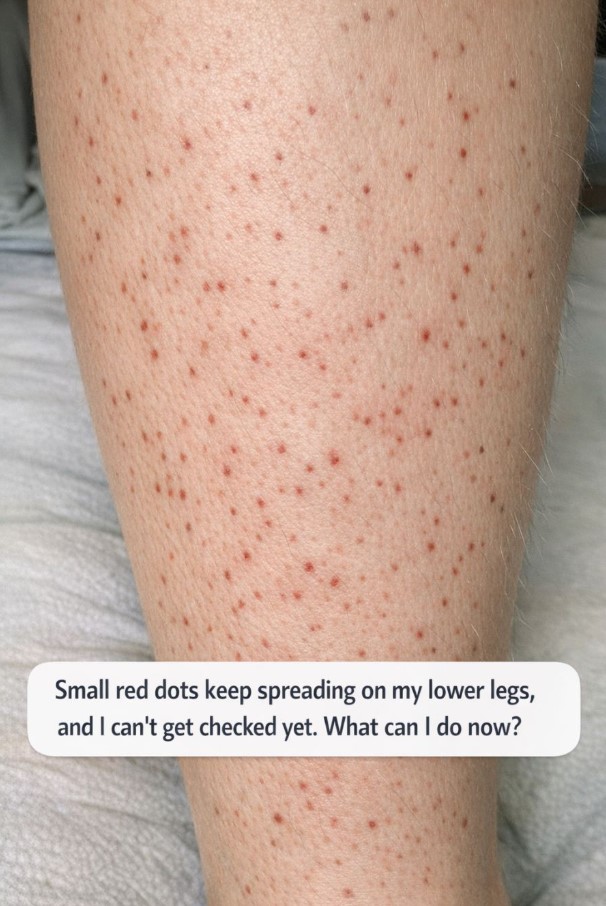
Noticing tiny red dots spreading across your lower legs can be confusing and worrying — especially when you can’t see a doctor right away. Red spots on the skin can come from several different causes, and most of them are not serious, but it’s important to understand why they happen, what to look for, and how to care for your skin until you can get professional help.
This article explains:
- What those red dots might be
- Common, harmless causes
- Less common but more serious possibilities
- Safe things you can try at home
- Signs that mean you should seek medical help sooner
What Those Red Dots Could Be
There are a few common reasons for small red dots on the lower legs. In most cases, they are harmless and temporary, but it helps to know what they might represent:
1. Petechiae (Tiny Broken Blood Vessels)
Petechiae are very small red or purple dots that appear when tiny blood vessels under the skin break and leak blood. They don’t blanch (turn white) when you press on them. They can occur from:
- Strenuous exercise
- Minor trauma or rubbing
- Tight socks or boots
- Coughing or straining
- Low platelet counts (a blood cell involved in clotting)
Petechiae usually are not itchy or raised — they stay flat on the skin.
2. Allergic Reactions
Sometimes contact with soaps, lotions, laundry detergents, or plants can cause red dots or a rash on the legs. These often itch and may be blotchy or scattered.
3. Heat Rash
In warm or humid weather, sweat can become trapped under the skin, causing clusters of tiny red bumps. This is more common when clothes rub against the skin or when you sweat a lot.
4. Insect Bites
Small red dots that itch and may have a tiny puncture mark in the center can be from insects like fleas or mosquitoes. These often appear in clusters.
5. Dry Skin Irritation
Very dry skin can sometimes develop small red patches, especially in winter or dry climates. The skin may feel rough or tight.
How to Tell If It’s Likely Harmless
Some features suggest the spots are not serious:
- They are very small and flat
- They don’t spread quickly
- They are not painful
- They do not itch severely
- They do not come with fever or tiredness
- You haven’t had recent trauma or bleeding problems
If the dots are just small, red, and stable in number, they often fall into the category of harmless skin changes.
Safe Things You Can Try at Home
While you wait for a medical appointment, here are gentle steps you can take that are safe and may help:
1. Keep Your Skin Moisturized
Dry skin can crack and become irritated, making red spots more noticeable. Use a fragrance-free moisturizer once or twice a day. Focus on the lower legs after bathing or showering.
2. Avoid Harsh Soaps and Detergents
Products with strong fragrances or alcohol can irritate the skin. Switch to mild, gentle products labeled for sensitive skin.
3. Cool Compress
If the spots are itchy or warm, a cool compress on the area for 10–15 minutes can help soothe irritation.
4. Wear Comfortable Clothing
Tight socks, heavy boots, or materials that rub against your skin can make irritation worse. Wear loose, breathable fabrics when possible.
5. Avoid Excessive Scratching
Scratching can injure the skin and make spots worse or lead to infection. If the area is itchy, gently pat or tap the skin instead.
6. Monitor Activities
If you were doing a lot of walking, running, or activities that strain your legs, consider if the dots appeared afterward. Temporary petechiae or irritation can follow strenuous activity.
When to See Medical Help Sooner
While many causes of red dots are harmless, there are signs that deserve earlier medical evaluation:
Seek Care Promptly If:
- The spots spread quickly
- They appear with fever, chills, or fatigue
- They are painful, warm to the touch, or swollen
- They are accompanied by bleeding elsewhere
- You notice bruises in unusual places
- The spots don’t blanch (turn white) when pressed gently
- You have a known blood or clotting disorder
- You are taking medications that affect blood clotting
These signs may point to causes that need prompt evaluation and possibly treatment.
What a Clinician Might Do Later
Once you’re able to see a healthcare provider, they may:
- Ask about your medical history and recent activities
- Examine the spots and other areas of your skin
- Ask if you have other symptoms (fever, chills, bleeding)
- Possibly recommend blood tests to check platelet levels or inflammation
- Suggest skin care or topical treatments if irritation is mild
- Rule out allergic reactions or infections
This helps them determine whether the cause is minor irritation, a reaction, or something that requires medical treatment.
Difference Between Benign Spots and Concerning Ones
Here’s a quick comparison to help you identify which category your symptoms might fall into:
| Feature | Likely Harmless | Needs Medical Attention |
|---|---|---|
| Small, flat dots | ✔️ | ❌ |
| Itchiness without severe irritation | ✔️ | ❌ |
| Rapid spreading | ❌ | ✔️ |
| Painful or warm | ❌ | ✔️ |
| Fever or chills | ❌ | ✔️ |
| Easy bruising or bleeding elsewhere | ❌ | ✔️ |
This table isn’t a diagnosis, but it can help you decide when to seek care sooner.
Tips to Support Healthy Skin
To protect your skin overall:
- Stay hydrated — drink enough water daily
- Use gentle cleansers
- Moisturize daily (especially after showers)
- Avoid long hot showers — warm water is gentler
- Wear sunscreen — even in winter, sun can dry skin
- Protect skin from scratching
Good daily skin care can reduce irritation and make little spots less likely to appear.
Conclusion :
Small red dots spreading on your lower legs can have many causes — most of them are harmless and related to dry skin, irritation, or minor stretching of tiny blood vessels. You can safely care for your skin at home by moisturizing regularly, using gentle products, protecting your skin from friction, and keeping track of any changes.
However, certain symptoms — like rapid spread, pain, warmth, fever, or bleeding — deserve medical attention sooner. When you’re able to see a clinician, they can evaluate your symptoms and help determine the exact cause and best treatment.
Until then, focus on gentle skin care, avoid harsh soaps and tight clothing, and watch for changes. With careful observation and protective care, you can manage discomfort and support your skin while waiting for medical evaluation.