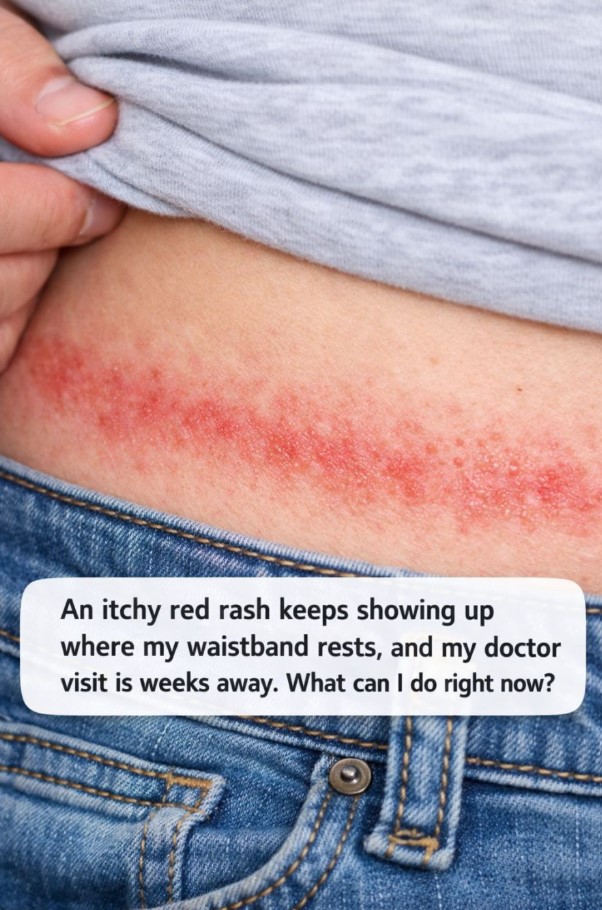
Getting a red, itchy rash where your waistband rubs can be uncomfortable and distracting, especially when you can’t get into a doctor right away. Many people experience this type of irritation, and while it can look alarming, in most cases it’s caused by common, manageable factors like friction, sweat, pressure, or mild irritation rather than a serious medical condition.
This guide will help you understand:
- What might be causing the rash
- Safe, gentle steps you can take immediately
- How to care for your skin while waiting for medical care
- When to seek medical attention sooner
Let’s walk through what’s likely going on and what you can do to feel better.
Why Red, Itchy Rashes Often Appear Where Clothing Rests
Skin where your waistband touches — typically around the lower abdomen, hips, or back — is an area where irritation can easily develop because:
1. Friction and Chafing
Clothing rubbing against the skin repeatedly can cause irritation. This is especially common if:
- Clothing is tight
- Fabric is rough or synthetic
- You’ve been active or sweating a lot
This irritation can lead to small, red, itchy patches right where the waistband sits.
2. Heat and Sweat Buildup
The area under a waistband tends to trap heat and moisture — especially if you sit, bend, or move in ways that press clothing against the skin. Sweat that doesn’t evaporate can irritate the skin and make it itchy.
3. Contact Irritation
Sometimes the material in your waistband (elastic, dyes, or detergent residue) may irritate sensitive skin. Even mild soaps or laundry products can leave residues that irritate skin in areas of pressure and sweat.
4. Allergic Reaction to Materials
Less commonly, you might have a mild allergy to something in your clothing (rubber, latex in elastic, or certain synthetic fabrics) that causes a red, itchy rash where they touch your skin.
Common Symptoms You Might Notice
The rash where the waistband rests often feels like:
✔ Red or pink patches
✔ Mild itching or burning
✔ Slight tenderness when touched
✔ Small bumps or clusters
✔ Location exactly where clothing presses against the skin
You probably don’t have intense pain, bleeding, or fever — which helps separate irritation from more serious skin conditions.
Safe Things You Can Do Right Now
While you wait to see a clinician, here are gentle steps you can take that are safe and supportive for your skin:
1. Wear Loose, Breathable Clothing
Switch to soft, breathable fabrics like cotton that don’t cling or rub. Avoid tight waistbands, belts, or synthetic fabrics that can trap heat and moisture.
Breathable clothing helps:
- Reduce friction
- Let sweat evaporate
- Keep air moving around the skin
2. Keep the Area Clean and Dry
Wash the area gently with lukewarm water and a mild, fragrance‑free soap. Pat dry — don’t scrub — after washing.
Moisture left on the skin can worsen irritation, so gently dry the area.
3. Avoid Harsh Products
Skip body sprays, scented lotions, alcohol‑based wipes, or strong soaps around the affected area. These can strip natural skin oils and cause more irritation.
Opt for:
- Fragrance‑free soap
- Moisturizers labeled “for sensitive skin”
- Products without dyes or added fragrances
4. Use a Gentle Moisturizer
Applying a gentle, fragrance‑free moisturizer after washing can help protect the skin. Use a cream or ointment rather than a very light lotion — creams create a stronger moisture barrier.
5. Apply a Cool Compress
If the itch or redness feels warm or irritated, place a cool compress (clean cloth dipped in cool water) on the area for 10–15 minutes. This can help reduce itching and the sensation of warmth.
6. Avoid Scratching
It may be tempting, but scratching can injure the skin and make the rash worse or lead to infection. Instead of scratching, try tapping or gently pressing the area.
7. Watch Your Laundry Routine
Sometimes laundry detergents, fabric softeners, or dryer sheets leave residues that can irritate skin. Try switching to a hypoallergenic, fragrance‑free laundry detergent and skip fabric softeners for a while.
How to Tell If It’s More Than Simple Irritation
Most waistband rashes are mild and improve with simple care, but you should watch for symptoms that suggest something more serious. Seek medical attention sooner if:
Signs That Warrant Earlier Evaluation
- The rash spreads rapidly or gets larger
- You develop significant pain or warmth at the site
- The rash starts to ooze, crust, or bleed
- There’s strong or unusual odor from the area
- You develop fever, chills, or new symptoms elsewhere
- The skin becomes very tender or you can’t tolerate fabric touching it
- Red streaks form away from the rash
These could indicate infection, allergic inflammation, or other skin conditions that may require prescription medication.
What Your Provider Might Check Later
Once you can see a clinician, they may:
- Ask about how long the rash has been present
- Check for patterns related to clothing, heat, or activity
- Examine other areas of your skin for similar signs
- Ask about detergents, soaps, and laundry products you use
- Ask about any new clothing items or fabrics recently worn
If the rash looks like simple irritation, they may suggest prescription steroids or barrier creams. If there’s any concern about allergic causes, patch testing or a change in skincare routine may be recommended.
Tips for Preventing Waistband Rash in the Future
To reduce the chance of this happening again:
✔ Wear looser, breathable fabrics
✔ Avoid tight elastic bands that dig into the skin
✔ Wash new clothes before wearing to remove residues
✔ Use mild, fragrance‑free laundry products
✔ Keep the area clean and dry after sweating
✔ Change out of sweaty clothes promptly after activity
✔ Use a gentle barrier cream or ointment if the skin is sensitive
Conclusion :
An itchy red rash where your waistband rests is most often a form of skin irritation caused by friction, warmth, sweat, or sensitivity to fabric or detergents. While uncomfortable, it’s usually not a serious health problem. You can help your skin feel better now by wearing soft, breathable clothing, avoiding harsh products, keeping the area clean and dry, and using gentle moisturizers.
If the rash doesn’t improve with these steps or shows signs of infection — such as spreading redness, pain, oozing, or fever — it’s best to seek medical care sooner.
In the meantime, gentle care, loose clothing, and a calm skincare approach can keep the irritation from getting worse and help you stay comfortable until you can see a clinician.