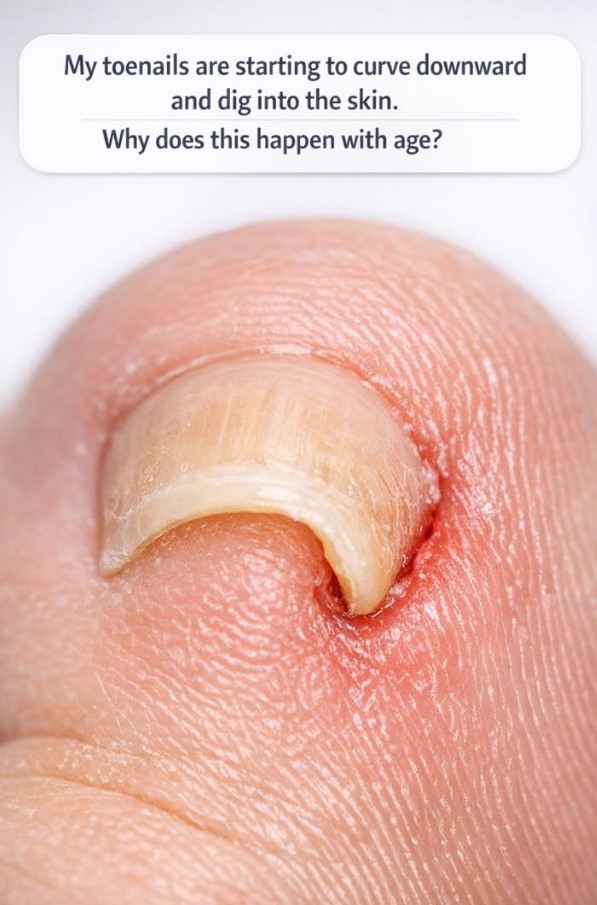
If you’ve noticed your toenails starting to curve downward and dig slightly into the skin along the edges, you’re not alone. This is a surprisingly common issue as people age, and it can range from a mild cosmetic annoyance to something that causes discomfort or pain. Understanding why toenails change shape over time and learning how to care for them safely can make a huge difference in comfort, appearance, and long-term foot health.
In this article, we’ll explore why toenails curve downward, the anatomy behind nail growth, risk factors that make the problem more likely, safe ways to care for your nails at home, and when it’s best to see a professional. By the end, you’ll have a clear, practical guide to keeping your toenails healthy and comfortable as you age.
1. Understanding Toenail Anatomy
To understand why toenails curve downward, it helps to know a bit about how nails are structured and how they grow. Toenails aren’t just a flat piece of keratin — they’re a complex system that interacts with skin, bone, and blood supply.
Key parts of the toenail:
- Nail Plate: The visible hard part of the nail that we trim.
- Nail Bed: The skin underneath the nail plate that provides nutrients and support.
- Cuticle: The thin layer of skin at the base of the nail that protects the nail matrix.
- Nail Matrix: The growth center under the cuticle. This is where new nail cells form.
- Lateral Folds: The skin on the sides of the nail that helps guide growth and protect edges.
As we age, several natural changes occur:
- Nail growth slows down.
- The nail may become thicker or harder.
- The edges may start curving downward due to uneven growth or pressure.
All of these changes can make toenails more prone to digging into the surrounding skin if proper care isn’t maintained.
2. Why Toenails Start to Curve Downward
Several factors contribute to the downward curving of toenails:
1. Age-Related Growth Changes
As we get older, the nails often grow more slowly and become thicker. The slower growth combined with thicker nail edges can cause the tips to curl naturally downward.
2. Genetics
Some people are genetically predisposed to more curved nails. If your parents or grandparents had nails that tended to dig in, you might experience the same pattern.
3. Repeated Pressure or Trauma
Tight shoes, high heels, or long periods of standing or running can put pressure on the toes. This repeated compression can gradually shape the nail into a downward curve.
4. Health Factors
Certain conditions, such as diabetes or poor circulation, can affect nail growth and thickness. Fungal infections can also make nails thicker and more prone to curving. While these are less common, they’re worth noting because they can influence how nails look and feel.
5. Nail Care Habits
Improper trimming, like cutting nails too short at the sides or rounding the edges, can encourage the nail to curve and dig into the surrounding skin. Over time, this can lead to discomfort or ingrown nails.
3. Common Terms and Conditions
When nails curve downward, it can sometimes lead to specific conditions:
- Ingrown Toenails (Onychocryptosis): When the edge of the nail grows into the skin, causing pain, redness, or swelling.
- Pincer Nails: This is when the nail curves excessively, pinching the skin on both sides. It’s more noticeable with age and can be uncomfortable.
- Distinguishing Normal Changes vs. Concerning Changes: Mild curvature without pain is often normal, but signs like infection, discoloration, rapid thickening, or bleeding require professional evaluation.
Understanding these terms helps you know when a toenail is simply aging and when it may need attention.
4. Daily Habits That Affect Nail Shape
Some daily habits play a big role in how toenails curve:
Footwear: Tight shoes or high heels compress the toes and can force nails to curve more. Shoes with wide toe boxes reduce pressure.
Trimming Habits: Cutting nails too short at the edges or rounding corners encourages nails to dig into skin. Straight cuts across the top usually work best.
Physical Activity: Runners, hikers, or people on their feet a lot can develop downward-curving nails faster due to repeated pressure. Proper cushioning and fitting shoes can help.