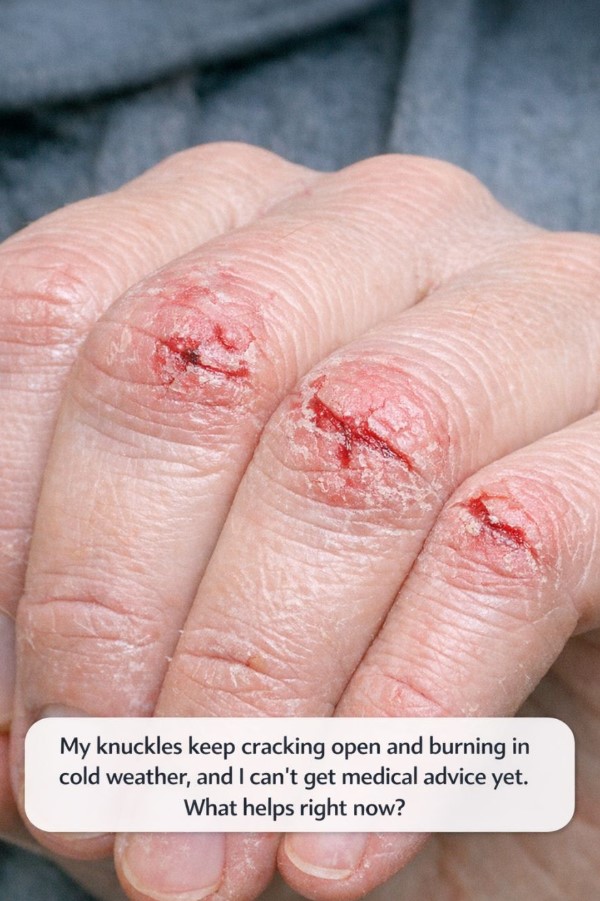
Colder months can bring beautiful snowy days and cozy sweaters — but they can also bring dry, irritated skin that seems to act up out of nowhere. If your knuckles are cracking open, feeling sore, or burning when the temperature drops, you’re not alone. Many people notice that their hands behave differently in cold weather, and it can feel uncomfortable or even alarming when cracks reopen or become painful.
Even if you can’t see a doctor right now, there are helpful things you can do today to support your skin and make your hands feel more comfortable. In this article, we’ll talk about what might be causing these symptoms and explore safe, gentle habits you can adopt while you wait for professional care.
Why your hands react to cold weather
Our skin is our largest organ, and it adapts constantly to the world around us. Cold weather — especially when it’s dry — affects the skin in several ways:
1. Reduced moisture in the air
Cold air holds less humidity than warm air, which means your skin loses moisture more quickly. When the outer layer of skin dries out, it becomes less flexible and more prone to cracking.
2. Frequent temperature changes
Going from cold outdoor air to warm, heated indoor air can stress the skin. That rapid shift makes it harder for the skin to maintain its natural moisture balance.
3. Less natural skin oil
During winter, your body may produce less natural oil on the surface of your skin. This oil helps protect and seal in moisture. Without enough of it, the skin can become brittle and more susceptible to splits and discomfort.
When knuckles crack or peel, it’s often a sign that the protective outer layer of skin is dry and irritated.
Why knuckles in particular?
The skin on your knuckles stretches and bends a lot throughout the day — every time you open a door, type on a keyboard, or make a fist. That constant movement, combined with dryness, makes this area especially vulnerable to cracking.
Additionally, the knuckles have thinner skin than some other parts of the hand, so they are more exposed to environmental changes.
What does it mean when your skin burns?
Burning, stinging, or sharp sensations can happen when the outer layer of skin is damaged or overly dry. It doesn’t necessarily mean an infection is present — sometimes the nerve endings near the surface become more sensitive when skin is tight or split. This is common in winter, especially if:
- You wash your hands frequently
- You use soaps that strip natural oils
- You spend time outdoors in cold wind without protection
While those sensations can feel alarming, they are often a sign of irritation rather than a serious problem.
Simple steps you can take right now
These are comfort-focused habits you can start today. They aren’t medical treatments, but they can help your skin feel less dry and irritated while you wait for professional guidance.
1. Switch to a gentle cleanser
Harsh soaps remove oils that protect your skin. Choose a mild, fragrance-free hand wash or cleanser that won’t strip moisture. Look for words like “gentle,” “moisturizing,” or “sensitive skin” on the label.
2. Moisturize frequently
Apply a thick, gentle moisturizer after washing your hands, before bed, and any time your skin feels dry. Products with ingredients like glycerin, ceramides, or petrolatum help lock in moisture.
One approach people find helpful:
- Moisturize in the morning
- Apply again after handwashing
- Reapply before bedtime
A thicker ointment or cream is often more effective in cold weather than a light lotion.
3. Wear gloves outdoors
When the weather is cold, cover your hands before you go outside. Gloves help reduce moisture loss, protect your skin from wind, and prevent further cracking.
If your knuckles are already cracked:
- Choose soft, breathable gloves
- Avoid tight fits that rub against irritated skin
4. Limit hot water exposure
While hot showers can feel great in winter, very hot water strips oils from the skin. Try using lukewarm water instead when washing hands or bathing, and dry your skin gently — pat it rather than rubbing.
5. Keep indoor air humidified
Dry indoor heat from radiators or central heating can make dry skin worse. A room humidifier adds moisture to the air, which can help reduce skin dryness over time.
When should you be more cautious?
Most dry, cracked skin in winter is related to environmental dryness and irritation. However, it’s important to be aware of signs that may need closer attention from a healthcare provider:
You should mention any of the following to your doctor when you can be seen:
- Cracks that won’t heal or keep reopening
- Intense pain or swelling
- Signs of infection (increasing redness, warmth, pus)
- Numbness or persistent burning that interferes with daily tasks
Noticing these signs doesn’t mean something serious is happening — but it does mean your symptoms deserve professional evaluation when possible.
A reassuring perspective
It’s completely understandable to feel frustrated when something feels off with your body and you can’t get immediate answers. Many people experience dry, cracked skin that feels worse in cold weather — and you’re absolutely not alone.
The key thing to remember is that your skin is reacting to environmental stress and dryness, not necessarily a serious underlying condition. By adopting gentle skin care habits and protecting your hands from further irritation, you’re doing the best thing you can while you wait for your appointment.
Your experience is valid, and it makes sense that you want relief now. Simply being proactive about moisturizing, protection, and gentle care can make a noticeable difference in how your skin feels day to day.
Conclusion :
Dry, irritated hands that crack open and burn in cold weather are a common experience for many people. These symptoms often come from loss of moisture, environmental stress, and frequent movement of the skin on the knuckles — not from anything inherently dangerous.
While waiting for your medical appointment, there are several practical, gentle ways to support your skin:
- Use a mild cleanser
- Moisturize regularly
- Wear protective gloves outdoors
- Avoid very hot water
- Add humidity to dry indoor air
These steps help reduce dryness and irritation, making your skin feel more comfortable while you wait for professional care.
If your symptoms change significantly, become painful, or show signs of infection, it’s important to mention those to your healthcare provider as soon as you can. In most cases, though, winter-related irritation improves with consistent, supportive care and preventive habits.
You’re doing the right thing by staying observant and informed. With patience and daily gentle care, your hands can feel better and more resilient even in colder weather.