
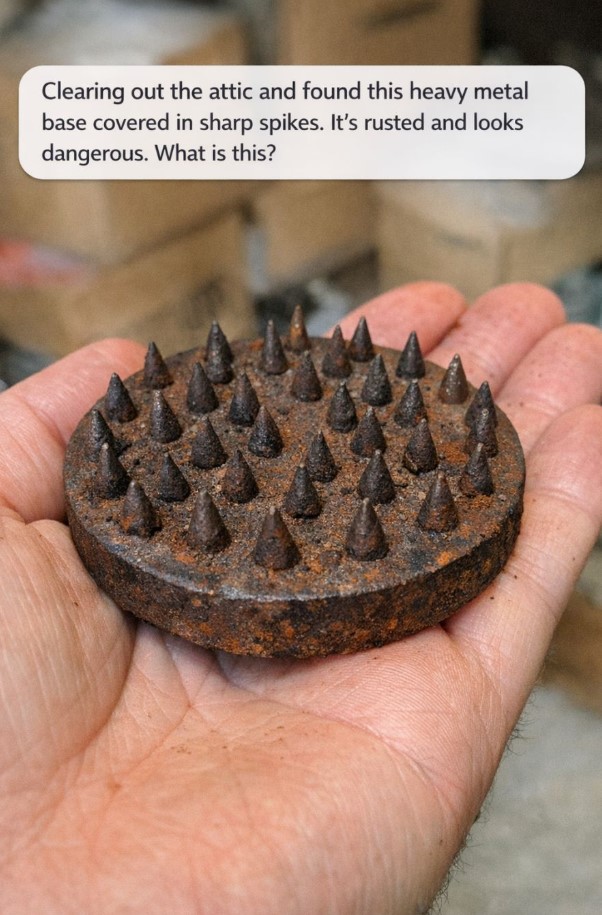
Discovering an unfamiliar object while cleaning out an attic can be surprising, especially when the item is heavy, metal, covered in sharp spikes, rusty, and looks potentially dangerous. Whether it was tucked away for years or forgotten through generations, finding something that appears hazardous naturally raises questions: What is it? Why was it there? Can it still be useful, or should it be discarded?
Old houses, barns, and storage spaces often contain remnants from past decades — and sometimes those objects are tools or equipment that aren’t immediately recognizable today. Metal pieces with spikes can range from antique farm implements to industrial hardware, decorative fixtures, or even historical curiosities. The key to handling such finds — especially when they are rusty and sharp — is to first understand what they might be, then consider safe ways to identify and deal with them.
This article explores the most common types of heavy, spiked metal objects you might encounter, how to recognize them, and what you should do if you find something similar in your own attic or storage space.
Common Possibilities for a Heavy, Spiked Metal Base
When you encounter a rusted metal base with sharp spikes, several types of objects could match that description. Below are some of the most likely explanations.
1. Old Tool or Farm Implement
In the past, many agricultural or workshop tools featured metal spikes for functionality. These could include:
- Soil aerators — tools used to perforate soil for gardening or lawn care.
- Animal deterrents — spike bases placed on posts or surfaces to prevent birds or animals from perching or climbing.
- Vintage fencing hardware — older fencing systems sometimes used spiked bases to anchor posts into the ground.
These utilitarian pieces were designed for outdoor use and went into barns or sheds, which may explain why one ended up stored in an attic.
2. Decorative Piece or Furniture Base
Some architectural and decorative elements — especially from older homes — were made of cast iron or heavy metal and included spikes for aesthetic impact. Examples include:
- Antique coat racks or umbrella stands — structured from heavy metal with decorative spikes.
- Bases for outdoor lamps or lanterns — designed for security and visual style.
- Garden ornament stands — decorative metalwork often incorporated spikes as part of design.
Even if the object isn’t serving its original purpose anymore, the craftsmanship can help you identify its intended use.
3. Industrial or Mechanical Component
Certain industrial equipment parts have sharp projections for functionality. These could be:
- Parts from old machinery — such as bases for mechanical arms, belt guides, or fasteners.
- Metal jigs or fixtures — used in manufacturing to hold materials in place.
These pieces usually feel heavier and more irregular in shape compared with decorative items.
4. Protective Hardware
In some cases, spikes were intentionally added to discourage climbing or tampering. Examples might include:
- Spike strips for anti-trespass deterrents — sometimes used in yards or on walls to keep animals or people from climbing.
- Security hardware from fences or gates — rusted metal could indicate long years of exposure or storage.
Objects like these may seem dangerous but were designed for a specific protective purpose.
How to Identify What You Found
To narrow down what the object might be, start by examining key features:
Shape and Construction
- Is the base flat or angled?
- Are the spikes uniform or random?
- Does it look manufactured or handcrafted?
These clues can indicate whether it’s a tool, decorative item, or industrial piece.
Weight and Material
Heavy iron or steel suggests outdoor or industrial use, while lighter metals may relate to indoor furniture or decorative hardware.
Attachment Points or Fasteners
Look for holes, brackets, or welds that may show how the item was mounted or connected to something else.
Wear Patterns
Rust and wear often tell a story. Heavy corrosion might indicate outdoor exposure for decades. Areas worn smoother may have been handled often.
Taking detailed photos and comparing them to images of known vintage tools, hardware pieces, and antique fixtures can also help you identify the object more precisely.
Tips for Handling and Disposal
A rusty, spiked object can be dangerous if handled carelessly. Before doing anything else, follow these safety steps:
1. Wear Protective Gloves and Clothing
Thick gloves, long sleeves, and closed-toe shoes reduce the risk of cuts or tetanus-causing punctures.
2. Avoid Direct Bare-Hand Contact
Rusty metal can lead to infection if skin is broken. Use tools like pliers or tongs to move it if needed.
3. Use a Brush to Clean Dirt and Loose Rust
A stiff brush can help reveal more details without removing structural integrity. This may make identification easier.
4. Consider Professional Identification
If it looks like a rare antique, part of machinery, or has potential historical value, a local antiques expert, tool collector, or historical society might help identify it.
5. Dispose of It Safely
If you determine the object is simply scrap metal:
- Wrap sharp areas in heavy cloth or cardboard.
- Clearly label it before placing it in yard or metal recycling.
- Avoid leaving it where children or pets could encounter it.
Conclusion :
Discovering a heavy metal base covered in sharp spikes in your attic can be intriguing and a bit unsettling. While the object might seem mysterious at first, it most likely falls into one of several categories: a vintage tool or farm implement, industrial hardware, decorative architectural element, or protective fencing piece. Each of these has its own historical and functional context.
To identify it accurately, examine its shape, weight, construction details, and any attachment points. Photos and comparisons with known antique or hardware examples can help. Above all, handle it with care — rusty metal with sharp edges can be dangerous if touched without protection.
Whether the object turns out to be a piece of forgotten equipment from decades ago or a curious artifact with a story, knowing how to approach it safely will let you clear out storage spaces with confidence and peace of mind.