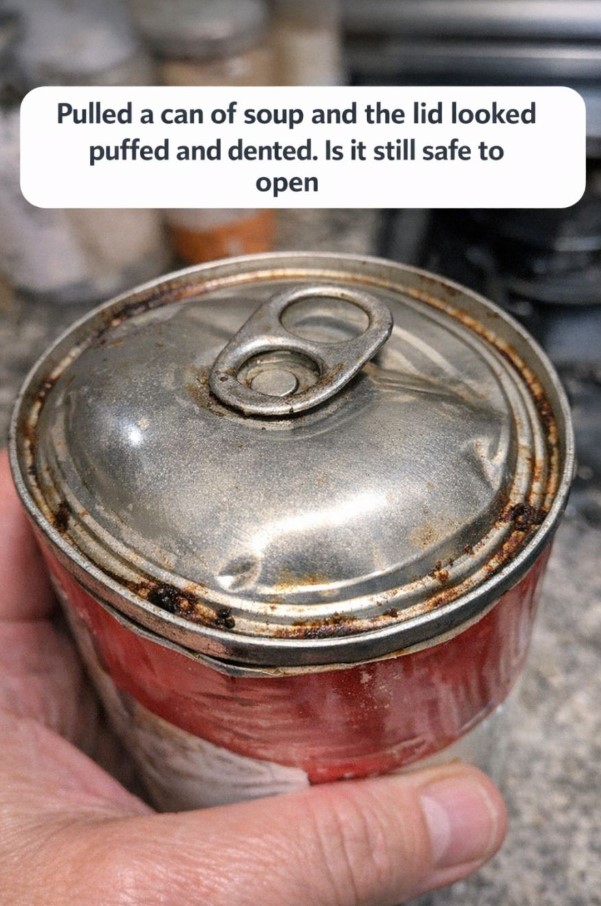
Discovering that the lid of a can of soup looks puffed up or dented can be unsettling. Canned food is supposed to be sealed, stable, and safe to eat, so when the can’s appearance changes unexpectedly, many people wonder whether it is still safe to open and consume. The shape and condition of a can can reveal important clues about what has happened inside, and in some cases it may indicate a serious safety risk.
Canning is a method of preserving food by sealing it in an airtight container and heating it to destroy bacteria and other microorganisms. Because the seal is designed to keep contaminants out, any sign of bulging, denting, or swelling can signal that the internal environment has changed. In such situations, it’s important to know how to interpret these signs, what might have caused them, and how to respond so that you protect your health and food safety.
This article explores why cans can become puffed or dented, how to tell when a can is unsafe, and what you should do when you encounter one.
What Causes a Can to Become Puffed or Dented?
Canned foods are sealed under vacuum and then processed to eliminate harmful bacteria. When that seal is compromised or if gases form inside, it can change the shape of the can.
1. Gas Production from Bacteria
One of the most concerning reasons a can lid appears puffed is the production of gas by bacteria inside the food. When food begins to spoil, bacteria release gases as a by‑product. These gases build up pressure inside the sealed can, causing the top to bulge outward.
This pressure change is a strong indicator that the contents may be contaminated, and opening it could expose you to harmful organisms.
2. Heat or Temperature Fluctuations
Extreme heat or fluctuating temperatures can cause a can to expand or contract. For example, if a can of soup is left in a hot car or near a heat source, the internal liquid can expand and push the lid outward. Similarly, rapid temperature changes can stress the can’s structure.
While this kind of expansion doesn’t always mean spoilage, it does weaken the seal and may create conditions that allow bacteria to enter.
3. Damage to the Can Seal
Dents along the seams of a can can compromise the integrity of the seal that keeps food safe. If the can was dropped or crushed, even without visible bulging, the inner lining or seal may have been damaged.
A compromised seal can let air and microbes into the can over time, increasing the risk of spoilage.
How to Tell if a Bulging or Dented Can Is Unsafe
When you notice a can that looks out of the ordinary, there are several signs that it may no longer be safe to open or consume:
1. Lid or Side Is Firmly Puffed Out
If the top of the can is noticeably bulging outward and does not flex back when pressed, this is a strong indication that gas has built up inside. This is often caused by bacterial activity and suggests that the food may be spoiled.
2. Deep Dents Along the Seams
Dents along the edges or seams — where two pieces of metal are joined — can weaken the airtight seal. This type of damage is riskier than dents on flat surfaces because it increases the likelihood that contaminants have gotten inside.
3. Rust or Corrosion
If the can has rust or significant corrosion, particularly near the top or along seams, this may indicate that moisture has compromised the protective coating. This can allow bacteria to enter and spoil the food.
4. Strange Odor When Opened
If you do open the can and notice an off or sour smell, this is a strong sign of spoilage. Safe food should not produce unpleasant or unexpected odors.
5. Foaming or Bubbling
Any foaming or bubbling upon opening — beyond what might occur with carbonated beverages — can indicate bacterial gas production or fermentation, both of which are signs of spoilage.
What You Should Do
When you encounter a can that is puffed, dented, or otherwise looks unusual, here are the recommended steps:
Do Not Open It
If the can is bulging or compromised at the seams, do not open it. Opening a pressurized can that contains spoiled food can release gases and bacteria into the air, which can be unsafe.
Discard It Safely
Place the can in a sealed plastic bag and dispose of it with household trash. Avoid puncturing or opening it. This reduces the chance of exposure to contaminated contents.
Wash Hands and Surfaces
After handling a compromised can, wash your hands thoroughly with soap and water. Clean any surfaces the can may have touched.
Check Other Canned Goods
If one can in a batch looks unsafe, check other canned items stored nearby. Temperature fluctuations or storage conditions may have affected multiple cans.
When the Can Might Still Be Safe
Not every dent means the contents are dangerous. Consider these points:
- Minor dents on flat surfaces: Small dents that do not affect the top or bottom of the can and are not near seams may not compromise safety.
- No bulging and no unusual odor: If the can looks normal except for a small dent, and the contents smell fine once opened, it is generally safe to use.
- Proper storage history: If the can was stored in a cool, dry place and hasn’t been exposed to heat or physical damage, minor dents may be less concerning.
Still, use caution and good judgment whenever the can’s shape or condition looks unusual.
Conclusion :
A can of soup with a puffed or dented lid should be taken seriously. While simple cosmetic dents on flat areas might not pose a risk, significant bulging, dents along seams, rust, or other signs of compromise are indications that the contents may no longer be safe. Internal gas buildup from bacterial activity, weakened seals, and exposure to temperature extremes all contribute to changes in can shape and signal a higher risk of spoilage.
For safety, avoid opening any can that looks unusually puffed or deeply dented along the edges. Dispose of it carefully and check other stored cans for similar issues. When in doubt, treating the food as unsafe is the more cautious choice, especially when the health of you and your family is at stake.
Understanding these signs and knowing how to respond protects you from potential foodborne illness and helps ensure that the canned foods you serve are safe and wholesome.