
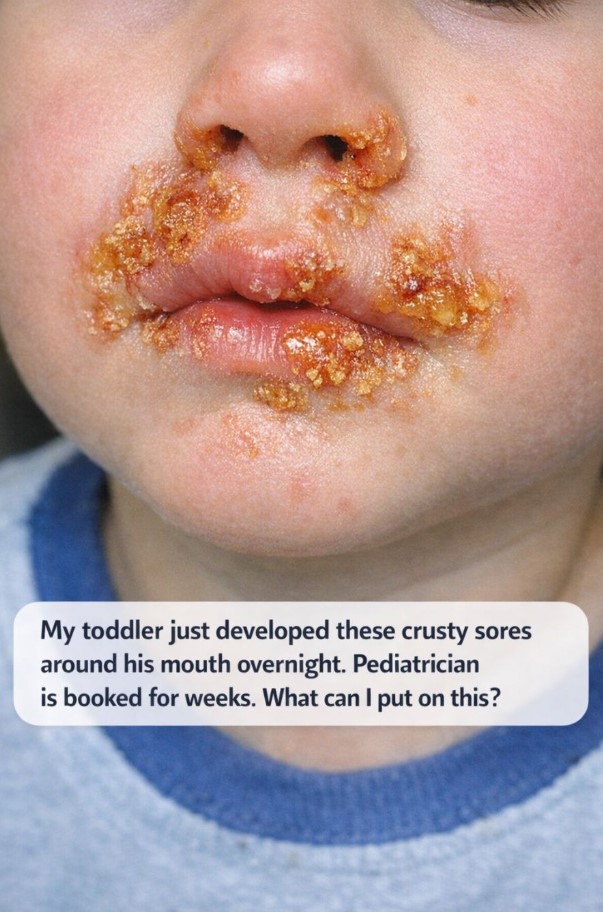
Seeing new sores on your toddler’s face overnight can be upsetting and confusing, especially when they seem crusty, irritated, or uncomfortable. When you can’t get in to see the pediatrician right away, it’s natural to want to know whether you can safely help your child at home, what might be causing the sores, and what signs suggest you should seek urgent care.
Sores around a young child’s mouth can develop quickly for a number of reasons, and each cause has its own clues. Some are mild and easy to manage at home, while others require medical evaluation. The key is to look for patterns, symptoms, and changes — and to respond in a way that keeps your child comfortable and safe.
This article explains common causes of crusty mouth sores in toddlers, what you can do while waiting for an appointment, when it’s appropriate to call a provider sooner, and how to care for your child’s skin gently and effectively.
Common Causes of Crusty Sores Around the Mouth
There are several reasons a toddler might suddenly develop crusty sores or dry scabs around the mouth:
1. Irritation From Saliva (Drool Rash)
Young children often drool, especially when teething or congested. Constant moisture around the mouth can irritate the skin, leading to redness, flaking, and crusty patches. This type of irritation is common and usually improves with simple care.
2. Chapped or Dry Skin
Cold, dry air, licking the lips frequently, or wind exposure can strip moisture from skin around the mouth. In toddlers, this can show up as dry, flaky, or crusty skin, especially after outdoor play or weather changes.
3. Mild Skin Infection or Staph Colonization
Sometimes bacteria that normally live on the skin can overgrow when the barrier is weakened (for example, by drool or dryness). This can cause small sores that crust over and may be tender or itchy.
4. Viral Rash (Cold Sores)
Certain viruses can cause blisters or sores around the mouth. In young children, a viral rash may start as small bumps and later form crusty surfaces as they heal. Cold sore viruses (herpes viruses) are rare in very young toddlers but are still possible through close contact with an infected caregiver.
5. Eczema (Atopic Dermatitis) Around the Mouth
Eczema can flare up around the mouth, especially in children who already have sensitive skin or allergies. This usually appears as dry, itchy, red patches that can crust if irritated by licking or rubbing.
What You Can Do at Home Right Now
While a pediatrician appointment is ideal, there are gentle, safe steps you can take to soothe your toddler’s skin and help prevent further irritation.
1. Keep the Area Clean and Dry
- Gently cleanse the area with lukewarm water and a soft cloth.
- Pat dry — never rub — to avoid irritation.
2. Apply a Simple Moisturizer
A thick, fragrance-free moisturizer helps hold in moisture and protect the skin’s barrier. Good options include:
- A plain, gentle ointment (like petroleum jelly-type products)
- A fragrance-free cream made for sensitive skin
Apply a thin layer several times a day and after eating or drinking.
3. Reduce Saliva Irritation
- Wipe drool frequently with a clean, soft cloth.
- Change bibs or clothing once they become damp.
- Consider a breathable barrier ointment before naps and bedtime.
4. Avoid Harsh Soaps or Fragranced Products
Cleaners and wipes with fragrance or alcohol can dry out the skin further and make sores worse.
5. Monitor for Signs of Infection
Watch for increasing redness, warmth, swelling, or oozing. These signs may mean the skin barrier is compromised and bacteria are involved.
When to Seek Medical Care Sooner
Most mild irritations improve with simple care, but you should seek medical advice — even before your scheduled pediatric visit — if you notice any of the following:
Signs in Your Child
- Fever
- Sores that are spreading rapidly
- Pain that interferes with eating or drinking
- Pus or a bad smell from the sores
- Increased swelling or warmth
- Clusters of blisters
Behavior Changes
- Extreme fussiness
- Refusal to eat or drink
- Signs of dehydration (dry mouth, fewer wet diapers)
If sores appear to be spreading, painful, or accompanied by systemic symptoms, call a healthcare provider right away.
Things to Avoid
These measures can actually make the rash worse:
- Don’t use alcohol-based wipes or cleansers around the mouth.
- Don’t apply strong steroid creams unless prescribed by a provider specifically for your child.
- Avoid home remedies with essential oils or homemade pastes, which can irritate a toddler’s sensitive skin.
Conclusion :
Crusty sores around your toddler’s mouth can have many causes — from drool irritation and dry skin to eczema flares and mild infections. In many cases, gentle care at home, including cleaning the area, protecting the skin with a moisturizer, and reducing saliva exposure, can help improve symptoms while you wait for a pediatrician appointment.
However, if the sores are spreading quickly, are painful, or come with fever, pus, or significant behavior changes, it’s important to contact a healthcare professional sooner. Fast action can help prevent complications and keep your child comfortable and well.
Keeping your child’s skin clean, protected, and hydrated is key to supporting healing. With careful observation and gentle care, most mild rashes improve quickly. And when in doubt, err on the side of safety by speaking with a provider who can give you guidance specific to your child’s situation