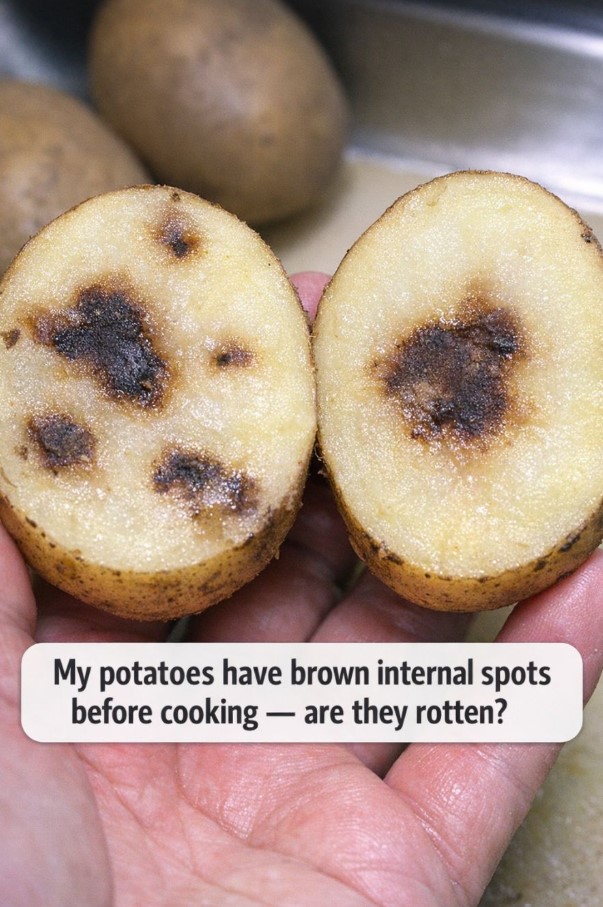
Finding brown spots inside raw potatoes can be unnerving, especially when you’re preparing dinner and want fresh, wholesome ingredients. You might slice into what looked like a normal potato only to discover dark flesh hidden beneath the skin. Instinctively you may wonder: Is this rotten? Can I still eat it?
The good news is that internal brown discoloration in potatoes is often not a sign of spoilage or foodborne danger. There are several harmless or natural reasons these spots occur. That said, some internal discolorations can indicate issues that affect taste or texture, and understanding the difference helps you prepare potatoes safely and confidently.
This article explains what causes brown internal spots, how to tell whether a potato is still good to cook, and when it’s safer to discard the tuber.
Common Causes of Brown Spots Inside Potatoes
1. Internal Bruising from Handling
Potatoes are surprisingly delicate under the surface. Rough handling during harvesting, transport, or storage can cause bruising inside the potato flesh. These bruises may not be visible on the outside but show up as brown patches when cut open.
Key features of bruising:
- Irregular or blotchy brown areas
- No foul smell
- Texture may be slightly firmer or softer around the spot
Bruising doesn’t mean the potato is unsafe — it just affects appearance and sometimes texture.
2. Varietal or Natural Pigmentation
Some potato varieties naturally develop darker pigments in certain areas. This internal color variation does not indicate spoilage and doesn’t affect safety or quality.
These inherent color differences are more common in potatoes that:
- Are homegrown or heirloom varieties
- Have been stored for extended periods
- Are from cooler growing regions
Again, this is a cosmetic issue and does not compromise the potato’s safety.
3. Water or Sugar Spotting from Improper Storage
Potatoes store best in cool, dark, dry environments. If they’re kept in conditions that are too warm, too cold, or too moist, sugar can accumulate unevenly in the flesh. When these sugars react during cutting or cooking, brown spots may appear.
This sometimes happens when:
- Potatoes are stored in the refrigerator
- They were exposed to sunlight or moisture
- Storage temperatures fluctuate widely
These spots are harmless but can affect texture or sweetness when cooked.
4. Early Stage of Disease or Physiological Disorders
Certain physiological disorders — such as internal black spot, brown center, or vascular browning — can form during growth or storage. These are not caused by harmful bacteria, but they can change the appearance and sometimes the texture of the potato.
Indicators of this category include:
- Dark brown or black spots deep inside the flesh
- No strong odor
- Firm or slightly dry patches around the discoloration
These spots typically don’t spread, and the rest of the potato is usable once the discolored areas are removed.
When Brown Spots Signal a Problem
While most brown internal spots are harmless, some signs do mean a potato should not be eaten.
Rot or Mold
If the brown areas:
- Are accompanied by a mushy texture
- Have a sour or musty smell
- Are filled with fuzzy mold growth
- Show soft areas extending beyond the spot
These are clear signs of spoilage. Mold or rot can develop even if the potato skin looks okay at first glance.
Action: Discard the potato immediately. Do not try to salvage it.
Sprouts and Green Skin
Greenish potatoes or those with long sprouts can contain higher levels of solanine, a natural compound that can cause digestive discomfort if consumed in large amounts.
If the potato has:
- Green skin patches
- Large or numerous sprouts
Then even if there are no brown spots inside, the potato may be better discarded or trimmed extensively before use.
How to Prepare Potatoes with Internal Brown Spots
When the brown spots in the potato are from bruising, pigmentation, or storage changes (not mold or rot), you can still use the potato safely.
Step-by-Step Guide :
- Cut Around the Discoloration
Using a sharp knife, carve out the brown patches until you reach clean, white or pale flesh. - Inspect the Remaining Flesh
Look for an off smell or slimy texture. If all else appears normal, proceed. - Wash and Prepare
Rinse the remaining potato pieces under cold water to remove any leftover particles. - Cook as Usual
Use the prepared potato in your recipe — whether boiling, baking, roasting, or sautéing.
If large portions of the potato are affected and little usable flesh remains, it may be more practical to discard the tuber and use a fresh one.
Tips to Prevent Brown Spots in Future Potatoes
1. Handle Gently
Avoid dropping or banging potatoes during transport and storage to reduce internal bruising.
2. Store Properly
Keep potatoes:
- In a cool, dark place (not the refrigerator)
- Away from direct sunlight
- In a dry environment
3. Avoid Extreme Temperatures
Sudden temperature changes can cause internal discoloration during storage.
4. Use Fresh Potatoes Promptly
Potatoes kept too long are more likely to develop internal changes.
Conclusion :
Finding brown internal spots in potatoes can be surprising, but in most cases, it’s not a sign of spoilage or danger. These discolorations typically result from natural causes like internal bruising, pigment variations, storage conditions, or harmless physiological changes. As long as the potato doesn’t have an off odor, slimy texture, mold, or significant soft rot, it can be safely prepared and cooked once the discolored areas are cut away.
When in doubt, trust your senses: smell, texture, and the overall appearance of the flesh are the best indicators of whether a potato is still good. With proper storage and gentle handling, you can reduce the likelihood of brown spots and enjoy fresh, wholesome potatoes in your meals.