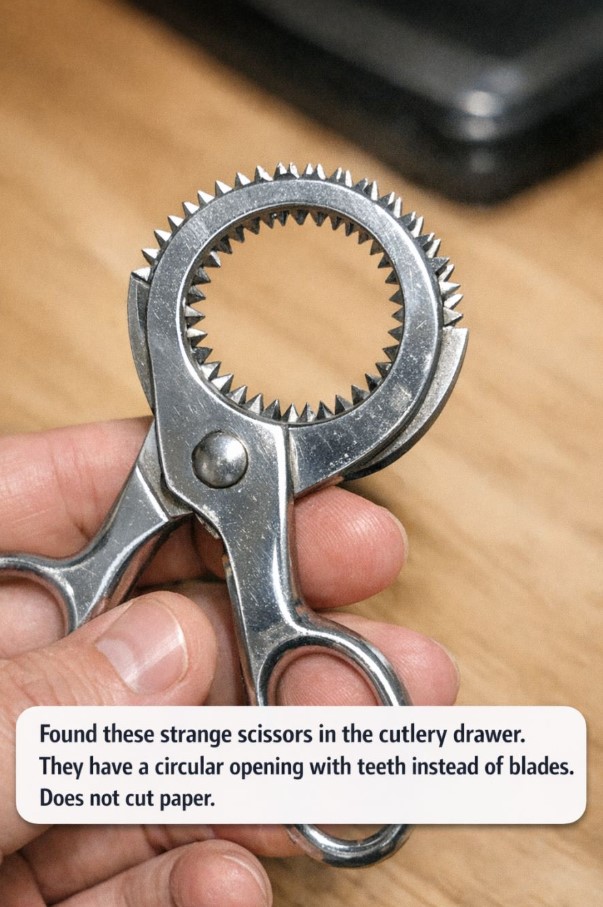
While digging through a kitchen drawer, you might come across a peculiar tool that looks like a pair of scissors — but with a circular opening lined with teeth instead of blades. At first glance, it’s confusing: it doesn’t cut paper, fabric, or anything like traditional scissors. Its odd design leaves many wondering what it’s for and why it ended up in their cutlery drawer.
Despite its mysterious appearance, this tool is far from useless. In fact, it serves a very specific culinary purpose: it’s an egg topper, designed to neatly remove the top of a soft-boiled egg. Let’s explore how this unusual gadget works, why it exists, and how to use it effectively.
Why These “Scissors” Don’t Cut Paper
The reason these scissors fail at cutting paper lies in their unique design. Unlike standard scissors, which have sharp blades that shear through materials, this tool features a circular opening with small serrated teeth. These teeth aren’t meant to slice; they grip and crack.
The opening typically measures 1–2 inches in diameter, perfectly sized for an average egg. The teeth are intentionally blunt, because their job isn’t to slice — it’s to create a uniform crack around the eggshell. Without sharp blades, they simply cannot cut paper or other conventional materials.
The Surprising Purpose: Soft-Boiled Egg Topper
This tool’s main job is to remove the top of a soft-boiled egg cleanly, giving easy access to the yolk and whites without messy shell fragments. Soft-boiled eggs are often served in egg cups, and an egg topper makes them neat and presentable.
Whether you want to dip toast soldiers or enjoy the egg with a spoon, the egg topper ensures a smooth, consistent opening — much more elegant than breaking the shell by hand.
How the Circular, Toothed Opening Works
The mechanism is simple but clever. You place the circular, toothed opening over the egg’s top and gently squeeze the handles. The teeth press against the eggshell, creating a uniform crack around the circumference.
The teeth apply just enough pressure to break the shell cleanly without shattering it. This even pressure prevents bits of shell from falling into the egg’s interior, making your breakfast experience much more enjoyable.
Step-by-Step: Using an Egg Topper Without Mess :
- Place the egg upright in an egg cup for stability.
- Position the circular opening of the egg topper over the top of the egg.
- Squeeze the handles gently to apply even pressure. You’ll hear a soft crack as the shell splits.
- Release the handles and lift the topper away.
- Remove the top portion of the shell carefully with your fingers or a small knife.
Now your egg is ready to enjoy — neat, clean, and mess-free.
When This Tool Shines: Soft vs. Hard-Boiled Eggs
Egg toppers excel with soft-boiled eggs, which have delicate shells and a runny interior. The tool allows you to open the egg without spilling its contents.
Hard-boiled eggs, by contrast, are usually peeled entirely. While some may use an egg topper for presentation purposes, it’s not essential for firm eggs because the shell can be removed without special tools.
Common Designs and Variations
Egg toppers come in multiple styles:
- Basic scissor-style: Circular opening with serrated teeth.
- Spring-loaded models: Use a quick squeeze to crack the shell.
- Bell-shaped toppers: Drop over the egg and release to cut the top.
- Adjustable diameters: Accommodate larger or smaller eggs.
Despite these differences, all achieve the same goal: a clean, neat egg opening.
How to Recognize an Egg Topper
If you’re unsure whether a tool is an egg topper or a failed kitchen gadget, look for:
- Circular, toothed opening: Designed for cracking eggshells.
- Scissor-like handles: Meant for squeezing rather than cutting.
- Inability to cut paper: Indicates it’s not for traditional cutting.
- Durable construction: Often stainless steel, built to last through repeated use.
Safety and Cleaning Tips
While the teeth aren’t sharp enough to cut skin, avoid pinching your fingers when using the topper.
Cleaning is easy: wash with warm, soapy water or place in the dishwasher if it’s dishwasher-safe. Dry thoroughly to prevent rust or corrosion.
Other Clever Uses (With Caution)
Some users have experimented with the topper for soft fruits like tomatoes, creating decorative cuts. However, it should never be used on hard shells, nuts, or anything requiring significant force, as this can damage the tool or cause injury.
Why It Ends Up in the Cutlery Drawer
Egg toppers are compact and used infrequently, which is why they often share a drawer with regular scissors and kitchen gadgets. Their unusual shape means they blend in, only to be rediscovered when the need for a soft-boiled egg arises.
When to Replace or Upgrade
Replace your egg topper if:
- The teeth become bent or dull.
- It no longer creates a clean cut.
- The handles loosen or break.
Upgrading can make your breakfasts smoother and more enjoyable, especially if you frequently serve soft-boiled eggs.
Conclusion :
That odd scissor-like tool in your cutlery drawer isn’t broken — it’s a specialized kitchen gadget designed for one very particular task: neatly opening soft-boiled eggs. With its circular, toothed opening, it delivers a clean crack every time, making breakfast elegant and mess-free.
Once you know its purpose, the egg topper becomes an indispensable little helper for anyone who enjoys perfectly presented eggs. Next time you see it tucked away, you’ll know exactly how and why to use it — and maybe even discover some clever alternative uses along the way.