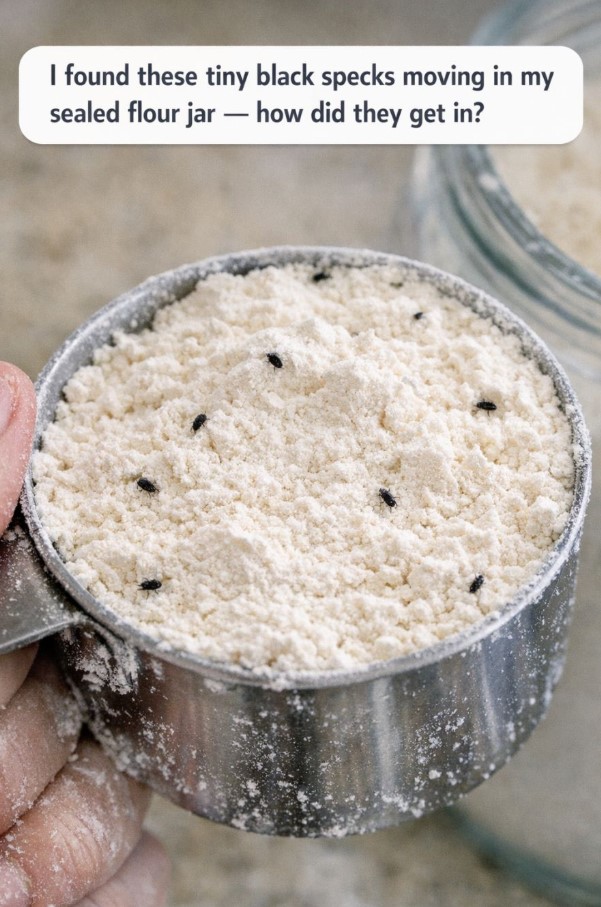
Opening a sealed container of flour only to find tiny black specks that appear to be moving can be unsettling. You store flour in the pantry thinking it’s clean and safe, and then out of nowhere, something unexpected shows up. Questions immediately come to mind: How did they get in? Is the flour still safe? What should I do now?
Fortunately, this is a surprisingly common pantry situation, and understanding what those specks are and how they ended up in your flour can help you deal with it correctly and safely. In this article, we’ll explore the likely causes of tiny black specks in flour, how insects or contaminants can enter even seemingly sealed containers, how to identify whether the product is still usable, and what steps you should take to protect your food.
What Those Tiny Black Specks Likely Are
When you see tiny dark specks that seem to be moving in flour, there are two main possibilities:
1. Insects or Larvae
The most common explanation is that those tiny black specks are pantry insects, such as flour beetles, weevils, or their larvae. These pests are very small — often just a few millimeters long — and can be dark in color. Larvae may appear lighter and wiggle when disturbed, while adults are typically darker and more beetle‑like.
2. Caking or Clumps from Moisture
In some cases, dark specks may simply be tiny clumps of flour mixed with bran or other natural particles, sometimes due to moisture exposure. However, if the specks are visibly moving, they are almost certainly living organisms rather than dried flour fragments.
How Insects Can Get Into a Sealed Flour Jar
You might be thinking, But this jar was sealed — how did they get in? There are a few common explanations for this:
1. Infestation Happened Before Sealing
In many cases, insects or their eggs are already present on the grain before milling and packaging. These eggs can survive through processing and hatch later in the sealed container. Even though the bag or jar appears intact, the infestation may have started long before you opened it.
2. Microscopic Cracks or Imperfections in Packaging
Some pantry pests are so tiny that they can squeeze through microscopic gaps in packaging materials. Even sealed containers can sometimes have tiny imperfections around lids or seams that insects can exploit.
3. Cross‑Contamination in the Pantry
If other infested products are stored nearby — cereal, rice, pasta, or grains — insects can spread. Eggs or larvae may migrate through cracks in pantry shelves or packaging and end up in your flour even if it was originally pest‑free.
Signs to Confirm It’s an Infestation
To determine if the black specks in your flour are indeed insects or related to infestation, look for these signs:
- Movement: Live insects or larvae will wiggle or crawl when disturbed.
- Webbing or Silk: Some pantry pests leave behind fine webbing that may appear between flour granules.
- Eggs or Pupae: Small whiteish or tan specks could be eggs or pupal cases.
- Odd Odor: Infested flour may develop an unusual or musty smell.
- Other Infested Foods: Blister packs or open containers nearby may show signs of pests as well.
If you see several of these indicators, it’s very likely that an infestation is present.
Is the Flour Still Safe to Use?
When you find moving specks in your flour jar, it’s important to err on the side of caution:
- Discard the Flour: Insects and their larvae can carry bacteria, and once a product shows signs of infestation, it’s safest to throw it out.
- Avoid Tasting to Test: Even if it doesn’t smell “bad,” infested flour is not safe to eat.
- Don’t Try to Salvage by Sifting: Once insects have infested a dry good, they can spread microscopic contaminants that cannot be removed by simple sifting.
While it may feel wasteful to throw out flour, avoiding potential foodborne illnesses and ensuring the safety of your meals is more important.
How to Prevent Future Infestations
To keep your pantry and ingredients safe, follow these tips:
1. Use Airtight Containers
Transfer dry goods like flour, rice, grains, and cereal into airtight containers made of glass or heavy‑duty plastic. This creates a barrier that’s harder for pests to penetrate.
2. Freeze New Purchases
Before storing new bags of flour, place them in the freezer for a few days. Freezing kills any eggs or larvae that might be present without affecting the flour’s quality.
3. Keep the Pantry Clean
Regularly sweep and wipe pantry shelves. Crumbs and spilled flour attract insects and create breeding grounds.
4. Inspect New Packaging
Before opening any new dry goods, check for tiny holes or signs of damage that might allow pests in.
5. Store in Cool, Dry Conditions
Insects thrive in warm, humid environments. Keeping your pantry cool and dry helps reduce the likelihood of infestations.
What To Do if Infestation Is Widespread
If you find that one package of flour is infested, it’s wise to check other stored dry goods. Look for similar signs in:
- Rice and grains
- Pasta and crackers
- Oats, cereal, and granola
- Nuts and seeds
If you spot signs of insects in multiple products, discard all affected items, clean the shelves thoroughly with warm soapy water, and consider using bay leaves or sealed pheromone traps designed for pantry pests as a preventative measure.
Conclusion :
Finding tiny black specks moving in a sealed flour jar can be unsettling, but it’s a surprisingly common pantry issue. These specks are most often insects or larvae that got into the product before packaging or migrated from nearby foods. Once you see signs of infestation, it’s safest to discard the flour and thoroughly clean the storage area to prevent the problem from spreading.
By using airtight containers, freezing new purchases, maintaining a clean pantry, and storing dry goods properly, you can dramatically reduce the likelihood of future infestations. With the right precautions, your pantry can stay safe, organized, and free of unwelcome surprises — so your next baking project is all about delicious results, not pests.