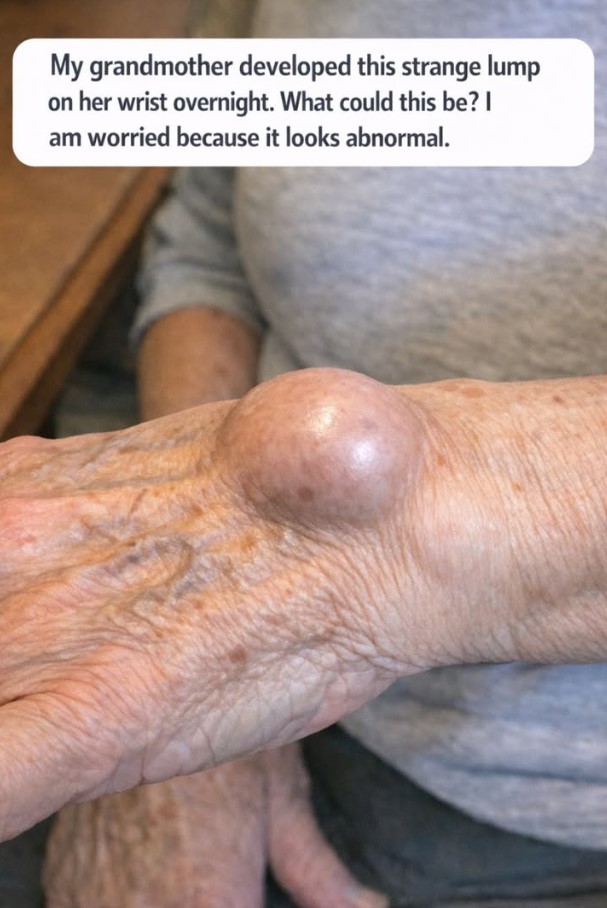
It can be alarming to notice a new lump on a loved one’s body, especially when it appears seemingly overnight. If your grandmother has developed a strange swelling on her wrist, it’s natural to feel concerned. While many wrist lumps are harmless, some require medical attention, and knowing what to watch for can help you act quickly and confidently.
Understanding Sudden Wrist Lumps
A lump on the wrist can have several origins. Some of the most common include:
- Ganglion Cysts
One of the most frequent causes of wrist lumps, ganglion cysts are fluid-filled sacs that develop near joints or tendons. They can appear suddenly and may fluctuate in size, sometimes even shrinking on their own. Ganglion cysts are generally painless, though they can cause discomfort if they press on nearby nerves. - Lipomas
Lipomas are soft, fatty lumps that grow slowly under the skin. While usually harmless, they are less common to appear overnight. Lipomas are typically movable and painless but may require evaluation if they grow quickly. - Bone or Joint Conditions
Conditions like arthritis or bone spurs can sometimes create bumps on the wrist. These are usually associated with pain, stiffness, or reduced range of motion. - Infections or Abscesses
Rarely, an infection can present as a sudden swelling or lump. If the area is red, warm, or tender, this could indicate an underlying infection that needs immediate medical care. - Other Rare Causes
Tumors, both benign and malignant, can appear as lumps. Though less common, it’s important to monitor the lump’s growth, consistency, and any associated symptoms, especially in older adults.
What to Do if You Notice a Sudden Lump
Caring for an elderly family member means taking prompt and careful action. Here’s what you can do:
- Observe Carefully: Note the lump’s size, shape, and any changes over time. Take photos to show a healthcare provider, which can be helpful for tracking changes.
- Check for Symptoms: Look for pain, redness, warmth, tenderness, or changes in skin color. Also, monitor if your grandmother experiences numbness, tingling, or difficulty moving her wrist.
- Avoid Self-Treatment: Do not try to drain, squeeze, or manipulate the lump. This could worsen the condition or cause an infection.
- Schedule a Medical Evaluation: Make an appointment with her primary care physician or a specialist such as an orthopedic doctor or hand surgeon. They may recommend imaging tests like an ultrasound, X-ray, or MRI to determine the lump’s nature.
- Ask About Treatment Options: Depending on the diagnosis, treatment could range from simple observation to minor procedures for removal or drainage. Ganglion cysts, for instance, sometimes resolve on their own, but persistent or painful cysts may require treatment.
Supporting Your Grandmother Emotionally
A sudden lump can be frightening, especially for older adults who may already worry about health issues. Be patient, listen to her concerns, and provide reassurance. Let her know that many wrist lumps are benign, but it’s always best to get a professional opinion to be safe. Helping her feel comfortable during appointments and treatments can reduce anxiety and make the process easier for both of you.
Precautions and Red Flags
Seek immediate medical attention if you notice any of the following:
- Rapidly growing lump
- Severe pain or sudden tenderness
- Redness, warmth, or signs of infection
- Numbness, tingling, or loss of wrist function
- General symptoms like fever or feeling unwell
These warning signs could indicate an infection or a more serious condition that requires urgent care.
Conclusion :
Discovering a sudden lump on your grandmother’s wrist can be worrying, but most lumps are not dangerous. By carefully observing the lump, avoiding home treatments, and consulting a medical professional promptly, you can ensure she receives the right care and peace of mind. Acting quickly and supporting her emotionally makes a big difference, helping her feel safe while navigating the uncertainty of a new health concern. Remember, while vigilance is important, many wrist lumps, such as ganglion cysts, have simple solutions and can often be managed effectively.