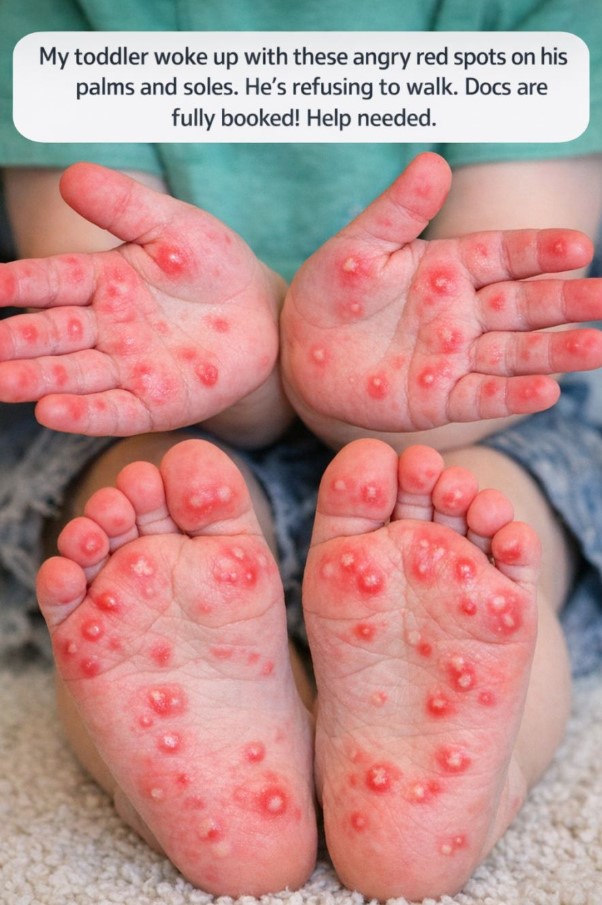
There’s nothing more unsettling than waking up to find your toddler uncomfortable — especially when you notice bright red spots on their tiny palms and soles. If they suddenly refuse to walk or cry when you try to help them stand, it’s completely natural to feel worried.
Many childhood illnesses show up through the skin, and while some look alarming, they are often mild and temporary. Understanding the possible causes can help you stay calm, take the right steps, and know when it’s time to seek medical advice.
Let’s walk through what might be happening.
A Common Cause: Hand, Foot, and Mouth Disease
One of the most frequent causes of red spots on a toddler’s palms and soles is Hand, Foot, and Mouth Disease (HFMD). This viral illness is very common in young children and spreads easily in daycare or preschool environments.
How It Usually Starts
HFMD often begins like a typical mild viral infection. You may notice:
- A low-grade fever
- Irritability or clinginess
- Reduced appetite
- Mild sore throat
Within a day or two, small red spots begin to appear — especially on the hands and feet. These spots may stay flat or develop into tiny blisters. Some children also develop painful sores inside the mouth, which can make eating and drinking uncomfortable.
Because the rash often appears on the soles of the feet, walking may feel painful. That’s why some toddlers refuse to stand or move much during this time.
How Long It Lasts
In most cases, HFMD clears up on its own within 7 to 10 days. There’s no specific cure since it’s caused by a virus, but rest, fluids, and comfort care are usually enough while the body heals naturally.
Other Possible Causes of Red Spots on Palms and Soles
Although HFMD is common, it isn’t the only explanation. Here are a few other possibilities:
Allergic Reactions or Contact Dermatitis
If your toddler touched something irritating — such as certain soaps, plants, or new materials — they could develop a localized rash. These rashes may appear red, inflamed, or slightly blistered.
Scabies (Mite Infestation)
This condition is caused by tiny mites that burrow into the skin. It typically causes intense itching and can affect the palms, soles, and areas between fingers. The itching often worsens at night.
Erythema Multiforme
This is a less common skin reaction that can follow certain viral infections. The rash may look like target-shaped spots and often begins on the hands and feet.
Other Viral Rashes
Many childhood viruses cause rashes. Some may begin on the extremities before spreading elsewhere. If your toddler recently had a cold or fever, this may be part of a viral illness running its course.
Why Is My Toddler Refusing to Walk?
If your child doesn’t want to walk, it’s often because the soles of their feet are tender. Blisters or inflamed spots can hurt when pressure is applied.
Other possible reasons include:
- Foot soreness from friction or irritation
- Mild swelling
- Skin sensitivity from fever or viral illness
If the redness is warm, very swollen, or extremely painful to touch, it’s important to consult a healthcare professional promptly.
What You Can Do at Home
While waiting to see a doctor or if appointments are fully booked, you can take steps to keep your toddler comfortable:
1. Monitor Symptoms
Pay attention to:
- Fever levels
- Spread of the rash
- Changes in behavior
- Eating and drinking habits
Keeping track of these details can help your pediatrician make a diagnosis quickly.
2. Keep Them Hydrated
If mouth sores are present, offer cool drinks and soft foods. Avoid spicy or acidic items that could sting.
3. Protect Sensitive Skin
- Dress your toddler in loose, breathable clothing
- Avoid harsh soaps
- Keep nails trimmed to prevent scratching
4. Provide Comfort
Extra cuddles, quiet activities, and rest go a long way. Most viral rashes improve with time.
When to Seek Immediate Care
Although most cases are mild, contact a healthcare provider urgently if you notice:
- A very high fever
- Difficulty breathing or swallowing
- Extreme lethargy
- Rapidly spreading rash
- Signs of infection (intense redness, warmth, swelling, or pus)
Trust your instincts — if something feels wrong, it’s always okay to seek medical advice.
Final Thoughts
Seeing red, angry-looking spots on your toddler’s hands and feet can be frightening — especially if they refuse to walk. In many cases, the cause is a common viral illness that resolves within about a week with supportive care.
The key is to monitor symptoms carefully, keep your child comfortable, and reach out to a healthcare professional if symptoms worsen or don’t improve.
Parenting comes with moments of uncertainty, but staying informed and calm makes a big difference. Most of the time, these childhood rashes pass quickly — and before long, your little one will be back to running around like nothing ever happened.