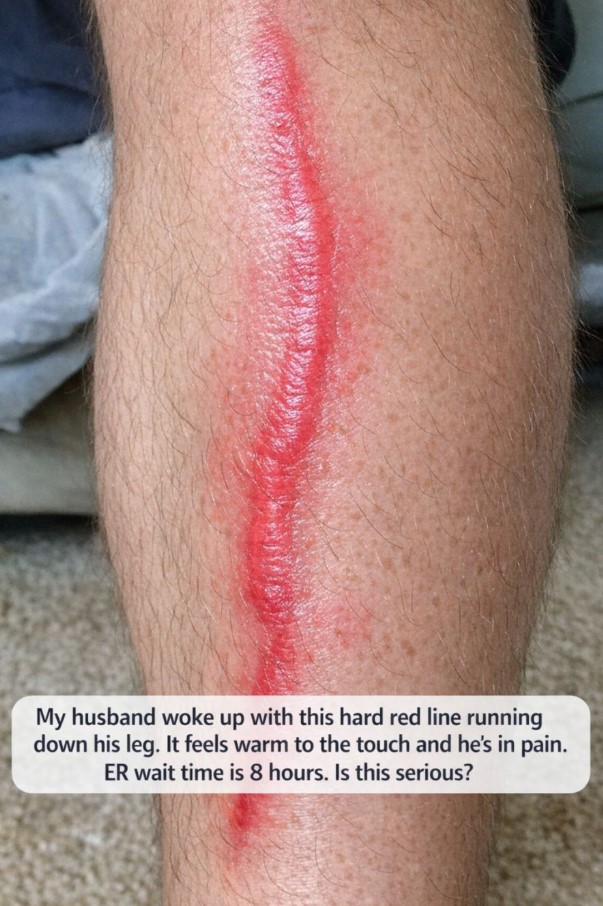
Waking up to a hard, red line running down your leg can be alarming. If it feels warm to the touch and is accompanied by pain, it’s natural to worry — especially when the thought of waiting hours for medical attention crosses your mind.
Although many skin or circulation issues might be harmless, a red streak like this can sometimes indicate something more serious, making it crucial to understand what’s going on. In this post, we’ll break down the potential causes, signs to watch for, and steps you can take to care for yourself or a loved one while waiting for professional care.
Why a Red Line on the Leg Happens
A red streak along the leg often follows the path of veins or lymphatic vessels. It can appear suddenly and may be accompanied by swelling, warmth, tenderness, or pain. This symptom can have several explanations, ranging from minor skin infections to more urgent medical conditions.
1. Cellulitis: A Skin Infection
Cellulitis is a common bacterial skin infection that often causes redness, warmth, swelling, and pain in a localized area. When bacteria enter through a break in the skin, such as a scratch, insect bite, or cut, they can spread to deeper layers of skin.
Key signs of cellulitis include:
- Red, warm, and tender skin
- Swelling in the affected area
- Pain or discomfort when touched or moved
- Sometimes fever or chills
A red line can appear along the leg when the infection spreads along lymphatic vessels, which carry immune cells throughout the body. This is sometimes called lymphangitis, and it signals that the infection is moving through the body.
2. Blood Clots (Deep Vein Thrombosis)
Another serious cause to be aware of is a blood clot in the leg, also known as deep vein thrombosis (DVT). Blood clots can sometimes appear as redness, warmth, and swelling in the affected leg. Pain may increase when walking or standing, and in some cases, the leg may feel heavier or tender to the touch.
Why this matters: If a clot breaks loose and travels to the lungs, it can cause a pulmonary embolism, which is life-threatening. Warning signs include sudden shortness of breath, chest pain, rapid heartbeat, or coughing up blood.
3. Other Causes
Other potential causes of a red line on the leg include:
- Insect bites: Some bites can lead to localized inflammation that tracks along lymph vessels.
- Allergic reactions: Certain reactions to topical products can produce streaks or lines.
- Trauma or minor injury: Bruises or scratches may develop secondary redness or swelling along veins.
While these causes may be less serious, it’s important to monitor symptoms closely.
What You Should Do Immediately
If someone wakes up with a hard red line on their leg that’s warm and painful, prompt action is important. Here’s what you can do:
- Seek medical attention promptly
Even if the wait time is several hours, alert the clinic or hospital that it may be cellulitis or a blood clot. These conditions require urgent evaluation. - Elevate the leg
Raise the leg slightly to help reduce swelling. - Avoid massaging or pressing
Never massage a red, painful line. If it’s a blood clot, massaging could dislodge it. - Monitor for fever or spreading redness
Fever, chills, or rapidly expanding redness are warning signs that the infection could be worsening. - Do not self-treat with antibiotics
Only a doctor can prescribe appropriate medication for infections. Using antibiotics without guidance can be dangerous.
When to Seek Emergency Care
Go to the emergency room immediately if the following occur:
- Sudden shortness of breath or chest pain
- Redness spreading rapidly up the leg
- Intense swelling, tenderness, or warmth
- High fever or chills
- Difficulty walking or severe pain
These could indicate serious infection or a blood clot that requires immediate treatment.
Supporting Recovery at Home (With Medical Guidance)
Once evaluated and treated by a doctor, additional steps can support recovery:
- Rest and elevate the affected leg
- Stay hydrated to support circulation
- Follow the full course of prescribed antibiotics if it’s an infection
- Wear compression stockings only if advised by a healthcare professional
- Avoid strenuous activity until cleared by your doctor
Even after symptoms improve, follow-up appointments may be necessary to ensure the condition is fully resolved.
Why This Symptom Shouldn’t Be Ignored
A red, hard line on the leg is more than just a skin issue. It can indicate serious infection, lymphatic inflammation, or a blood clot. Acting quickly can prevent complications and ensure the right treatment.
Even if waiting times are long, reaching out to a healthcare provider and describing the symptoms clearly can help prioritize care. Your instincts matter — persistent or worsening symptoms should never be dismissed.
Conclusion:
Seeing a hard, painful red line running down a leg is alarming — and for good reason. It can be a sign of cellulitis, lymphangitis, or even a blood clot, all of which require medical attention.
Understanding the possible causes, recognizing warning signs, and taking immediate steps — such as elevating the leg and contacting a doctor — can make a critical difference.
While the internet can offer general guidance, nothing replaces professional evaluation. Acting promptly can protect health, prevent complications, and provide peace of mind.