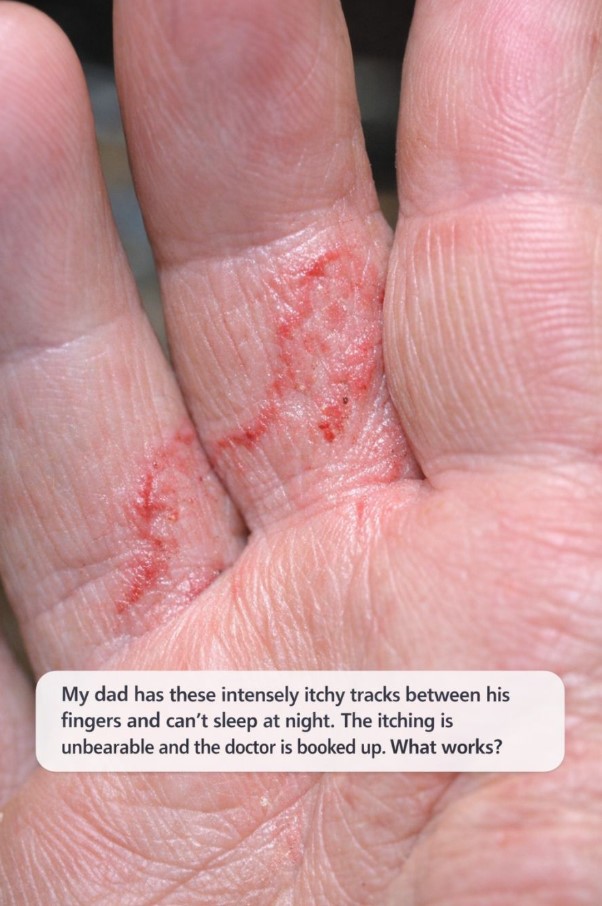
There’s nothing quite as distressing as watching someone you care about struggle with constant, intense itching — especially when it’s severe enough to disrupt sleep. When those itchy tracks show up between the fingers, it can be even more confusing and frustrating. You might be wondering: What could this be? Why does it itch so much? And what can help when a doctor’s appointment isn’t available right away?
In this blog article, we’ll explore clearly and calmly what might be causing these symptoms, what steps you can take at home, and how to tell when it’s important to seek medical care. This is written to help you understand the situation better — not to diagnose, but to give practical information and safe guidance.
What Does “Itchy Tracks Between the Fingers” Usually Look Like?
When someone describes “intensely itchy tracks,” they often mean:
- Thin, wavy, or linear marks on the skin
- Redness or slight irritation
- Intense itching, especially at night
- Itchiness that feels deep or persistent
- The pattern sometimes looks like lines or trails where the skin seems slightly raised
These tracks are often most noticeable in places like:
- Between the fingers
- On the wrists
- Around the elbows
- On the torso
- Around the waistline
They can be especially uncomfortable at night when the body relaxes and the itch sensation becomes more noticeable.
Common Causes of Intense Itching Between the Fingers
There are a few possible explanations for this type of itching. Most are harmless and treatable, but some require medical intervention.
1. Scabies (A Mite Infestation)
One of the most well‑known causes of tiny, itchy tracks — especially between the fingers — is a mite infestation commonly known as scabies. Scabies is caused by microscopic mites burrowing just under the skin’s surface. As they move, they create tiny trails that can show up as faint lines or tracks.
Common features:
- Itching that gets worse at night
- Fine, thread‑like tracks in skin folds (especially between fingers)
- Itching that spreads over days or weeks
- Often contagious through close skin‑to‑skin contact
What makes scabies especially uncomfortable is the intense itch, which is the body’s reaction to the mites and their eggs under the skin.
2. Contact Dermatitis (Skin Irritation)
Contact dermatitis occurs when the skin is irritated by something it has touched, like:
- Soaps or detergents
- Lotion or cosmetic products
- Chemicals or fragrances
- Plants or new fabrics
This irritation can cause redness, itching, dryness, or small irritated patches. While contact dermatitis can be itchy, the “tracks” are usually less linear and more patch‑like or scaly.
3. Eczema (Atopic Dermatitis)
Eczema is a chronic skin condition that causes red, itchy, and inflamed patches. It’s common in people of all ages and often affects hands and finger areas. It may flare up due to dry skin, stress, weather, or allergens.
4. Other Less Common Causes
There are occasional cases where parasite bites, fungal skin infections, or even stress‑related itching can occur, but these are less common and usually have other distinct features.
Why Itching Can Be Worse at Night
One reason your dad may notice the itching especially at night is that:
- There’s less distraction in the evening
- Body temperature changes at night can increase skin sensitivity
- Histamine release naturally goes up at night
- Sleep cycles make the sensation of itch more noticeable
All of these can make itching feel more intense in the dark hours when your body is trying to rest.
What You Can Do at Home to Soothe Itching
While waiting for a doctor’s appointment, there are safe, supportive steps you can take to help ease discomfort. These are not cures, but they can provide relief without causing harm.
🧼 1. Keep the Area Clean and Dry
Gently wash the affected skin with mild, fragrance‑free soap and lukewarm water. Pat dry with a soft towel instead of rubbing.
🧴 2. Moisturize Regularly
Dry skin tends to itch more. Applying a gentle, fragrance‑free moisturizer can help reduce irritation. Look for creams with soothing ingredients like:
- Ceramides
- Glycerin
- Petroleum jelly
Apply right after bathing to help lock in moisture.
❄️ 3. Cool Compresses
Cold compresses can help calm itchy areas. Just wrap a cool, damp cloth around the spot for 10–15 minutes.
🛁 4. Oat Baths
Taking a shallow bath with colloidal oatmeal (finely ground oats made for soaking) can help soothe irritated skin. Avoid hot water, which can make itching worse.
🧂 5. Avoid Harsh Products
Perfumed soaps, strong detergents, or anything with alcohol or strong chemicals can irritate skin further. Stick to gentle, unscented products while symptoms persist.
🤲 6. Avoid Scratching
This can be very hard, especially at night, but scratching can damage skin, lead to bleeding, or cause infection. Keeping nails trimmed and covering the area with soft cotton bandages at night may help reduce scratching.
When to Seek Medical Care Sooner
While many causes of itching can be managed at home for a short time, there are clear signs that you should contact a healthcare provider right away — even if appointments are booked:
❗ Signs of Infection
- Increased redness or warmth
- Pus or yellow discharge
- Fever or chills
- Painful swelling
❗ Symptoms That Worsen Rapidly
If itching spreads quickly or becomes unbearable despite home care.
❗ Sleep Loss or Severe Discomfort
Inability to rest or functioning due to sleep disturbance is not something to ignore.
❗ Persistent Patterns
If the itching has lasted more than a few weeks, or keeps coming back, that may mean a more specific treatment is needed.
In many areas, clinics or urgent care centers offer same‑day appointments or telehealth visits, which can help get medical advice sooner when routine visits are full.
What a Healthcare Provider Might Do
When your dad finally sees a clinician, they might:
🔍 Perform a Skin Examination
A careful look at the pattern of the markings helps narrow down the cause.
🧪 Take a Skin Scraping
For suspected mite infestations like scabies, a skin sample might be examined under a microscope.
💊 Prescribe Medicated Creams or Lotions
For cases like scabies or eczema, doctors often prescribe topical treatments that kill mites or calm inflammation.
💊 Recommend Soothing Therapies
Steroid creams, antihistamines, or other medications might be used to control itch and inflammation.
Practical Tips for Nighttime Relief
Here are some things that may help reduce itch intensity at night:
✨ Wear soft, breathable cotton gloves or socks overnight
✨ Use a cool humidifier in the bedroom
✨ Wear light, loose clothing
✨ Avoid caffeine or spicy foods close to bedtime
✨ Practice relaxation (deep breathing, calming music)
Even small changes can make a big difference in comfort and sleep quality.
Why Patience and Reassurance Matter
Intense itching can feel helpless and frustrating — especially when you’re waiting for a doctor’s appointment and sleep feels impossible. Remember: you’re not alone in dealing with this, and many people have experienced similar symptoms that were effectively treated once a professional evaluation was possible.
In the meantime, your thoughtful care, gentle support, and these safe strategies can help ease discomfort and create a calmer night for your dad.
Final Thoughts:
Intensely itchy tracks between the fingers are uncomfortable, especially when they interfere with sleep. While there are several possible causes, many of them — including skin irritation, eczema, and mite‑related issues — can be managed with supportive care and, when needed, medical treatment.
The most important things right now are comfort, patience, and safe approaches that help today while you make plans for tomorrow. Keep the area clean, moisturized, and protected. Watch for warning signs. And don’t hesitate to seek medical attention if symptoms worsen or become unbearable.
You’re doing the right thing by seeking answers, and with the right care, relief is absolutely possible.