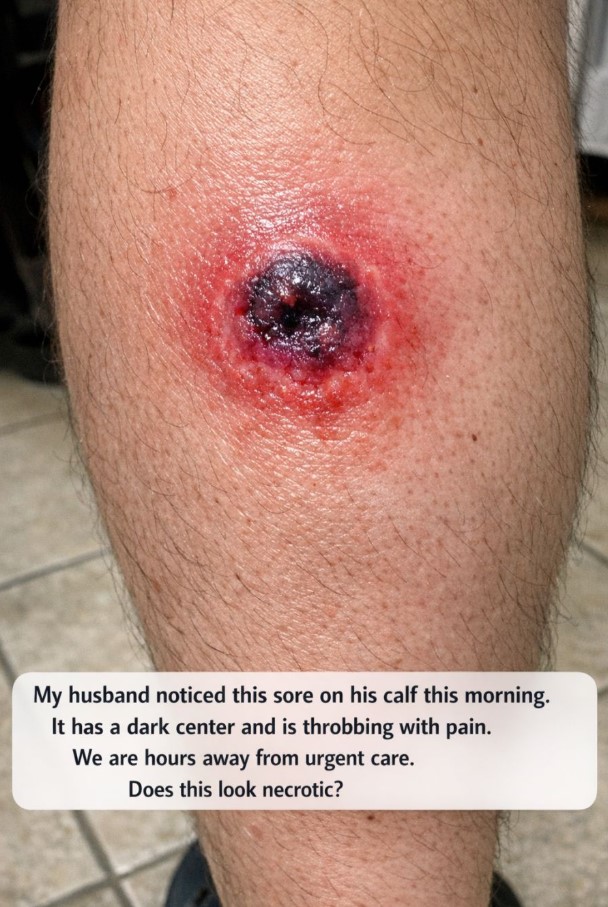
Noticing a painful sore on your husband’s calf — especially one with a dark center — can be alarming, especially when help isn’t immediately available. You’re not alone in feeling worried: sudden sores that hurt, look odd, or aren’t healing as expected can raise red flags for anyone.
When you’re hours away from urgent care and trying to decide what to do next, it helps to understand:
- Why certain sores develop
- What the “dark center” might indicate
- Which symptoms are urgent
- How to care for it safely in the meantime
This guide walks you through common possibilities and practical steps you can take before professional medical evaluation is available.
A Painful Sore with a Dark Center — What Could It Be?
There are a number of conditions that can cause a sore on the skin with pain and a dark or discolored center. None of this replaces a medical diagnosis, but understanding common causes can help you make thoughtful decisions while you’re waiting for care.
1. Infected Skin Lesion (Cellulitis or Abscess)
Sometimes a small cut, bug bite, or unnoticed skin break can become infected. When bacteria enter the skin, the body responds with swelling, redness, pain, and sometimes a collection of pus under the skin.
In these cases:
- The center may look darker because of localized inflammation or trapped material
- The area around it may feel warm and tender
- Pain may be throbbing rather than sharp
This doesn’t always mean the tissue is dying — it can simply mean the body is fighting an infection. Still, infections can spread if not treated.
2. Pressure-Related Sore or Ulcer
If the sore developed in an area that rubs against clothing or is under tension from muscle movement, pressure and repeated irritation over time can contribute to breakdown of the skin. These sores can have a discolored center, especially if healing has stalled.
3. Insect or Spider Bite Reaction
Some insect bites can cause local inflammation that looks unusual:
- A dark center can form if the bite causes localized irritation or tiny bleeding under the skin
- Pain and throbbing can occur as part of the body’s reaction
Most insect bite reactions are not dangerous, but they should improve over a couple of days rather than worsen.
4. Bruise or Blood Vessel Injury
Some bruises can look dark in the middle, especially after small impacts you didn’t notice at the time. Bruises usually aren’t painful in a throbbing way unless there’s muscle involvement beneath the skin or a small hematoma (blood pooled under the skin).
5. Early Sign of a More Serious Skin Condition
Less commonly, certain vascular or skin tissue problems (like early tissue damage or vascular issues) can cause symptoms that look concerning. These are less common, but part of why any sore that appears unusual and painful deserves a prompt evaluation by a clinician.
What “Dark Center” Might Mean
When people describe a “dark center,” it often means one of several things:
- Scab formation: a healing crust forming over the sore
- Localized blood pooling: tiny bleeding under the surface that looks darker
- Inflammation: center of the sore looks deeper red to brown
- Trapped fluid or pus: in a small abscess
While necrosis (tissue death) can sometimes cause dark patches, it is not the most common explanation — especially in otherwise healthy people. True necrosis typically involves additional warning signs, which we’ll cover next.
Symptoms That Suggest a Need for Immediate Medical Care
Since you’re trying to decide what to do while you’re hours from urgent care, keep an eye out for these urgent warning signs, which mean you should seek care sooner if possible:
Symptoms to Watch For
- Rapid expansion of redness or swelling
- Severe, increasing pain that doesn’t improve with rest
- Fever or chills
- Red streaks spreading away from the sore
- Numbness or loss of sensation around the area
- Foul odor or discharge
- Skin that feels cold, numb, or unusually firm
- The sore becomes deeper, larger, or doesn’t show any improvement after a day
If any of these occur, try to call your doctor or a nurse hotline and describe what you’re seeing. They may advise you to seek emergency care even if you’re far from urgent care hours.
What You Can Do Safely at Home for Now
While waiting for medical care, here are safe steps you can take to support comfort and reduce irritation:
1. Keep it Clean
- Gently wash the area with mild soap and clean water
- Pat dry — do not scrub
2. Avoid Heat or Harsh Lotions
- Don’t apply heat packs or harsh antiseptic creams unless advised
- Avoid ointments with strong chemicals that can irritate sensitive skin
3. Light Cover if Needed
- A clean, dry bandage can protect the area from rubbing against clothing
- Change it daily or if it becomes wet or dirty
4. Pain Relief
- Over-the-counter pain relievers (like acetaminophen) may help if safe for him
- Always follow dosing instructions and consider existing medical conditions
5. Elevate the Leg When Possible
If the sore is on the calf and swelling is present, elevating the leg can help reduce discomfort.
What Not to Do
Here are actions that could make things worse:
❌ Don’t squeeze or pick at the sore
❌ Don’t apply unverified home remedies (like random alcohol, fire, or harsh chemicals)
❌ Don’t apply heat directly to the sore
❌ Don’t ignore worsening symptoms
These steps can irritate the skin, delay healing, or introduce infection.
Why Seeing a Professional Matters
A clinician can:
- Examine the sore directly and determine whether it’s infected
- Decide if antibiotics or a wound culture is needed
- Recommend proper dressing or topical treatments
- Rule out serious causes like underlying infection or circulation issues
- Provide precise guidance tailored to your husband’s health history
Even if the sore seems common, a professional evaluation ensures nothing serious is overlooked — especially if pain and appearance are worsening.
Final Thoughts:
A painful sore on the calf with a dark center is understandably worrying, but there are many possible explanations — and most are not immediately dangerous if addressed with care. The key is to watch for signs that suggest spreading or deeper infection, keep the area clean and protected, and get it evaluated by a clinician as soon as you can.
You’re doing the right thing by paying attention and planning to seek urgent care. In the meantime, treat it gently, monitor changes, and avoid anything that could make it worse.
Your husband’s health and comfort matter, and with careful follow-up and professional guidance, this sore can be properly diagnosed and managed.