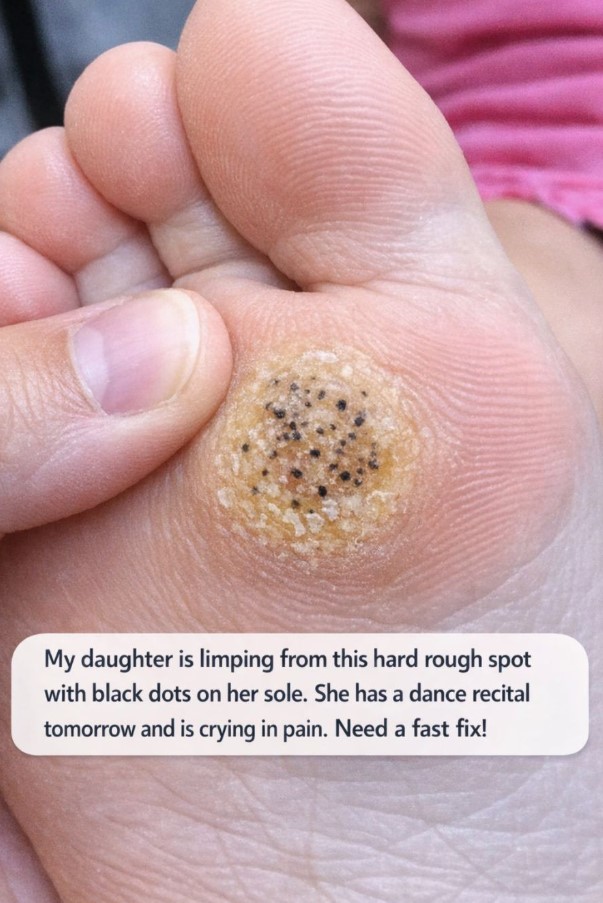
It can be worrying for any parent to notice their child suddenly limping or complaining about pain in their foot. Sometimes the cause is something simple, such as a blister from tight shoes or a small cut that became irritated. However, there are situations where the problem appears as a strange, rough patch on the bottom of the foot with tiny black dots in the center. When this happens, the discomfort can make walking painful and may even cause a child to limp.
Parents often discover this issue at the worst possible time—right before an important event like a sports match, school activity, or dance recital. Naturally, the first reaction is to look for a quick solution that can relieve the pain and help the child move comfortably again. Understanding what this type of skin problem might be and how to manage it can make the situation much less stressful.
In many cases, a hard, rough spot with black dots on the sole of the foot turns out to be a plantar wart. These are quite common among children and teenagers and usually appear in areas that bear the most weight when standing or walking. Because they grow inward due to pressure from the body, they can become painful and create the feeling of stepping on a small stone.
What Are Plantar Warts?
Plantar warts are small skin growths that develop on the bottom of the foot. They are caused by a virus that infects the outer layer of the skin. The virus enters through tiny cuts, cracks, or weak spots on the foot and causes the skin cells to multiply more quickly than normal. This rapid growth forms the rough, hardened area known as a wart.
Unlike many warts that grow outward from the skin, plantar warts are pushed inward by the pressure of walking and standing. This inward growth is what makes them particularly uncomfortable.
Children and teenagers tend to get plantar warts more often than adults. Their immune systems are still developing, and they frequently walk barefoot in places like swimming pools, locker rooms, and gym floors where the virus can easily spread.
Signs and Symptoms
Plantar warts often have a distinctive appearance that helps distinguish them from other foot problems like calluses or corns.
Common signs include:
- A rough or thickened patch of skin on the sole of the foot
- Tiny black dots in the center of the growth
- A hardened surface that may look similar to a callus
- Pain when standing, walking, or pressing on the area
- A feeling similar to stepping on a small pebble
The small black dots that appear inside the wart are actually tiny blood vessels that have become clotted. These dots are one of the clearest signs that the growth is a wart rather than another type of skin condition.
Because plantar warts grow inward, they can create pressure on the surrounding tissue every time a person walks. This pressure is often what causes the pain.
Why Your Child May Be Limping
When a plantar wart develops on a part of the foot that bears weight—such as the heel or the ball of the foot—it can make walking uncomfortable. Each step pushes the wart deeper into the skin, which can irritate the sensitive tissues underneath.
As the body tries to protect the area, a thick layer of hardened skin may form over the wart. While this protective layer is meant to shield the skin, it can also increase pressure and make the pain worse.
For children who are active in sports, dance, or other physical activities, this discomfort can quickly become strong enough to affect how they walk. Limping is often the body’s natural response to avoid placing pressure on the painful spot.
Ways to Reduce Pain Quickly
Although removing a plantar wart completely usually takes time, there are several simple steps that can help relieve pain and make walking easier.
Soaking the Foot
Soaking the foot in warm water for about ten minutes can help soften the thick skin covering the wart. Once the skin becomes softer, gently rubbing the area with a pumice stone or foot file may reduce some of the pressure.
Using Wart Treatments
Many over-the-counter wart treatments contain an ingredient called salicylic acid. These treatments work by slowly breaking down the thickened layers of skin that form the wart.
They are available in liquids, gels, pads, and medicated patches. Consistent use over time can gradually shrink the wart.
Reducing Pressure
If the wart is painful during walking, cushioning the area can help. Special pads designed for foot pressure relief can be placed around the wart so that body weight does not press directly on it.
Comfortable shoes with good support can also make a significant difference.
Keeping the Area Covered
Covering the wart with a bandage or protective pad can reduce irritation and help prevent the virus from spreading to other parts of the foot.
Things to Avoid
When a wart is painful, it may be tempting to try to remove it quickly at home. However, certain actions can make the problem worse or lead to infection.
It is best to avoid:
- Cutting or digging into the wart
- Picking or scratching the area
- Trying to pull the wart out
- Using harsh or unapproved treatments
These methods can damage the surrounding skin and allow the infection to spread.
When Medical Attention May Be Needed
In many cases, plantar warts eventually go away on their own as the body’s immune system fights the virus. However, there are times when professional care is recommended.
Consider seeing a healthcare professional if:
- The wart becomes extremely painful
- It starts bleeding or changing in appearance
- Several warts appear or spread quickly
- Home treatments do not work after several weeks
- The child has a weakened immune system
Medical treatments may include freezing the wart, applying stronger medications, or other procedures designed to remove it safely.
Preventing Future Warts
Because plantar warts are caused by a virus, certain habits can help reduce the chances of getting them again.
Helpful preventive steps include:
- Wearing sandals or flip-flops in public showers and pools
- Keeping feet clean and dry
- Avoiding sharing shoes, socks, or towels
- Covering cuts or scratches on the feet
Teaching children these simple habits can help protect their feet from infection.
Conclusion :
A hard, rough spot with black dots on the sole of the foot is often a plantar wart, a common condition that many children experience. Although it can be painful and may cause limping, it is usually harmless and manageable with proper care.
Simple steps such as soaking the foot, reducing pressure on the area, and using appropriate treatments can help relieve discomfort while the wart gradually improves. If the pain becomes severe or the wart does not respond to home care, medical treatment can provide additional help.
With patience and the right approach, most children recover fully and are soon able to return to their normal activities without pain or discomfort.