Estate sales can feel like treasure hunts for anyone who enjoys antiques, collectibles, or vintage home décor. Every box or shelf might hide something unusual—an item with a story waiting to be discovered. Sometimes those finds are easy to recognize, like classic glassware or decorative bowls. Other times, however, you stumble across an object so strange that you have no idea what it is or how it was used.
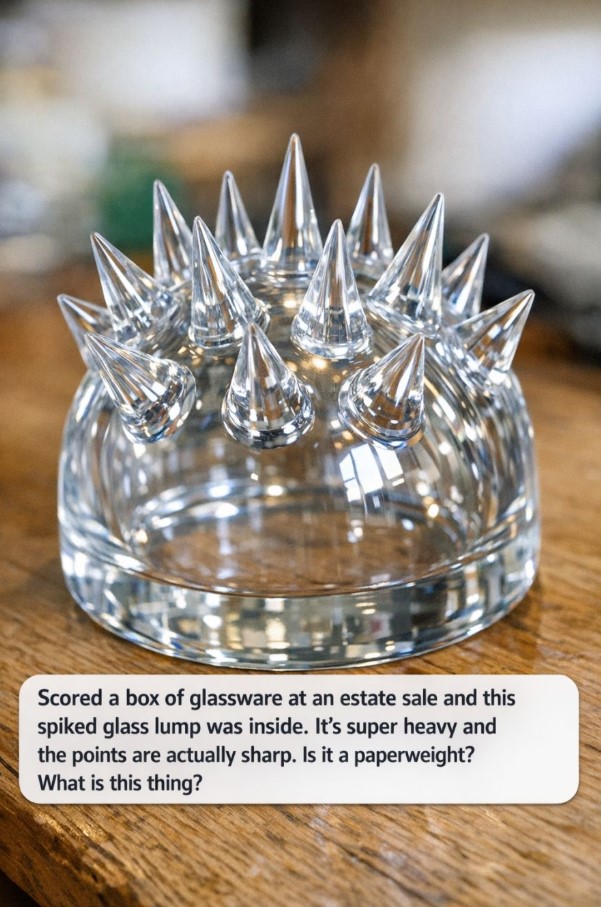
That’s exactly what happened during a recent estate sale visit. Among a box of elegant glassware was a mysterious piece that immediately stood out. It wasn’t shaped like a cup, bowl, or vase. Instead, it looked like a heavy lump of glass covered in small spikes. Even more puzzling, the points were actually sharp.
At first glance it looked decorative, but it was also surprisingly solid and heavy for its size. Was it a sculpture? A tool? Part of something else entirely?
Curiosity quickly took over, and the search for answers began.
The Strange Discovery
The object appeared in a box filled with ordinary items like drinking glasses and small bowls. But one piece looked completely different from the rest.
This mysterious object had several unusual characteristics:
- It was extremely heavy for its size
- The surface had sharp, raised points or spikes
- It looked like a solid piece of molded glass
- It didn’t resemble any common kitchen or household item
Because estate sales often include collectibles, the first thought was that it might be some kind of decorative glass sculpture or antique ornament.
But its unusual shape made identification difficult.
Searching for Clues
When you encounter a strange object like this, the best place to start is by examining the details carefully. Antique collectors often look for specific signs that can reveal where a piece came from.
Experts recommend checking several clues when identifying vintage glass items:
- Weight: Crystal or leaded glass is often heavier than standard glass.
- Marks or signatures: Many manufacturers stamp logos or symbols on the bottom.
- Imperfections or bubbles: Older glass pieces sometimes contain tiny bubbles or irregularities from early production methods.
Looking closely at the object, there didn’t appear to be any obvious manufacturer’s mark. However, the weight suggested it might be made of crystal or art glass, which is typically denser and more reflective than regular glass.
Still, the spiky design remained a mystery.
Possible Explanations
After doing some research and comparing images online, a few possibilities began to emerge.
1. Decorative Art Glass Piece
One of the most likely explanations is that the item is simply a decorative art glass sculpture. Many glass artists create unusual shapes, including spiky or textured designs that catch the light.
Objects like these are often meant purely for decoration and may not have any practical function.
2. Glass Paperweight
Another possibility is that the object is a paperweight. Vintage glass paperweights often feature unique shapes and designs.
Because paperweights need to hold papers in place, they are usually solid and heavy, which matches the description of the mysterious object.
Some collectors even produce novelty paperweights shaped like animals or spiky designs. For example, art-glass paperweights sometimes resemble hedgehogs or porcupines with raised glass points.
3. Hedgehog-Style Crystal Figurine
Some decorative glass pieces are intentionally made with spikes to resemble animals such as hedgehogs or porcupines. These figurines became popular collectibles in the late 20th century.
For example, crystal hedgehog figurines have been produced by several glassmakers and are often sold as collectible decorations.
If the object resembles a round shape with spikes radiating outward, it could easily belong to this category.
Why It Felt So Heavy
One thing that surprised many people who examined the object was how heavy it felt.
This could be explained if the piece was made from lead crystal rather than standard glass. Crystal contains lead oxide, which increases density and gives it a brilliant sparkle when light passes through it.
That added weight and shine are exactly why crystal pieces often feel unusually solid in your hand.
The Final Realization
After comparing photos and consulting collectors online, the most likely conclusion was that the mysterious object was a decorative art glass paperweight, possibly designed to resemble a hedgehog or abstract spiked sculpture.
While it may not have served a practical purpose beyond decoration, pieces like this are quite common in the world of art glass collectibles.
Many collectors enjoy unusual shapes because they stand out on shelves or desks, and the spikes help reflect light in interesting ways.
The Fun of Estate Sale Mysteries
One of the most exciting parts of visiting estate sales is discovering unusual objects like this. Even if you can’t identify them immediately, the process of researching and learning about them can be incredibly rewarding.
Estate sales often contain items that span decades of design trends, including:
- Vintage glass art
- Antique kitchenware
- Collectible figurines
- Handmade decorative objects
Every once in a while, something appears that makes you pause and wonder about its history.
Conclusion :
Finding a mysterious object at an estate sale can be just as exciting as finding something valuable. In this case, the strange spiky glass lump turned out to be most likely a decorative art glass paperweight or figurine, possibly inspired by hedgehog-style designs.
While it may not have been a rare artifact or antique treasure, it still sparked curiosity and led to an interesting investigation.
And that’s part of the charm of estate sales: you never know what strange or fascinating item might be hiding in the next box.
Sometimes the real treasure isn’t just the object itself—it’s the mystery behind it.