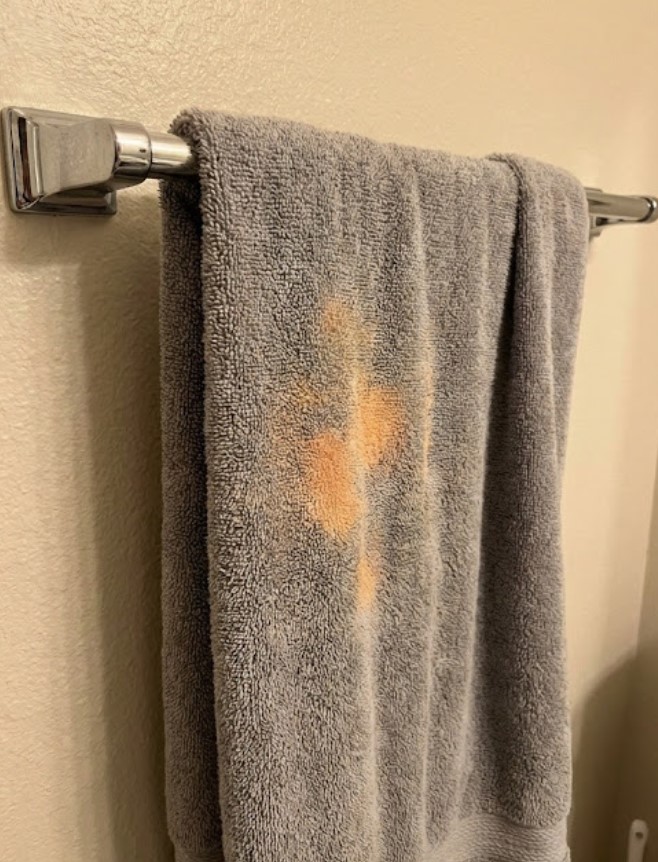
Few things are more frustrating than pulling freshly washed towels from the dryer—only to find strange orange or rust-colored stains that weren’t there before. You might assume it’s dirt, poor washing, or even a faulty detergent. But the truth is far more surprising.
These stubborn orange marks are often not “stains” in the traditional sense. In many cases, they are caused by chemical reactions, minerals in your water, or even everyday products you use without thinking. That’s why no matter how many times you wash your towels, the discoloration doesn’t disappear—and sometimes even gets worse.
Understanding the real cause is the key to solving the problem. In this guide, we’ll explore why these stains appear, why they’re so difficult to remove, and what you can do to prevent them in the future.
🧪 The Hidden Culprit: Benzoyl Peroxide
One of the most common reasons for orange marks on towels is an ingredient found in many acne treatments: benzoyl peroxide.
This ingredient is widely used because it helps fight acne-causing bacteria. However, it has a powerful side effect—it acts like a bleaching agent when it comes into contact with fabric.
Instead of leaving a traditional stain, it removes the dye from the towel, revealing lighter colors underneath. On darker towels, this often appears as bright orange, yellow, or pink patches.
How to Recognize It:
- The marks are lighter than the towel
- They don’t fade after washing
- They appear after using skincare products
Unfortunately, once the color is stripped, it cannot be restored. No detergent or cleaning method will reverse this kind of damage.
💧 Hard Water and Iron Deposits
Another major cause of orange stains is hard water, especially if it contains iron or manganese.
When towels are washed in mineral-rich water, the iron can oxidize—similar to how metal rusts—leaving behind orange or brown stains embedded in the fabric.
Signs of Hard Water Stains:
- Stains appear after washing or drying
- They are darker, not lighter
- You may notice similar residue in sinks or toilets
These stains are difficult to remove because regular detergent does not break down mineral deposits.
🦠 Bacteria and Damp Towels
Bathrooms are naturally humid, and towels often stay damp for long periods. This creates the perfect environment for bacteria to grow.
Certain bacteria—like Serratia marcescens—can produce pink, orange, or rust-colored residue that sticks to fabric fibers.
Why It Happens:
- Towels are left wet or in piles
- Poor airflow prevents proper drying
- Bacteria form a protective layer (biofilm)
Warning Signs:
- Musty smell
- Stains spreading over time
- Discoloration even after washing
Unlike bleaching, these stains can sometimes be removed—but they require stronger cleaning methods.
🌞 Sunscreen and Chemical Reactions
If you’ve noticed stains after a beach or pool day, sunscreen may be responsible.
Some sunscreens contain ingredients that react with minerals in water, creating rust-like orange stains on towels.
Clues:
- Stains appear after sun exposure
- Only certain towels are affected
- Washing doesn’t remove the marks
This is another example of a chemical reaction, not simple dirt.
🧴 Other Contributing Factors
Several additional factors can also lead to orange stains:
✔️ Laundry Products
Some detergents or fabric softeners can react with minerals in hard water, causing discoloration.
✔️ Old Plumbing
Rust from aging pipes can enter your water supply and stain fabrics.
✔️ Cleaning Products
Bathroom cleaners or sprays can accidentally get onto towels and cause color changes.
✔️ Cosmetic Products
Hair dyes, toothpaste, and skincare items can all contribute to unusual discoloration.
❗ Why These Stains Won’t Wash Out
The reason these stains are so stubborn is simple: many of them are not actually stains.
- Benzoyl peroxide: permanently removes color
- Minerals: embed into fabric fibers
- Bacteria: form resistant biofilms
That’s why normal washing methods often fail—and why repeated washing can even make the problem worse.
How to Prevent Orange Stains
Prevention is much easier than trying to fix the problem later.
🧼 Smart Daily Habits:
- Rinse your face thoroughly before using a towel
- Avoid wiping skincare products directly onto fabric
- Use white towels if you regularly use acne treatments
💧 Improve Water Quality:
- Install a water softener or iron filter
- Add vinegar or baking soda occasionally to laundry
🌬️ Keep Towels Dry:
- Hang towels properly after use
- Avoid leaving them in damp piles
- Wash towels regularly
🧴 Be Careful with Products:
- Check labels for benzoyl peroxide
- Rinse off sunscreen before drying
What to Do If Your Towels Are Already Stained
- Bleached spots: Cannot be fixed—repurpose the towel
- Mineral stains: Try vinegar, citric acid, or oxygen bleach
- Bacterial stains: Wash in hot water and dry thoroughly
⚠️ Avoid chlorine bleach on orange stains—it can make some types worse.
Conclusion :
Orange stains on towels might seem like a simple laundry issue, but they’re usually caused by deeper factors like chemical reactions, minerals in your water, or everyday personal care products.
The key to solving the problem is identifying the source. Once you understand whether the issue is bleaching, bacteria, or mineral buildup, you can take the right steps to prevent it from happening again.
With a few small changes—like improving drying habits, checking your products, and managing water quality—you can keep your towels looking clean, fresh, and stain-free for much longer.
In the end, great laundry isn’t just about washing—it’s about understanding the science behind what happens to your fabrics every day