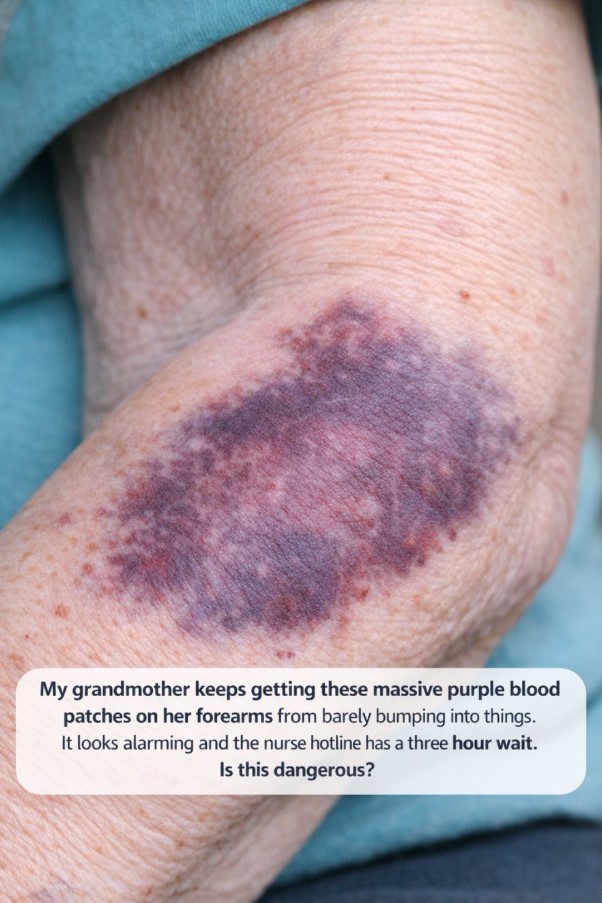
It can be unsettling to see large purple patches suddenly appear on someone’s skin—especially when they seem to form after the slightest bump or even without a clear cause. Many people worry that this could be a serious health issue, particularly when it happens to older adults.
However, in many cases, these marks are a common and generally harmless condition linked to aging skin. While they may look dramatic, they often result from natural changes in the body rather than something dangerous.
Still, it’s important to understand why these bruises appear, what they mean, and when they might require closer attention. Knowing the difference between normal aging and a potential concern can provide both reassurance and clarity.
What Are These Purple Patches?
These large, dark purple or reddish marks are typically a type of bruising caused by blood leaking under the skin. The medical term for this kind of bruising is often referred to as purpura.
In older adults, a very common form is actinic purpura (also known as senile purpura). This condition occurs when blood vessels become fragile and break easily, even with minor contact or pressure.
These patches often:
- Appear suddenly
- Look dark purple or reddish
- Occur mostly on the forearms and hands
- Take longer to fade than typical bruises
Why Does This Happen More With Age?
1. Thinning Skin
As people age, the skin naturally becomes thinner and loses some of its protective layers. The fat and connective tissues that once cushioned blood vessels gradually decrease.
This means that even small bumps—like brushing against furniture—can cause tiny blood vessels to break.
2. Fragile Blood Vessels
Over time, blood vessels lose strength and elasticity. This makes them more likely to rupture under minimal pressure.
Once a vessel breaks, blood leaks into the surrounding tissue, creating the visible purple patch.
3. Sun Exposure
Years of sun exposure can weaken the skin and its supporting structures. This damage, often accumulated over decades, contributes to the fragility that leads to easy bruising.
That’s why these patches commonly appear on areas like the forearms, which are frequently exposed to sunlight.
4. Medications
Certain medications can make bruising more likely, including:
- Blood thinners
- Aspirin
- Corticosteroids
These can affect how blood clots or weaken the skin, increasing the chance of visible bruises.
Why Do the Bruises Look So Large?
Unlike regular bruises, these patches can appear bigger and more intense in color. This is because:
- Blood spreads more easily under thinner skin
- The body takes longer to reabsorb the blood
- There is less support around the blood vessels
Even a minor bump can lead to a bruise that looks much more dramatic than expected.
How Long Do They Last?
These types of bruises often take longer to heal than typical ones.
- They may last several days to a few weeks
- The color may change from purple to brown or yellow as they fade
- New patches can appear while older ones are still healing
This overlapping can make it seem like the condition is getting worse, even though it’s part of the same process.
Are They Dangerous?
In most cases, these purple patches are not dangerous and do not indicate a serious medical problem.
However, they can be:
- Visually alarming
- A sign of fragile skin
- A reminder to be cautious with minor injuries
That said, not all bruising should be ignored. It’s important to watch for unusual patterns.
When Should You Be Concerned?
While common age-related bruising is usually harmless, you should seek medical advice if you notice:
- Bruising without any apparent cause
- Very frequent or worsening bruises
- Bruises in unusual areas (like the torso)
- Additional symptoms such as bleeding gums or fatigue
- Sudden changes in how easily bruising occurs
These could indicate other underlying conditions that need evaluation.
Can You Prevent or Reduce These Bruises?
While you can’t completely stop age-related changes, you can take steps to reduce the likelihood and severity of bruising.
Protect the Skin
- Wear long sleeves to shield forearms
- Be mindful of sharp edges and hard surfaces
Use Moisturizers
Keeping skin hydrated can improve its elasticity and resilience.
Review Medications
If bruising is severe, a healthcare provider may review medications that could be contributing.
Gentle Handling
Avoid unnecessary pressure on the skin and handle it with care during daily activities.
Why This Condition Is So Common
Many people are surprised by how frequently this type of bruising occurs in older adults. It’s a natural part of the aging process and affects a large number of individuals.
Because it develops gradually, it often becomes noticeable only after the bruises start appearing more often or more dramatically.
Conclusion :
Large purple “blood patches” on the forearms, especially after minor bumps, are most often a result of fragile skin and blood vessels—a common condition associated with aging.
While these bruises may look alarming, they are usually harmless and part of the body’s natural changes over time. Understanding what causes them can help reduce worry and make it easier to manage them.
At the same time, it’s important to stay aware of any unusual patterns or additional symptoms. When in doubt, seeking professional advice is always a wise choice.
In most cases, though, these marks are simply a reminder of how delicate the skin can become—and how important it is to treat it with care.