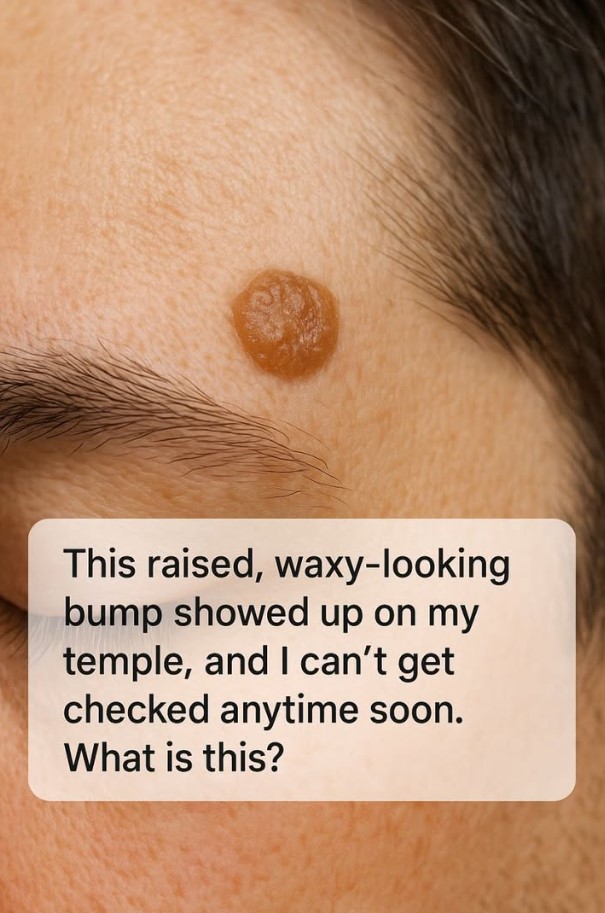
Discovering a new bump on your skin—especially on your face—can be unsettling. When it appears suddenly, has a strange texture, or looks different from anything you’ve seen before, it’s natural to feel concerned. Many people immediately wonder whether it’s something serious, especially if they can’t get it checked right away.
One common description that raises questions is a “raised, waxy-looking bump”, particularly when it shows up on areas like the temple, forehead, or cheeks. While this can sound alarming, the truth is that many skin growths with these characteristics are actually harmless.
In this article, we’ll explore what this type of bump could be, the most likely explanation, other possible causes, and when you should consider seeking medical attention.
The Most Common Cause — Seborrheic Keratosis
One of the most likely explanations for a raised, waxy-looking bump is a condition called seborrheic keratosis.
Seborrheic keratosis is a very common, noncancerous skin growth that often appears as people get older.
What it looks like:
- Slightly raised or flat bump
- Waxy, scaly, or rough texture
- “Stuck-on” appearance (like it’s sitting on top of the skin)
- Colors ranging from tan to brown or black
- Often appears on the face, neck, chest, or back
These growths can start small and gradually become thicker over time. They may also itch or become irritated, but they are typically painless.
Important point:
👉 Seborrheic keratosis is benign (not cancer) and does not spread from person to person.
Why It Appears
The exact cause isn’t fully understood, but several factors are linked to these growths:
- Aging (more common after 40)
- Genetics (often runs in families)
- Sun exposure in some cases
They tend to develop gradually and may appear alone or in clusters.
Other Possible Causes of a Similar Bump
While seborrheic keratosis is the most common explanation, other conditions can look similar:
1. Skin Tags
- Soft, flesh-colored growths
- Usually smaller and less waxy
- Often appear in areas of friction
2. Warts
- Rough, raised bumps
- Caused by a virus
- Usually not waxy in appearance
3. Actinic Keratosis (Sun Damage)
- Rough, scaly patches
- Often from long-term sun exposure
- Considered precancerous, unlike seborrheic keratosis
4. Moles or Other Skin Growths
- Can vary widely in appearance
- Some may need monitoring if they change over time
When You Should Be Careful
Even though many waxy bumps are harmless, you should pay attention to certain warning signs.
Seek medical advice if you notice:
- Rapid growth
- Bleeding or crusting
- Irregular borders or uneven color
- Persistent pain
- A sore that doesn’t heal
Doctors recommend checking any skin growth that changes quickly or looks unusual, as these can sometimes mimic more serious conditions.
Can You Treat It at Home?
For harmless growths like seborrheic keratosis:
- Treatment is usually not necessary
- Many people leave them alone
If removal is desired (for comfort or cosmetic reasons), doctors may use:
- Freezing (cryotherapy)
- Laser treatment
- Minor surgical removal
⚠️ It’s important not to try cutting or removing it yourself, as this can cause infection or scarring.
What If You Can’t See a Doctor Right Away?
If you’re unable to get checked immediately:
- Monitor the bump for changes
- Take a photo to track its size and appearance
- Avoid picking, scratching, or irritating it
Most importantly, stay calm—many of these growths are harmless and slow-growing.
Conclusion :
Finding a raised, waxy bump on your skin can feel alarming at first, especially when you don’t have immediate access to a medical professional. However, in many cases, this type of growth turns out to be something common and non-threatening, such as seborrheic keratosis.
These bumps may look unusual, but they are often simply a natural part of how the skin changes over time. Understanding their appearance and behavior can help ease unnecessary worry while allowing you to stay alert for any changes that might need attention.
The key is balance: don’t panic, but don’t ignore important warning signs either. Keep an eye on the area, take note of any changes, and plan to have it checked when you can.
In the end, your skin is constantly evolving, and not every new mark is a cause for concern—but staying informed is always the best approach to protecting your health.