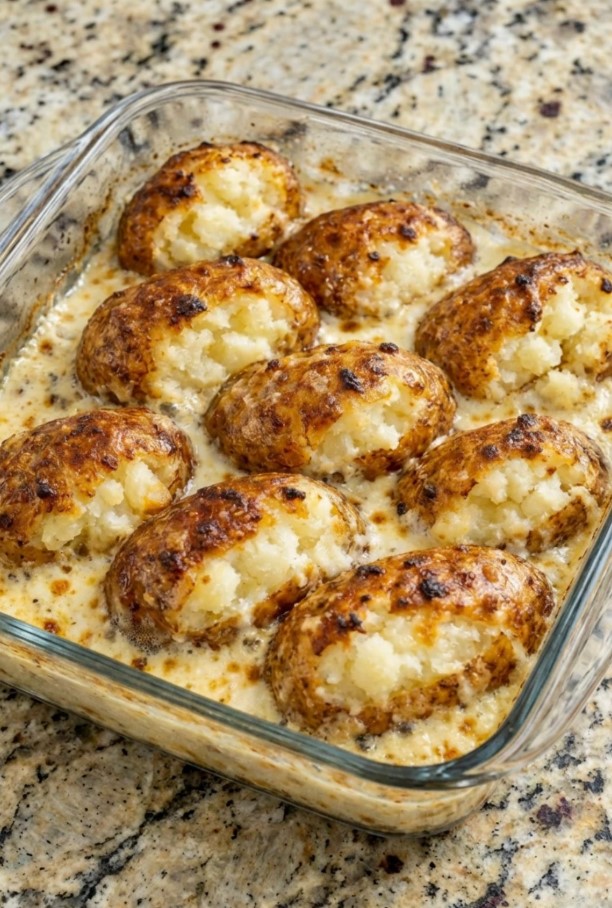
Sometimes, the best recipes are the simplest ones. With just a handful of ingredients and very little effort, you can create a dish that feels warm, comforting, and deeply satisfying. These 3-ingredient buttermilk baked potatoes are a perfect example of how basic ingredients can come together to create something truly delicious.
Potatoes have always been a kitchen staple—affordable, versatile, and naturally filling. When baked, they develop a soft, fluffy interior and a lightly crisp skin. But what takes this recipe to the next level is the addition of buttermilk, which brings a subtle tangy flavor and creamy texture that transforms ordinary baked potatoes into something richer and more indulgent.
This recipe is ideal for busy days, quick side dishes, or even a simple main meal when you want something easy yet satisfying. It’s proof that you don’t need complicated ingredients to create something comforting and memorable.
Ingredients :
One of the best things about this recipe is how minimal it is. You only need three ingredients:
- 4 medium potatoes (russet or any baking potatoes)
- 1 cup buttermilk
- Salt (to taste)
👉 Buttermilk is often used in potato dishes to add creaminess and a slight tang without making them too heavy.
Directions :
Step 1: Preheat the Oven
Preheat your oven to 375–400°F (190–200°C).
Step 2: Prepare the Potatoes
Wash the potatoes thoroughly and scrub off any dirt. Pat them dry.
Use a fork to pierce each potato several times—this allows steam to escape during baking and prevents them from bursting.
Step 3: Bake the Potatoes
Place the potatoes directly on the oven rack or on a baking tray.
Bake for 45–60 minutes, or until they are tender when pierced with a fork.
Step 4: Slice and Soften
Remove the potatoes from the oven and let them cool slightly.
Cut each potato open and gently fluff the inside with a fork.
Step 5: Add Buttermilk
Pour a generous amount of buttermilk over each potato.
The heat from the potatoes will absorb the liquid, creating a creamy, soft texture.
Step 6: Season and Serve
Sprinkle with salt to taste and serve immediately while warm.
Why This Recipe Works
This simple recipe works because of the natural qualities of its ingredients:
- Potatoes become soft and fluffy when baked
- Buttermilk adds creaminess and a slight tang
- Salt enhances the overall flavor
The combination creates a dish that is both light and satisfying, without needing butter, cream, or cheese.
Tips for the Best Results
- Choose starchy potatoes like russets for a fluffier texture
- Serve immediately for the best taste and consistency
- Add buttermilk gradually to control creaminess
- Don’t skip piercing the potatoes before baking
Optional Variations
Even though it’s a 3-ingredient recipe, you can easily customize it:
- Add black pepper or garlic powder
- Top with chives or green onions
- Mix in a little butter or cheese for extra richness
- Add cooked bacon for a heartier version
Serving Ideas
These buttermilk baked potatoes pair well with:
- Grilled chicken or steak
- Roasted vegetables
- Simple salads
They can also be enjoyed on their own as a light, comforting meal.
Conclusion :
The beauty of these 3-ingredient buttermilk baked potatoes lies in their simplicity. With just a few everyday ingredients, you can create a dish that feels warm, creamy, and satisfying without requiring complicated steps or expensive items.
This recipe is a reminder that cooking doesn’t have to be complicated to be delicious. Sometimes, the most comforting meals come from the simplest combinations—ingredients that work together naturally to create something greater than the sum of their parts.
The soft, fluffy potatoes combined with the tangy richness of buttermilk create a balance that is both light and indulgent at the same time. It’s a dish that feels wholesome, easy to prepare, and perfect for any occasion.
Whether you’re cooking for yourself, your family, or just looking for a quick and comforting side dish, this recipe is one you’ll come back to again and again.
Once you try it, you’ll see how something so simple can be so satisfying—and sometimes, that’s exactly what great cooking is all about.