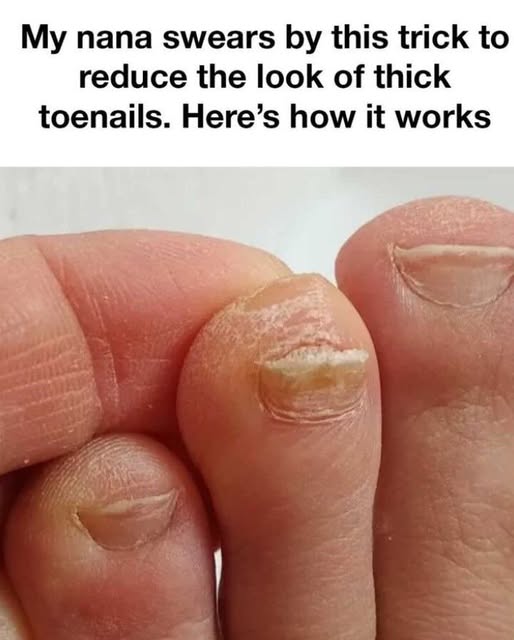
Thick toenails are more common than many people realize, yet they’re rarely talked about openly. Whether caused by aging, fungal issues, or repeated pressure from shoes, thickened nails can become uncomfortable, difficult to trim, and even embarrassing—especially during warmer months when open shoes are the norm.
For some, this issue develops gradually over time, making it easy to ignore until it becomes harder to manage. Others may notice sudden changes in nail texture or appearance and feel unsure about what to do next.
While medical treatments are available, many people turn to simple, at-home routines to help manage the appearance of thick toenails. These methods don’t promise overnight results, but with consistency, they can help soften, smooth, and improve nail health.
In this article, we’ll explore a natural, easy-to-follow routine inspired by traditional home care methods, along with practical tips to keep your toenails healthy and manageable.
What Causes Thick Toenails?
Before trying any remedy, it’s important to understand why toenails become thick in the first place. Several factors can contribute to this condition:
- Fungal infections: One of the most common causes
- Aging: Nails tend to thicken as circulation slows
- Injury or repeated pressure: Tight shoes or trauma can affect nail growth
- Skin conditions: Such as psoriasis
- Poor circulation: Reduced blood flow affects nail health
These factors can lead to nails becoming harder, more brittle, and difficult to trim.
The Simple Home Routine
This traditional method focuses on softening, cleaning, and gradually thinning the nails using common household ingredients.
What You’ll Need
- Warm water
- White vinegar
- Baking soda
- A basin or bowl
- A soft nail brush
- A nail file or pumice stone
- Moisturizing oil or lotion
Step-by-Step Guide :
1. Soak Your Feet
Fill a basin with warm (not hot) water and add about half a cup of white vinegar. Soak your feet for 15–20 minutes.
This helps soften the nails and may reduce bacteria or mild fungal growth.
2. Gently Clean the Nails
After soaking, use a soft brush to clean around the nails and remove any debris. Be gentle—this step is about loosening buildup, not scrubbing aggressively.
3. Apply a Baking Soda Paste
Mix baking soda with a small amount of water to form a paste. Apply it to your toenails and let it sit for about 10 minutes.
Baking soda acts as a mild exfoliant and can help soften thickened layers.
4. Rinse and Dry Thoroughly
Rinse your feet with clean water and dry them completely, especially between the toes. Moisture left behind can encourage fungal growth.
5. File the Nails Carefully
Using a nail file or pumice stone, gently file the surface of the nail. This helps reduce thickness gradually.
Important: Avoid over-filing, as this can damage the nail.
6. Moisturize
Finish by applying a moisturizing lotion or oil to your nails and surrounding skin. Hydration helps keep nails flexible and less prone to cracking.
Why This Routine Works
This method is effective because it combines several helpful actions:
- Soaking softens the nail, making it easier to manage
- Vinegar has mild antimicrobial properties
- Baking soda gently exfoliates and balances pH
- Filing reduces thickness gradually
- Moisturizing prevents dryness and cracking
Together, these steps create a simple yet effective routine for improving nail appearance over time.
Tips for Better Results
- Be consistent—repeat the routine 2–3 times per week
- Use clean tools to avoid infection
- Trim nails straight across to prevent ingrown nails
- Wear breathable shoes to reduce moisture buildup
- Keep feet clean and dry daily
Consistency is key—this is not a one-time fix but a gradual improvement process.
Common Mistakes to Avoid
- Over-filing the nail: Can cause damage or sensitivity
- Skipping drying: Moisture encourages fungal growth
- Using very hot water: Can irritate the skin
- Expecting instant results: Improvement takes time
Avoiding these mistakes will help protect your nails while improving their condition.
When to Seek Medical Help
While home routines can help with mild cases, some situations require professional care.
You should consult a doctor if you notice:
- Severe thickening or discoloration
- Pain or discomfort when walking
- Crumbling or brittle nails
- No improvement after several weeks
- Signs of infection
In such cases, prescription treatments or specialized care may be needed.
Long-Term Nail Care Habits
Healthy toenails require ongoing care. Here are a few habits to maintain:
- Wash and dry your feet daily
- Change socks regularly
- Avoid tight-fitting shoes
- Keep nails trimmed and clean
- Stay physically active to support circulation
These small habits can make a big difference over time.
Are Natural Remedies Enough?
Natural methods like this one can be helpful for managing mild thickening and improving appearance, but they are not a cure for underlying medical conditions.
If thick toenails are caused by a fungal infection or another health issue, additional treatment may be necessary.
The goal of this routine is to support overall nail health—not replace medical care when needed.
Conclusion :
Thick toenails can be frustrating, but they don’t have to be permanent or unmanageable. With a simple, consistent routine using everyday ingredients, you can gradually improve their appearance and make them easier to care for.
This natural approach focuses on softening, cleaning, and maintaining the nails in a gentle and practical way. While it may take time, the results can be noticeable with regular care and attention.
Most importantly, understanding the cause of the problem and taking the right steps—whether at home or with professional guidance—can help you feel more confident and comfortable.
Sometimes, the simplest routines are the most effective—and a little care can go a long way toward healthier, happier feet.