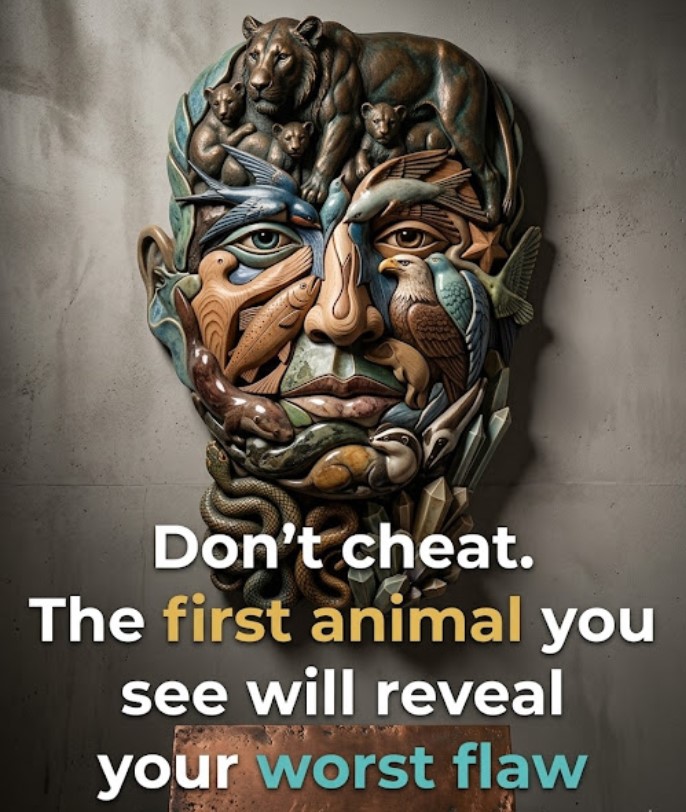
Have you ever looked at an image and instantly noticed one thing before anything else? That first impression—what your eyes are naturally drawn to—might feel random, but many believe it can reveal something deeper about your personality.
This idea is at the heart of popular “first animal you see” tests. These visual puzzles combine multiple hidden images, and the animal you notice first is said to reflect your inner traits, thinking style, or emotional tendencies.
While these tests are often shared for fun, they tap into something real: the way our brains process information. The first thing we notice in a complex image is influenced by our experiences, focus, and subconscious patterns.
So what does the first animal you see actually say about you? Let’s explore the common interpretations and what they might mean.
How This Type of Test Works
When you look at an optical illusion, your brain doesn’t process everything equally. Instead, it quickly selects what feels most familiar or important.
This happens because:
- Your brain relies on past experiences
- It fills in gaps automatically
- It prioritizes certain shapes or patterns
That’s why two people can look at the same image and see completely different things first.
These tests suggest that your first perception may reflect your personality traits—but it’s important to remember they are more about self-reflection than scientific diagnosis.
What Different Animals May Reveal
Lion – The Natural Leader
If you saw a lion first, it often represents leadership, confidence, and determination.
You may be someone who:
- Takes initiative
- Enjoys challenges
- Naturally steps into leadership roles
People like this are often ambitious and driven, though they may sometimes come across as intense or dominant.
Bear – The Calm Thinker
Seeing a bear first is usually linked to logic, stability, and a grounded personality.
You might be:
- Thoughtful and observant
- Reliable and disciplined
- Someone who prefers calm environments
This type of person values structure and tends to think carefully before making decisions.
Giraffe – The Social Spirit
If a giraffe stood out to you first, it often reflects a friendly and adaptable nature.
You may be:
- Outgoing and easy to talk to
- Flexible and open-minded
- Someone who enjoys connecting with others
People like this often bring positive energy into social situations.
Owl – The Deep Thinker
Spotting an owl first is often associated with intelligence and introspection.
This may mean you are:
- Analytical and detail-oriented
- Comfortable being alone
- Focused on understanding things deeply
You likely prefer meaningful conversations over small talk.
Horse (Stallion) – The Free Spirit
If you saw a horse first, it often represents independence and ambition.
You may be someone who:
- Values freedom
- Follows your own path
- Has strong inner drive
This personality is often energetic and determined, with a desire to achieve goals.
Frog – The Straightforward Personality
Seeing a frog first is often linked to honesty and directness.
You might be:
- Clear in communication
- Practical and realistic
- Someone who values simplicity
You tend to say what you mean and prefer honesty over complexity.
Why People Love These Tests
There’s a reason these personality tests spread so quickly online:
- They are quick and easy
- They feel personal and engaging
- They spark curiosity about ourselves
- They encourage reflection
Even if they’re not scientifically precise, they can still be fun and surprisingly relatable.
The Reality Behind the Results
It’s important to understand that these tests are not scientifically proven personality assessments.
Experts point out that:
- They are based on general interpretations
- Results can apply to many people
- They are influenced by perception and bias
In fact, what you see first may say more about how your brain processes images than about fixed personality traits.
That doesn’t make them useless—it just means they should be taken lightly.
Conclusion :
The idea that the first animal you see can reveal your personality is both fascinating and entertaining. It taps into our natural curiosity about ourselves and offers a quick, playful way to reflect on who we are. While the results may not be scientifically exact, they often highlight traits that feel familiar, which is part of their appeal.
What makes these tests interesting is not necessarily their accuracy, but the way they encourage self-awareness. When you read a description and find parts of it relatable, it can prompt you to think more deeply about your habits, preferences, and behaviors. In that sense, the value comes from reflection rather than the test itself.
It’s also a reminder of how complex the human mind is. The way we interpret images, notice details, and focus our attention is shaped by our experiences, memories, and emotions. Two people can look at the same picture and see completely different things—and that difference alone says something meaningful about how we each perceive the world.
At the same time, it’s important not to take these results too seriously. Personality is not defined by a single glance or a quick test. It’s shaped by a wide range of factors, including environment, experiences, and personal growth over time.
In the end, these visual personality tests are best enjoyed for what they are: a fun and engaging way to explore yourself. Whether the result feels accurate or not, it offers a moment of curiosity and reflection—and sometimes, that’s more valuable than a perfect answer.