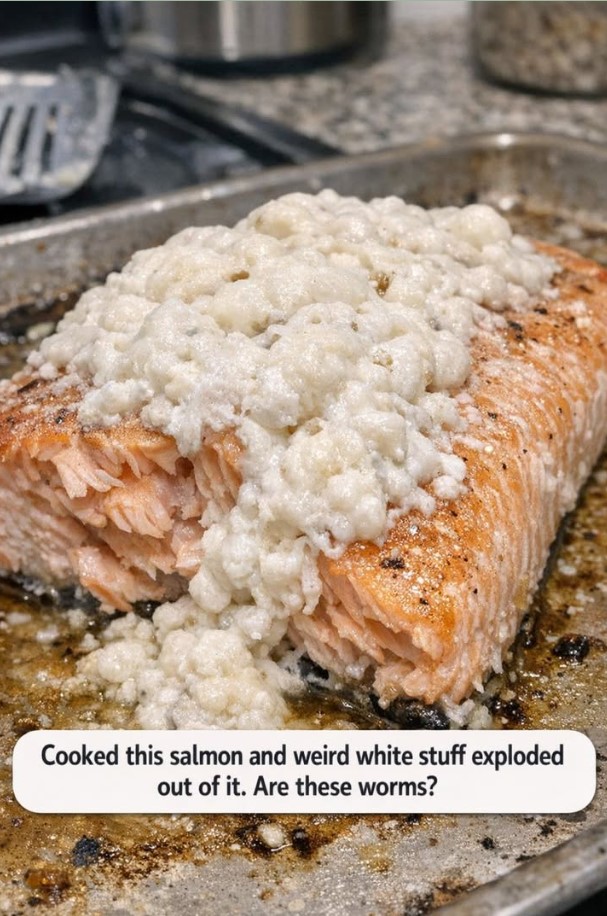
Cooking salmon at home is usually a simple and rewarding experience—until something unexpected happens. Many people have had the same surprising moment: you place a beautiful piece of salmon in the oven or pan, and as it cooks, a strange white substance begins to appear on the surface.
At first glance, it can look alarming. Some even worry that it might be worms or something unsafe. But before you panic, there’s reassuring news—this is actually a completely normal and harmless part of cooking salmon.
Understanding what this white substance is, why it appears, and how to reduce it can help you cook salmon with confidence and enjoy it without concern.
What Is the White Stuff?
The white substance that appears on cooked salmon is called albumin.
Albumin is a type of protein naturally found in fish. When salmon is raw, this protein is in liquid form inside the muscle fibers. As the fish cooks, heat causes the protein to solidify and push its way to the surface.
The result is that white, slightly foamy-looking material you see on top of the fish.
The key thing to remember: it is completely safe to eat.
Why Does It Happen?
Albumin appears during cooking due to:
- Heat forcing moisture out of the fish
- Proteins coagulating and rising to the surface
- Cooking at higher temperatures
The faster and hotter the salmon cooks, the more noticeable the albumin becomes.
Is It Safe to Eat?
Yes—absolutely.
The white substance is:
- A natural protein
- Not harmful
- Not a sign of spoilage
- Not worms or parasites
Even though it may not look appealing, it does not affect the safety of the fish.
How to Reduce the White Stuff
While harmless, many people prefer to minimize its appearance for better presentation.
1. Cook at Lower Temperatures
Cooking salmon gently helps prevent excess albumin.
- Use medium or low heat
- Avoid overcooking
2. Brine the Salmon First
Soaking salmon in a light saltwater solution before cooking can help.
- Mix 1 tablespoon salt with 1 cup water
- Soak for 10–15 minutes
- Pat dry before cooking
This helps keep proteins from being pushed out too quickly.
3. Avoid Overcooking
Overcooked salmon releases more albumin.
- Cook just until the fish flakes easily
- Remove from heat slightly early—it will continue cooking
4. Use Gentle Cooking Methods
Methods like baking, poaching, or steaming reduce protein leakage compared to high-heat searing.
Does It Affect Taste or Texture?
Not significantly.
However:
- It may slightly change the appearance
- It can make the surface look less appealing
- The flavor remains the same
If desired, you can simply wipe it off after cooking.
When Should You Be Concerned?
The white substance itself is normal—but watch for other signs:
- Strong unpleasant smell
- Slimy texture before cooking
- Discoloration
These could indicate spoiled fish, which is unrelated to albumin.
Conclusion :
Seeing a white substance appear on salmon while cooking can be surprising, especially if you’ve never encountered it before. It’s easy to assume something is wrong, but in reality, it’s simply a natural reaction that occurs when the fish is exposed to heat.
Understanding that this substance is just albumin—a harmless protein—can immediately remove any concern. It’s a normal part of the cooking process and does not mean your fish is unsafe or of poor quality. In fact, it happens even with high-quality salmon and experienced cooks.
What this situation really highlights is how small, unfamiliar details in cooking can sometimes seem alarming when we don’t know what to expect. But once you understand the reason behind it, it becomes just another normal part of preparing food.
If appearance matters to you, there are simple ways to reduce the amount of albumin by adjusting your cooking method. Lower temperatures, proper timing, and a quick brine can all make a noticeable difference.
In the end, this is a great reminder that cooking is as much about learning as it is about preparing food. Every new experience helps build confidence in the kitchen. And once you know what that white substance is, you’ll never have to question it again—you can simply enjoy your perfectly cooked salmon with peace of mind.