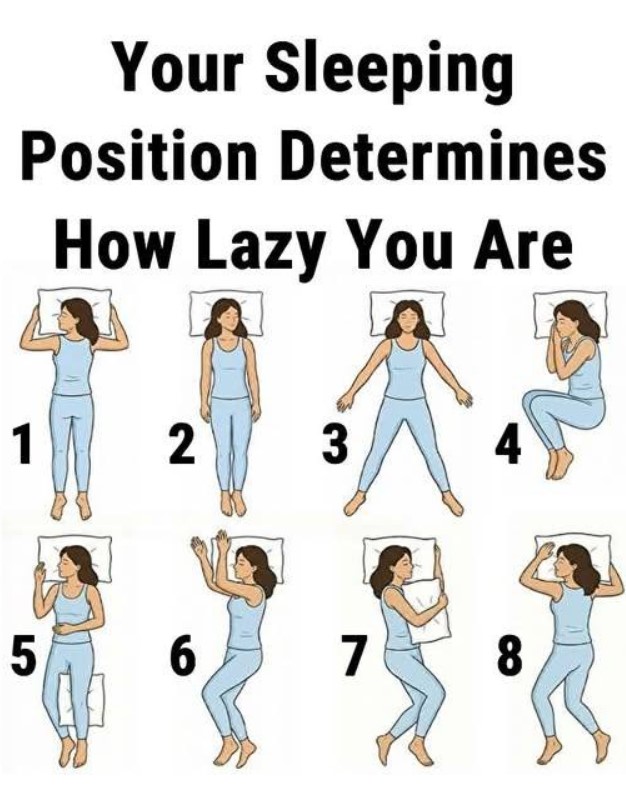
The way you sleep might seem like a simple habit, but many believe it can reveal surprising insights about your personality, emotions, and even your state of mind. Since sleep positions are largely unconscious, they may reflect how you feel deep down—without you even realizing it.
While science mainly focuses on how sleep positions affect physical health, there has also been growing interest in what they might say about personality traits and emotional patterns. Although these interpretations are not exact or proven for everyone, they offer an interesting way to reflect on behavior and habits.
Let’s explore some of the most common sleep positions and what they might reveal about you.
The Most Common Sleep Positions
Research shows that most people tend to favor a few main positions:
- Side sleeping (including fetal position) – the most common
- Back sleeping (lying flat)
- Stomach sleeping (face down)
Each of these positions has been linked—loosely—to certain personality traits and emotional tendencies.
1. The Fetal Position – Seeking Comfort and Security
This is one of the most popular positions, where you curl up on your side.
What it may suggest:
- Sensitive and emotional
- Seeks comfort and protection
- May appear strong but is soft inside
Some experts believe this position reflects a desire for safety or emotional reassurance.
2. Sleeping on Your Side – Balanced and Easygoing
Side sleeping (without curling tightly) is often considered the most natural and comfortable position.
What it may suggest:
- Calm and balanced personality
- Flexible and adaptable
- Social but not overly expressive
This position is seen as a middle ground—neither too guarded nor too exposed.
3. Sleeping on Your Back – Confident and Open
Lying flat on your back with arms at your sides or slightly spread.
What it may suggest:
- Confidence and self-assurance
- Openness and honesty
- Calm and secure mindset
Some interpretations suggest this position reflects comfort with yourself and your surroundings.
4. Sleeping on Your Stomach – Private and Reserved
This position involves lying face down, often with arms near the pillow.
What it may suggest:
- More private or guarded personality
- Strong exterior but sensitive to criticism
- Prefers control and stability
It’s sometimes described as a “protective” position, both physically and emotionally.
5. Switching Positions Frequently – Restless or Overthinking
If you move around a lot during the night, it may reflect what’s happening internally.
What it may suggest:
- Active or busy mind
- Stress or restlessness
- Difficulty relaxing fully
Frequent movement can sometimes be linked to discomfort or mental activity during sleep.
The Science vs. The Theory
It’s important to understand the difference between fact and interpretation.
- Scientifically, sleep positions affect health and comfort
- Personality links are theoretical and not definitive
- Many factors (stress, habits, environment) influence how you sleep
Experts generally agree that while these ideas are interesting, they should be taken as insights—not strict conclusions.
How Sleep Position Affects More Than Personality
Beyond personality, sleep position can influence:
- Breathing and snoring
- Spinal alignment
- Sleep quality
- Comfort and recovery
So even if the personality aspect is uncertain, the physical impact is very real.
Why We Sleep the Way We Do
Your sleep position is shaped by many factors:
- Habit and routine
- Physical comfort
- Stress levels
- Health conditions
Because it’s mostly unconscious, it can sometimes reflect how relaxed—or tense—you feel.
Conclusion :
Your sleep position may seem like a small, everyday detail, but it can offer an interesting window into your habits, comfort levels, and even emotional state. While the idea that it reveals personality isn’t scientifically proven, it still provides a fun and thoughtful way to reflect on how your body behaves when your mind is at rest.
What’s most important is understanding that there is no “perfect” personality type linked to any position. Each posture simply reflects a combination of comfort, habit, and possibly how you feel at a deeper level. Rather than labeling yourself based on how you sleep, it’s more useful to view these interpretations as general patterns rather than fixed truths.
At the same time, your sleep position can tell you something important about your physical well-being. If you frequently wake up uncomfortable, restless, or tired, your sleeping posture might be worth adjusting—not for personality reasons, but for better rest and health.
This topic also highlights how closely the mind and body are connected. Even during sleep, your body may respond to stress, emotions, or comfort in subtle ways. Paying attention to these signals can help you better understand yourself and improve your overall well-being.
In the end, whether you sleep curled up, stretched out, or constantly moving, the goal remains the same: getting restful, quality sleep. And if learning about your sleep position makes you more aware of your habits, then it’s already serving a valuable purpose.