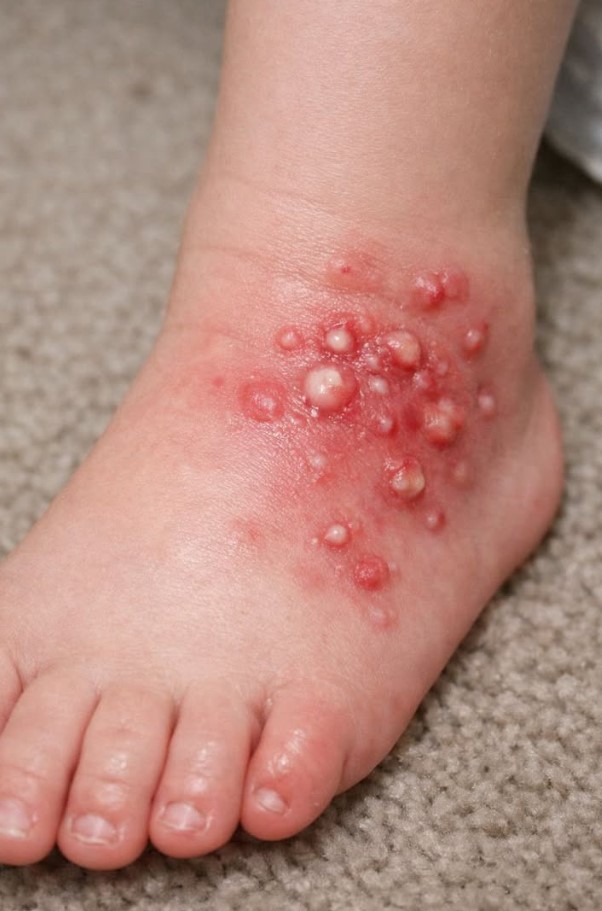
It can be very alarming for any parent to see their child suddenly develop unusual skin reactions after something as simple as playing outside. Grass, soil, and outdoor environments are usually associated with fun and freedom, but sometimes they can also trigger unexpected skin reactions. When a child steps in a patch of grass or soil and soon after develops painful or unusual blisters, it naturally raises concern—especially when the skin changes appear suddenly and seem to worsen quickly.
Skin reactions on the feet, especially blister-like formations, can happen for several reasons. In many cases, they are linked to irritation, allergic reactions, insect bites, or contact with environmental triggers hidden in grass or soil. Because children’s skin is more sensitive than adults’, their reactions can appear more intense and develop faster.
Understanding what might cause these symptoms is important for parents who want to respond calmly and take the right steps. While the appearance of white blisters can look frightening, many of these conditions are treatable and not always dangerous.
Possible Causes of Sudden Foot Blisters After Contact with Grass
1. Contact Dermatitis (Allergic or Irritant Reaction)
One of the most common reasons for sudden skin reactions after touching grass or soil is contact dermatitis. This occurs when the skin reacts to an irritant or allergen.
Grass may contain pollen, chemicals, or tiny natural irritants that can trigger a reaction in sensitive skin. The result can include redness, itching, swelling, and sometimes fluid-filled blisters.
In some cases, the reaction can become more intense if the skin is exposed for longer periods or if the child has a history of allergies or sensitive skin.
2. Dyshidrotic Eczema (Foot Blister Condition)
Another possible cause is a condition called dyshidrotic eczema. This skin disorder often affects the hands and feet and causes small, itchy, fluid-filled blisters that can appear suddenly.
These blisters may look white or cloudy and can sometimes cluster together, making the skin feel irritated or painful. Triggers may include moisture, sweat, stress, or environmental allergens.
While it is not contagious, it can flare up unexpectedly, especially after exposure to heat, grass, or sweating during play.
3. Insect Bites or Hidden Irritants in Grass
Grass and soil can sometimes hide insects, ants, or microscopic organisms that bite or irritate the skin without being noticed at first.
Some insect bites can trigger localized swelling and blister-like reactions, especially in children with sensitive skin. These reactions may appear within minutes or hours after exposure.
Even small bites can cause a strong immune response, leading to itching, redness, and fluid buildup under the skin.
4. Friction and Moisture Irritation
Another simple but often overlooked cause is friction combined with moisture. If a child is running barefoot or wearing shoes that trap heat, the combination of sweat and rubbing can cause skin layers to separate slightly, forming small blisters.
This is especially common during outdoor play when feet are warm, damp, and exposed to rough surfaces.
What White Blisters on the Foot May Indicate
White or cloudy blisters usually mean fluid has collected under the top layer of the skin. This is a natural response when the skin is irritated or damaged.
In many cases, these blisters are part of the body’s healing process. However, they can also indicate:
- An allergic skin reaction
- A mild infection or irritation
- An eczema flare-up
- Physical friction injury
While the appearance may look severe, many of these conditions are temporary and improve with proper care.
What Parents Should Do
If a child develops sudden blisters after playing outside, here are some safe steps to take:
- Gently wash the area with mild soap and cool water
- Avoid popping or scratching the blisters
- Keep the area clean and dry
- Apply a cool compress to reduce discomfort
- Monitor for signs of infection (increasing redness, swelling, or pain)
- Seek medical advice if symptoms worsen or spread
In most mild cases, the skin improves within a few days with basic care.
When to See a Doctor
Medical attention is important if:
- Blisters become large or painful
- There is pus or signs of infection
- The rash spreads quickly
- The child has fever or worsening discomfort
- The cause is unclear and symptoms persist
A healthcare professional can determine whether it is an allergy, eczema, infection, or another skin condition and recommend proper treatment.
Conclusion :
Sudden blister-like reactions on a child’s foot after playing in grass can be worrying, but in many cases, they are caused by common and manageable skin conditions. Whether it is contact dermatitis, dyshidrotic eczema, insect irritation, or simple friction, the skin is often responding naturally to an external trigger.
The important thing is to observe the symptoms carefully and avoid unnecessary panic. Most mild reactions improve with basic care, rest, and protection of the affected area. However, if the symptoms worsen or do not improve, seeking medical advice ensures the child receives the right diagnosis and treatment.
In the end, children’s outdoor play is important for their growth and happiness, and with a little awareness, most minor skin reactions can be managed safely and effectively.