Pickle juice has become one of those unexpected health trends that people either love or question completely. What was once just the leftover liquid in a jar of pickles is now considered by many as a natural remedy, sports recovery drink, and even a hydration aid. Some people swear by it for relieving muscle cramps, while others use it after workouts or even as a quick pick-me-up when feeling tired or dehydrated.
However, despite its growing popularity, most people are not actually drinking pickle juice in the most effective way. Simply pouring it and drinking it without understanding how much, when, or why can reduce its potential benefits—or even cause discomfort for some individuals. That’s why learning the correct way to consume it is important if you want to get the most out of it while avoiding unnecessary side effects.
Pickle juice is essentially a brine made from water, vinegar, salt, and spices. Because of its electrolyte content, especially sodium and potassium, it has gained attention as a natural support for hydration and recovery.
Why People Drink Pickle Juice
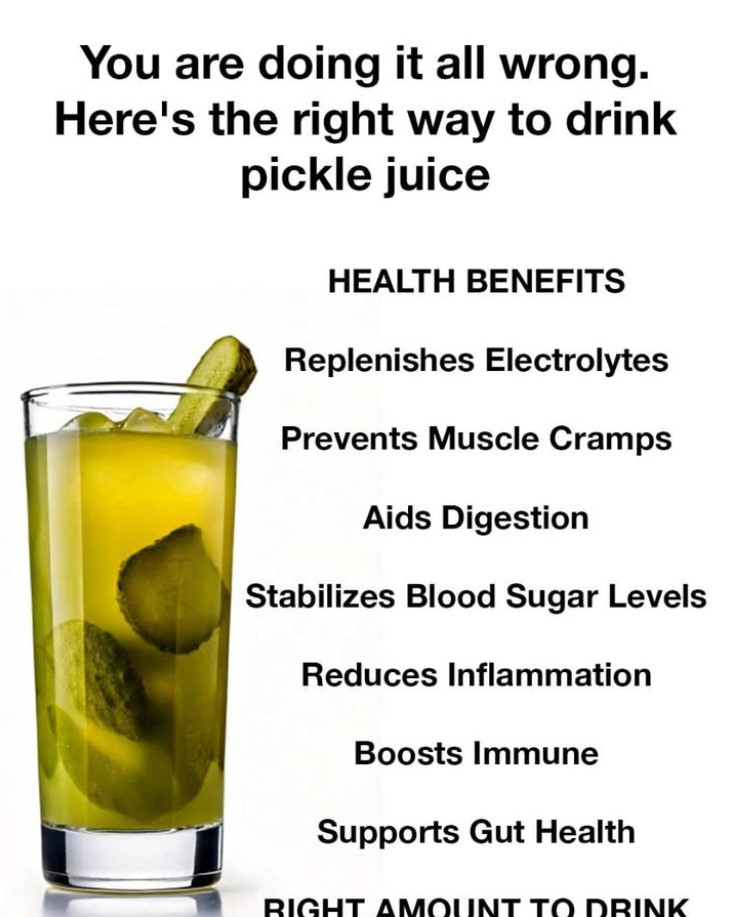
One of the main reasons pickle juice became popular is its potential to help with muscle cramps and recovery. Some studies suggest that small amounts of pickle juice may help relieve cramping faster than water alone, possibly due to how vinegar interacts with nerve signals in the body.
It is also used as a hydration support drink, especially after heavy sweating. Since it contains sodium and other electrolytes, it can help restore balance in the body after exercise.
Other people use it for:
- Post-workout recovery
- Reducing dehydration symptoms
- Supporting electrolyte balance
- Occasional digestive comfort
However, it is important to remember that pickle juice is not a miracle cure—it works best in small, controlled amounts.
The Right Way to Drink Pickle Juice
1. Don’t Drink Too Much at Once
One of the biggest mistakes people make is drinking large amounts in one go. Pickle juice is very high in sodium, and too much can lead to bloating or discomfort. A few small sips (around 1–3 ounces) is usually enough.
2. Use It After Exercise, Not Randomly
The best time to drink pickle juice is after intense physical activity, when your body has lost electrolytes through sweat. This is when it may help most with hydration and muscle recovery.
3. Don’t Replace Water With It
Pickle juice should never replace regular water. It is a supplement, not a primary hydration source. Water is still essential for daily hydration, while pickle juice should only be used occasionally.
4. Choose the Right Type
Not all pickle juice is the same. Some commercial versions are loaded with additives, while naturally fermented brine may offer more beneficial properties like probiotics. Choosing a cleaner version can make a difference.
5. Start Small if You’re New to It
If you’ve never tried it before, start with a small amount. Some people may find the strong salt and vinegar taste intense, and it may not agree with everyone’s stomach.
Important Things to Keep in Mind
Even though pickle juice has benefits, it also has downsides if overused:
- High sodium content may not be suitable for everyone
- Not recommended in large quantities daily
- May not be ideal for people with blood pressure concerns
- Effects are still partly based on limited research
So moderation is key.
Conclusion :
Pickle juice may seem like an unusual health drink, but it has earned its place in conversations about natural recovery and hydration support. When used correctly, it can offer benefits such as helping with muscle cramps, supporting electrolyte balance, and providing a quick post-exercise boost. However, its effectiveness depends heavily on how it is consumed.
The key takeaway is simple: pickle juice should be used in moderation and in the right situations. Drinking too much or using it incorrectly can reduce its benefits and potentially lead to unwanted side effects due to its high sodium content.
When approached properly, this simple kitchen leftover can become a surprisingly useful addition to your wellness routine. It’s not a miracle cure, but when used wisely, it can be a small but helpful tool for recovery and hydration support.