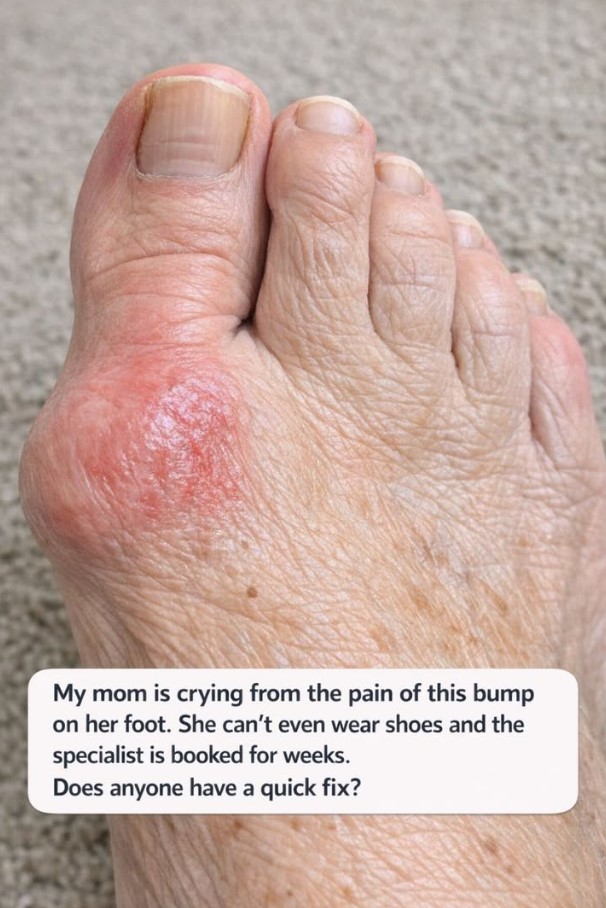
Foot pain can become extremely distressing, especially when it reaches the point where even wearing shoes becomes unbearable. When a bump suddenly appears on the foot and continues to grow or become painful, it can quickly affect daily life, mobility, and comfort. For many people, something that starts as a small irritation can turn into constant pain that limits walking, standing, or even resting comfortably.
A painful bump on the foot can have several possible causes, and while some are harmless, others may require medical attention. The appearance of swelling, redness, or sharp pain—especially when pressure is applied from shoes—often signals that the underlying issue is more than simple irritation. Because the foot carries the body’s full weight, even a small problem can feel much more intense compared to other parts of the body.
Understanding what might be causing this kind of condition is important, especially when access to a specialist is delayed. While only a medical professional can give a proper diagnosis, knowing the common causes can help you take the right next steps and manage symptoms more safely.
Possible Causes of a Painful Bump on the Foot
1. Ganglion Cyst
One of the most common causes of a soft or firm bump on the foot is a ganglion cyst. These are fluid-filled sacs that often form near joints or tendons. They may appear suddenly and can vary in size.
In many cases, ganglion cysts are not dangerous, but they can become painful if they press on nearby nerves or are irritated by footwear. This is why wearing shoes can sometimes make the pain worse or even unbearable.
2. Bone Spurs or Bony Growths
A bone spur is another possible cause, especially when the bump feels hard and deeply rooted. These are extra bone growths that develop over time due to pressure, friction, or joint stress.
When located on the foot, bone spurs can create sharp pain, swelling, and difficulty wearing shoes comfortably. The pain often increases when walking or standing for long periods.
3. Bunion or Joint Deformity
A bunion forms when the bones of the foot shift out of alignment, creating a visible bump near the big toe joint. Over time, the area can become inflamed, swollen, and very painful.
Shoes that are tight or narrow can make the condition worse, increasing discomfort and pressure on the bump. In more advanced cases, even soft footwear may feel painful.
4. Bursitis (Inflammation of Tissue Sacs)
Bursitis occurs when small fluid-filled sacs that cushion the bones become inflamed. This can happen from repeated pressure, walking, or wearing improper footwear.
When this happens in the foot, it can lead to swelling, tenderness, and a noticeable lump that becomes painful when touched or pressed inside shoes.
5. Skin-Related Conditions (Corns, Calluses, or Warts)
Sometimes, a painful bump is not deep inside the foot but rather on the skin surface. Corns and calluses form due to repeated friction and pressure, often from shoes that don’t fit properly.
Plantar warts can also cause hard, painful bumps that feel like pressure points when walking. These may look small at first but can become increasingly uncomfortable over time.
Why the Pain Gets Worse With Shoes
One of the biggest problems with foot bumps is pressure. Shoes can press directly on the affected area, especially if the bump is located on a high-contact point like the heel, side, or top of the foot.
This constant pressure can lead to:
- Increased swelling
- Sharp or burning pain
- Irritation of nerves or tissue
- Difficulty walking normally
That is why many people with foot lumps find relief only when barefoot or wearing very loose footwear.
What Can Be Done at Home (Temporary Relief)
While waiting for a medical appointment, there are a few safe ways to reduce discomfort:
- Wear open or wide shoes to reduce pressure
- Avoid tight footwear completely
- Apply ice packs to reduce swelling
- Rest the foot whenever possible
- Use soft padding around the bump area
- Avoid squeezing or pressing the bump
It is important not to attempt to pop, cut, or drain any bump at home, as this can lead to infection or worsening symptoms.
When to Seek Medical Attention
A foot bump should be evaluated by a doctor, especially if:
- The pain is severe or worsening
- The bump is growing in size
- Walking becomes difficult
- There is redness, warmth, or swelling
- Shoes can no longer be worn comfortably
Even if specialist appointments take time, urgent care or a general doctor can still help manage pain and rule out serious conditions.
Conclusion :
A painful bump on the foot that makes it impossible to wear shoes is not something to ignore. While the cause may range from harmless cysts to bone-related changes or skin conditions, the level of pain and discomfort suggests that the area is under significant pressure or irritation.
The most important step is to avoid worsening the condition by reducing pressure, wearing comfortable footwear, and seeking medical evaluation as soon as possible. Even though specialist appointments may take time, early care from a general doctor can help manage pain and prevent the condition from getting worse.
Ultimately, foot health plays a major role in daily comfort and mobility. Addressing the issue early and understanding the possible causes can make a big difference in recovery and long-term relief.