
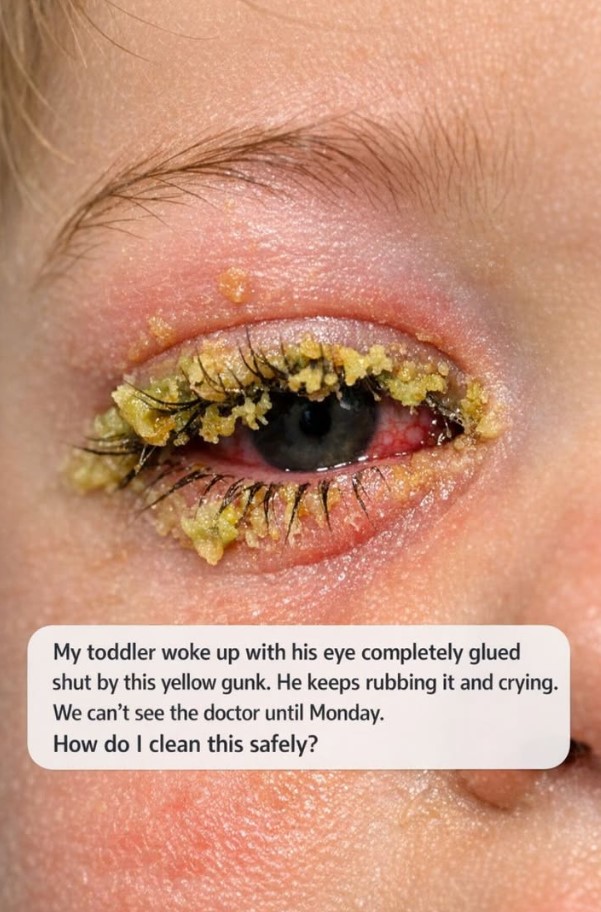
It can be very alarming for any parent to wake up and see their toddler’s eye stuck shut with thick yellow or sticky discharge. At first glance, it may look serious or even painful, especially when the child is crying, rubbing the eye, and unable to open it properly. Situations like this often create panic, particularly when a doctor’s appointment is not immediately available.
However, eye discharge in toddlers is actually quite common and can happen for several different reasons. In many cases, the “yellow gunk” is a natural response from the body trying to clean or protect the eye. The key is understanding what might be causing it and knowing how to clean it safely without making the irritation worse.
Eye discharge can appear during infections, mild inflammation, blocked tear ducts, or even after a common cold. The color and thickness of the discharge often give clues about what is happening inside the eye. While mild cases can often be managed at home temporarily, it’s important to watch for warning signs that may require medical attention.
Why a Toddler’s Eye Gets Stuck Shut
The sticky yellow or crusty discharge that causes the eye to “glue shut” is usually a combination of mucus, tears, oils, and immune cells. The body produces this to trap and remove irritants, bacteria, or debris from the eye.
Because toddlers don’t blink while sleeping, this discharge naturally builds up overnight and can dry along the eyelashes, making the eye difficult to open in the morning.
Common Causes of Yellow Eye Discharge in Toddlers
1. Pink Eye (Conjunctivitis)
One of the most common causes is conjunctivitis, also known as pink eye. This condition can be viral or bacterial and often causes red eyes, swelling, and yellow or green discharge. The eyelids may stick together after sleep due to dried pus or mucus.
Bacterial cases tend to produce thicker yellow discharge, while viral infections may cause watery eyes along with mild mucus buildup.
2. Blocked Tear Duct
A blocked tear duct is very common in young children and can lead to constant tearing and yellowish discharge. When tears cannot drain properly, they collect and mix with bacteria, causing sticky buildup around the eye. This often leads to crusting, especially after sleep.
3. Common Cold or Sinus Infection
When a child has a cold, the infection can affect the eyes as well. Mucus from the nose and sinuses may drain into the eyes, causing irritation and discharge.
This is especially common in toddlers because their immune systems are still developing.
4. Eye Irritation or Mild Infection
Dust, rubbing the eye, or exposure to irritants like shampoo or soap can also trigger the eye to produce extra discharge as a protective response.
How to Clean the Eye Safely at Home
If your child’s eye is stuck shut, the goal is to gently soften and remove the discharge without causing more irritation.
Step-by-step safe cleaning method:
- Wash your hands thoroughly before touching the eye.
- Soak a clean washcloth or cotton pad in warm (not hot) water.
- Hold it gently over the closed eye for a few seconds to soften the crust.
- Slowly wipe from the inner corner of the eye outward.
- Use a clean cloth for each wipe to avoid spreading infection.
- Repeat as needed until the eye can open comfortably.
A warm compress is commonly recommended to help loosen dried discharge safely.
What NOT to Do
- Do not try to force the eye open
- Do not rub aggressively
- Do not use random eye drops without medical advice
- Do not reuse the same cloth for both eyes
Improper cleaning can worsen irritation or spread infection.
When to Be Concerned
While many cases are mild, you should seek medical advice if:
- The eye becomes very red or swollen
- Discharge keeps coming back heavily
- The child has fever or appears very uncomfortable
- Vision seems affected
- Symptoms worsen instead of improving
Some eye infections can require prescription treatment to prevent complications.
Conclusion :
Seeing a toddler wake up with a glued-shut eye covered in yellow discharge can be frightening, but in many cases, it is caused by common and treatable conditions such as conjunctivitis, blocked tear ducts, or mild irritation. While the appearance may look severe, the body is often simply trying to clear out infection or debris naturally.
The most important step is gentle and proper cleaning using warm water and soft cloths to remove the buildup safely. Keeping the eye clean can help the child feel more comfortable while waiting for symptoms to improve or for a medical appointment if needed.
In the end, most mild cases of eye discharge in children resolve with simple care and attention. However, monitoring symptoms closely ensures that any signs of infection are caught early and treated appropriately, keeping your child safe and comfortable.