Finding rough, raised, crusty-looking bumps on your shoulders, chest, back, or neck can be unsettling—especially when they seem to appear suddenly or slowly grow over time. Many people worry these spots are dangerous, contagious, or a sign of something serious.
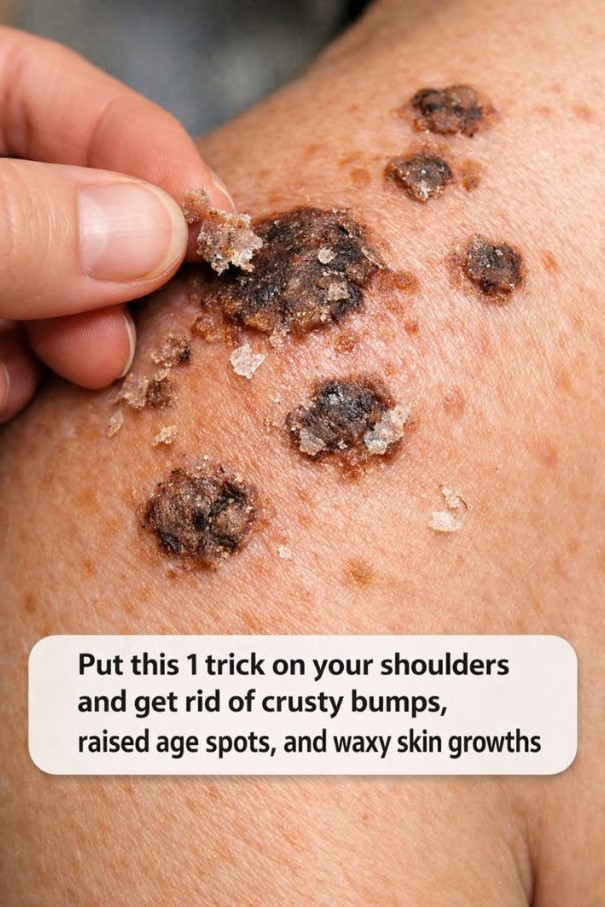
In many cases, these waxy, slightly raised growths turn out to be something called seborrheic keratoses—a very common, noncancerous skin growth that often appears as people get older. They are often described as looking like they were “stuck onto” the skin, with a waxy, scaly, or rough surface. They commonly show up on the face, chest, shoulders, and back.
Because they can look unusual, many people search for quick home fixes. But before trying any “trick,” it’s important to understand what these spots actually are and what should (and should not) be done.
What Are These Waxy Raised Spots?
Seborrheic keratoses are harmless skin growths that are usually:
- Brown, black, or tan
- Slightly raised or flat
- Waxy, rough, or scaly
- Round or oval shaped
- Found on the shoulders, chest, back, face, or neck
Many doctors describe them as having a “pasted-on” or “stuck-on” appearance because they often look like a drop of candle wax sitting on the skin.
They are not contagious and they do not turn into cancer.
Why They Happen
The exact cause isn’t fully known, but they become much more common with age. They are especially common in middle-aged and older adults, and family history may also play a role.
They may also become more noticeable in areas with frequent friction from clothing or repeated sun exposure.
The “Simple Trick” Many People Use: Gentle Moisturizing
While home remedies won’t remove seborrheic keratoses, keeping the skin moisturized can help reduce dryness, irritation, and rough texture.
A gentle option many people use includes:
- Fragrance-free moisturizer
- Petroleum jelly
- Gentle exfoliation with a soft washcloth (not scrubbing hard)
This can help the surrounding skin feel smoother, especially if the area feels dry or itchy.
However, it’s important not to scratch, cut, peel, or try to burn them off at home.
What Not to Do
Avoid:
- Picking or scratching
- Using harsh acids without medical advice
- Trying to cut them off yourself
- Burning or freezing them at home
Even though these spots are usually harmless, self-removal can cause irritation, bleeding, infection, or scarring.
Doctors usually remove them safely using methods like freezing (cryotherapy) or other office treatments if needed.
When to Get It Checked
Even harmless growths should be looked at if they:
- Change quickly
- Bleed often
- Become painful
- Have irregular borders
- Look very dark or unusual
- Suddenly appear in large numbers
Because some skin cancers can look similar, it’s always safest to have suspicious spots checked by a medical professional.
Why People Mistake Them for Age Spots
Flat age spots (sometimes called sun spots) and seborrheic keratoses can look similar, but there’s a key difference:
- Age spots: usually flat
- Seborrheic keratoses: often raised, waxy, and textured
That raised “stuck-on” look is one of the biggest clues.
Conclusion :
Crusty, raised, waxy bumps on the shoulders are often far less alarming than they first appear. In many cases, they are seborrheic keratoses—common, harmless skin growths that become more frequent with age and are not contagious or dangerous.
What matters most is recognizing that not every unusual skin spot needs panic, but it does deserve attention. Gentle skin care and moisturizing can help with comfort, but trying aggressive home removal methods is usually not the best idea.
If a spot changes, bleeds, becomes painful, or simply worries you, professional evaluation is always the safest choice. Peace of mind is often worth more than any quick home trick.
In the end, healthy skin care starts with understanding what you’re seeing—and sometimes the best “trick” is simply knowing when to leave it alone and when to get it checked.