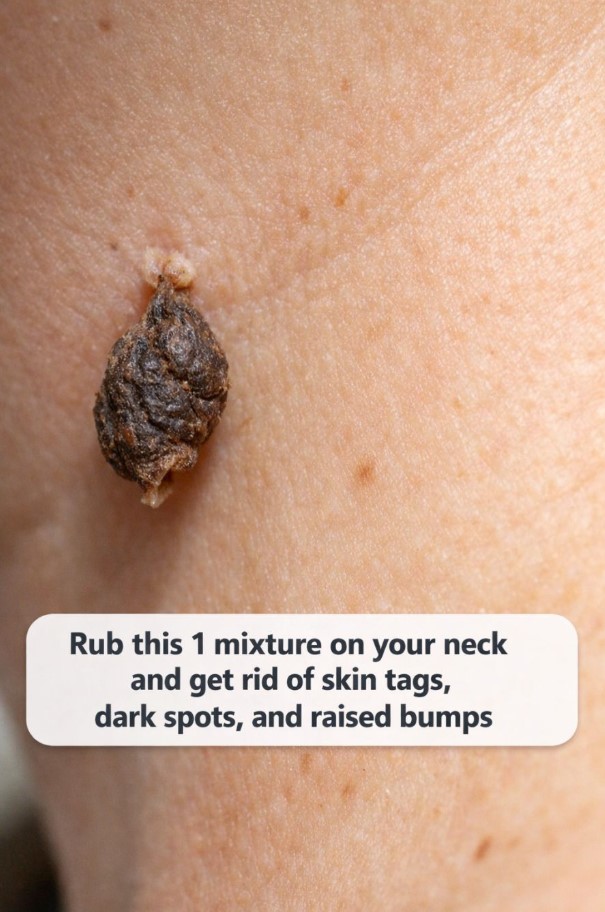
Neck skin often shows changes faster than other areas of the body. Small skin tags, dark patches, rough raised bumps, or uneven texture can appear over time due to friction, sun exposure, irritation, or simple aging. Because these changes are so visible, many people look for easy home remedies that promise quick results.
One popular idea involves gently applying a mixture of carrier oil and diluted tea tree oil, sometimes with small amounts of apple cider vinegar added. Remedy Daily describes this as a common at-home “neck trick” used for skin tags and dark spots.
While simple home care may help improve skin comfort and texture, it’s important to understand what these skin changes actually are—and what realistic results look like.
What Causes Skin Tags, Dark Spots, and Raised Bumps?
These three issues may look similar, but they often come from different causes.
Skin Tags
Skin tags are small, soft, noncancerous growths that commonly appear where skin rubs together—especially on the neck, underarms, and eyelids. They are very common and often harmless.
They may appear more often in:
- Adults over 40
- People with diabetes or metabolic syndrome
- People with extra skin friction
- Those who are overweight
Dark Spots
Dark spots (hyperpigmentation) often develop because of:
- Sun exposure
- Hormonal changes
- Irritation or inflammation
- Friction from collars or jewelry
These areas may look darker, thicker, or rougher than the surrounding skin.
Raised Bumps
Raised bumps may come from:
- Folliculitis
- Acne
- Keratosis pilaris
- Dry skin buildup
- Mild irritation
Not every bump is a skin tag, which is why careful observation matters.
The Common Home Mixture
A widely shared mixture includes:
- 1 tablespoon coconut oil
- 2–3 drops tea tree oil
Some people also add a small amount of diluted apple cider vinegar, though stronger acidic ingredients may irritate sensitive neck skin. Remedy Daily highlights tea tree oil as the main ingredient in this viral method.
Healthline also notes that diluted tea tree oil is commonly used at home for skin tags because it may help dry them over time, but it should never be used undiluted.
How to Apply It Safely
1. Clean the Area
Wash the neck gently with mild cleanser and pat dry.
2. Patch Test First
Before applying widely, test a small amount on a small patch of skin to check for irritation.
This is especially important with tea tree oil.
3. Apply Gently
Massage the diluted oil mixture softly onto the affected area for a few minutes.
Avoid rubbing too aggressively.
4. Watch for Irritation
If you notice:
- Redness
- Burning
- Itching
- Swelling
- Rash
…stop using it immediately.
Healthline warns that stronger ingredients like lemon juice or hydrogen peroxide may irritate the skin and are not proven better for removal.
What NOT to Do
Avoid:
- Cutting off skin tags at home
- Using sharp tools
- Applying harsh chemicals directly
- Scrubbing aggressively
Healthline specifically warns against cutting skin tags yourself because it can lead to bleeding and infection.
When to See a Doctor
It’s important to get medical advice if:
- A growth changes color quickly
- It bleeds often
- It becomes painful
- It grows rapidly
- You’re unsure if it’s actually a skin tag
Some moles or skin conditions can look similar, so proper evaluation matters.
Conclusion :
Simple neck remedies can sometimes help improve skin texture and comfort, but there is no true “magic mixture” that instantly removes skin tags, dark spots, and raised bumps overnight. Most safe home methods work slowly, and results vary depending on what the skin issue actually is.
The most important step is understanding the cause first. A harmless skin tag, sun-related dark spot, and rough skin bump all need different care—even if they look similar at first.
Gentle skincare, patience, and avoiding harsh DIY treatments are usually the safest approach. And when something looks unusual, getting professional advice is always better than guessing.
In the end, healthy skin care is less about miracle tricks and more about safe, consistent habits that protect your skin over time.