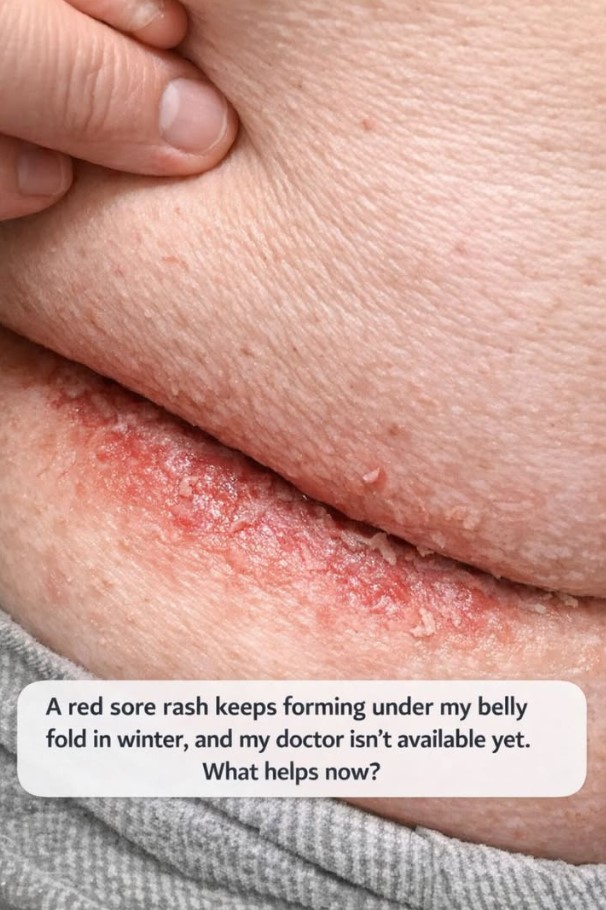
A red, sore rash that keeps appearing under a skin fold—especially around the belly area—can be uncomfortable, itchy, and sometimes even painful. It often becomes more noticeable in winter when skin is drier, clothing is heavier, and moisture can get trapped under warm layers.
This type of irritation is commonly linked to skin fold rash (intertrigo), a condition that develops when skin rubs against skin and stays warm and moist for too long. It is very common and usually not dangerous, but it can become worse if not cared for properly.
Because doctor appointments are not always immediately available, many people look for safe ways to reduce discomfort at home while monitoring the condition.
What This Rash Often Is
In many cases, a red rash under the belly fold is intertrigo, which develops in areas where:
- Skin touches skin
- Moisture gets trapped
- Friction occurs with movement
- Air circulation is limited
According to medical sources, intertrigo often appears in skin folds such as the abdomen, groin, under the breasts, or underarms.
It may look:
- Red or reddish-brown
- Sore or burning
- Itchy or tender
- Sometimes slightly cracked or raw
Why It Gets Worse in Winter
Winter conditions can make this type of rash more likely because:
- Heavier clothing traps heat and moisture
- Skin becomes drier and more sensitive
- Less airflow under layers of clothing
- Sweat can still occur under warm fabrics
Moisture combined with friction creates the perfect environment for irritation.
Common Triggers
Several everyday factors can contribute:
- Tight or synthetic clothing
- Excess sweating
- Not drying skin fully after bathing
- Weight-related skin folds
- Prolonged sitting or inactivity
- Sensitive skin reacting to soaps or detergents
Sometimes yeast or bacteria can also grow in warm, moist areas, making the rash more persistent.
What You Can Do at Home (Safe Relief Steps)
While waiting for medical advice, gentle care can help reduce irritation:
1. Keep the Area Clean and Dry
- Wash gently with mild soap
- Pat dry completely (don’t rub)
- Use a soft towel or even cool air from a fan or hairdryer on low
Dryness is one of the most important steps.
2. Reduce Friction
- Wear loose, breathable clothing
- Choose cotton fabrics when possible
- Avoid tight waistbands pressing on the area
3. Use Barrier Protection
A thin layer of:
- Zinc oxide cream
- Petroleum jelly
can help reduce rubbing and protect the skin from moisture.
4. Let the Skin Breathe
When possible:
- Spend short periods without tight clothing
- Allow airflow to the area
This helps the skin recover faster.
When It Might Be More Than Simple Irritation
You should pay closer attention if you notice:
- Increasing redness or spreading rash
- Strong burning or pain
- Oozing, crusting, or bad odor
- Small bumps or pus
- No improvement after a few days
These signs may suggest infection or yeast involvement, which may require specific treatment.
When to Seek Medical Help
It’s important to get checked if:
- The rash keeps returning
- It becomes painful or inflamed
- You develop fever or worsening symptoms
- Home care does not improve it
A healthcare professional can determine whether antifungal or antibacterial treatment is needed.
Conclusion :
A red rash under the belly fold can be uncomfortable, but it is very common and often linked to moisture, friction, and skin sensitivity—especially during colder months when clothing is heavier and airflow is limited.
In many cases, simple care steps like keeping the area clean and dry, reducing friction, and protecting the skin can help ease symptoms and support healing. However, it’s also important to watch for signs of infection or worsening irritation.
The key is consistency and gentle care. Most of these rashes improve when the skin is given time to breathe and recover.
In the end, while the condition may feel frustrating, it is usually manageable—and understanding what’s causing it is the first step toward relief.