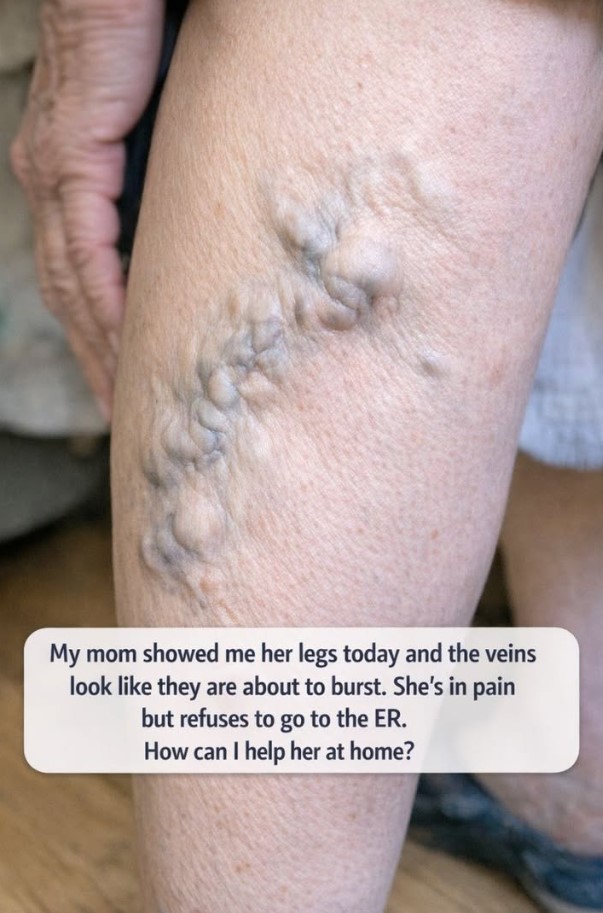
Seeing a loved one in pain is always difficult—but it can feel especially alarming when the symptoms are visible and intense. Bulging, swollen veins in the legs that look like they might “burst” can be frightening, particularly when the person experiencing them refuses to seek medical care.
If your mom—or any older adult—has veins that appear enlarged, twisted, or painful, you’re likely dealing with a condition that is more common than you might think. However, just because it’s common doesn’t mean it should be ignored.
So what’s really going on? Are those veins actually at risk of bursting? And what can you do if someone refuses to go to the emergency room?
Let’s break it down in a clear, practical, and responsible way.
What Those “Bulging Veins” Likely Are
The symptoms described—veins that look swollen, raised, or close to bursting—are most often linked to varicose veins.
Varicose veins are enlarged, twisted veins that usually appear in the legs due to increased pressure and poor blood flow.
They happen when tiny valves inside the veins stop working properly. Instead of pushing blood upward toward the heart, blood starts to pool in the veins. Over time, this pressure causes the veins to stretch, swell, and become very visible under the skin.
That’s why they can look:
- Bulging or rope-like
- Blue or dark purple
- Close to the surface of the skin
In many cases, they’re not dangerous—but they can become painful and uncomfortable, especially after standing or sitting for long periods.
Can Veins Actually “Burst”?
This is one of the most worrying parts—and the answer is:
👉 Yes, but it’s not very common.
A varicose vein can rupture if pressure builds up over time and the skin covering it becomes thin or damaged.
When that happens:
- Bleeding can occur suddenly
- It may look heavier than expected
- It can be alarming, even if the injury is small
That said, most cases do not reach this stage, especially if managed properly.
Why She Might Be in Pain
Varicose veins don’t just affect appearance—they can cause real physical discomfort.
Common symptoms include:
- Aching or throbbing in the legs
- A feeling of heaviness
- Swelling, especially after standing
- Burning or cramping sensations
These symptoms tend to worsen throughout the day, particularly if the person is on their feet a lot.
So if your mom is complaining of pain, it’s a sign that the condition is affecting her daily life—not just her appearance.
When It Becomes Serious
Even though varicose veins are often harmless, certain signs should never be ignored:
- Sudden increase in pain
- Skin changes (darkening, thinning, or sores)
- Swelling that doesn’t go down
- Bleeding from a vein
- Warmth or redness (possible clot or inflammation)
In more advanced cases, untreated varicose veins can lead to complications like ulcers or infections.
If any of these symptoms appear, medical evaluation becomes much more important.
What You Can Do If She Refuses the ER
If she refuses to go to the hospital, you can still take steps to help reduce discomfort and risk.
1. Encourage Leg Elevation
Raising the legs above heart level helps improve blood flow and reduces pressure in the veins.
2. Reduce Long Periods of Standing or Sitting
Encourage her to move regularly. Even short walks can improve circulation.
3. Gentle Movement
Simple activities like walking can help blood flow better and reduce symptoms.
4. Avoid Tight Clothing
Clothes that restrict blood flow (especially around the waist or legs) can worsen the problem.
5. Monitor the Skin
Keep an eye on any changes—especially thinning skin or areas that look fragile.
What to Do If a Vein Starts Bleeding
If the worst happens and a vein does rupture, staying calm is key.
Basic first aid includes:
- Lying down immediately
- Raising the leg
- Applying firm pressure to the area
This usually helps stop the bleeding quickly in most cases.
However, medical attention is still recommended afterward, even if the bleeding stops.
The Bigger Issue: Why She Might Be Refusing Help
It’s also important to understand why she doesn’t want to go to the ER.
Common reasons include:
- Fear of hospitals
- Thinking it’s “not serious”
- Worry about cost
- Not wanting to be a burden
Instead of pushing too hard, try:
- Having a calm conversation
- Suggesting a regular doctor visit instead of ER
- Explaining that treatment can prevent things from getting worse
Sometimes, a less intimidating step—like seeing a general doctor—can make a big difference.
A Safer Long-Term Approach
Even if it’s not an emergency, varicose veins can be managed effectively over time.
Doctors may recommend:
- Compression stockings
- Lifestyle changes
- Minimally invasive procedures (in more severe cases)
The good news is that treatments today are often simple and don’t require major surgery.
Conclusion :
Seeing veins that look like they’re about to burst can be scary—but in most cases, they’re a sign of varicose veins, a common condition caused by pressure and poor circulation in the legs.
While they’re not always dangerous, they can become painful and, in rare cases, lead to complications if ignored. That’s why it’s important to take symptoms seriously—even if your loved one is reluctant to seek help.
If going to the ER feels like too big of a step, start small. Encourage simple changes, monitor symptoms, and gently guide her toward seeing a doctor.
Because when it comes to health, waiting too long is the real risk—not taking action early.