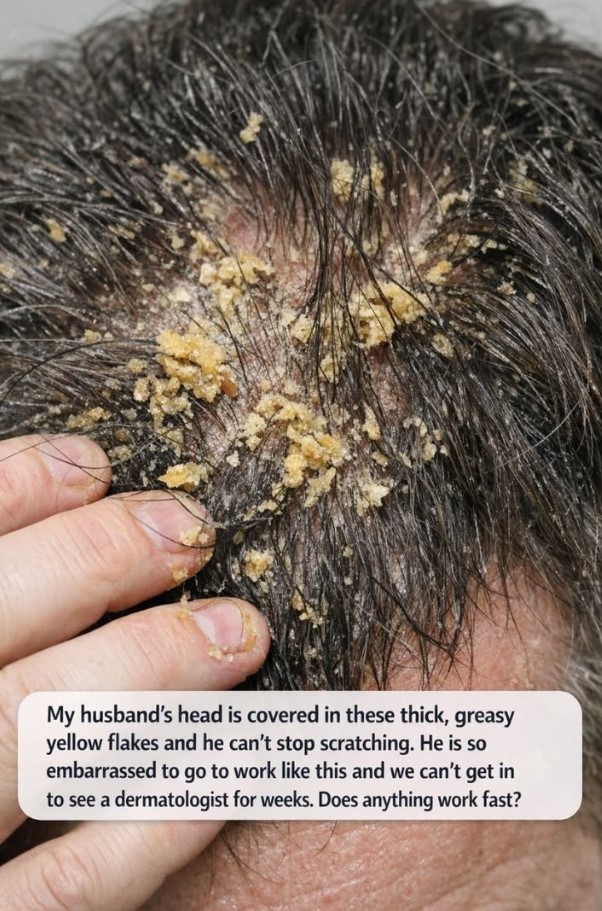
Scalp issues can be uncomfortable, frustrating, and sometimes even embarrassing—especially when they become visible or difficult to manage. One common concern people experience is the appearance of thick, greasy, yellowish flakes on the scalp, often accompanied by itching and irritation.
When symptoms like these show up suddenly or worsen over time, it’s natural to feel worried, particularly if access to a specialist is delayed. While this condition can look alarming, it is often linked to a manageable and fairly common skin issue rather than something dangerous.
Understanding what might be causing these symptoms—and what can be done to ease them—can help reduce discomfort and provide some relief while waiting for professional medical advice.
What Could Cause Thick, Greasy Flakes on the Scalp?
One of the most common causes of greasy, yellow flakes on the scalp is a condition known as seborrheic dermatitis. This is a skin condition that affects areas of the body with a higher concentration of oil-producing glands, such as the scalp, face, and upper chest.
Seborrheic dermatitis is typically associated with:
- Oily or greasy-looking flakes
- Yellow or white scales
- Redness or irritation
- Persistent itching
It is related to a combination of factors, including skin oils and naturally occurring yeast on the skin. While it can be uncomfortable, it is not contagious.
Why Does It Happen?
The exact cause of seborrheic dermatitis is not fully understood, but several factors are believed to contribute:
- Overproduction of skin oil (sebum)
- Sensitivity to yeast that naturally lives on the skin
- Stress or fatigue
- Weather changes, especially cold or dry conditions
These factors can disrupt the balance of the scalp, leading to irritation and flaking.
How It Differs from Dandruff
Although it may look similar to dandruff, seborrheic dermatitis is usually more intense.
Typical dandruff:
- Produces small, dry flakes
- Causes mild itching
Seborrheic dermatitis:
- Produces larger, greasy flakes
- Often includes redness and irritation
- Can spread beyond the scalp
Recognizing the difference can help guide how it’s managed.
What Can Help Provide Relief?
While a proper diagnosis from a healthcare professional is always best, there are some general approaches that may help reduce symptoms in the meantime.
1. Use Medicated Shampoos
Shampoos containing ingredients such as zinc, selenium, or antifungal agents are commonly used to manage scalp conditions.
These can help:
- Reduce flaking
- Control excess oil
- Calm irritation
It’s important to use them regularly and follow the instructions carefully.
2. Wash the Scalp Regularly
Keeping the scalp clean can help remove excess oil and buildup.
However:
- Avoid overly harsh products
- Don’t scrub aggressively, as this can worsen irritation
Gentle, consistent care is more effective than aggressive treatment.
3. Avoid Scratching
Scratching may provide temporary relief, but it can:
- Irritate the skin further
- Increase redness
- Lead to minor skin damage
Keeping nails short and gently managing itchiness can help reduce harm.
4. Manage Stress
Stress can sometimes make skin conditions worse.
Simple steps like:
- Getting enough sleep
- Taking breaks
- Staying physically active
may help reduce flare-ups.
5. Use Gentle Hair and Skin Products
Products with strong fragrances or harsh chemicals may irritate the scalp further.
Switching to mild, fragrance-free products can help keep the scalp calmer.
When to Seek Medical Advice
Even though this condition is often manageable, professional care is important if:
- Symptoms are severe or worsening
- Over-the-counter treatments are not helping
- The condition spreads beyond the scalp
- There is pain, swelling, or signs of infection
A healthcare provider may recommend stronger treatments or confirm the diagnosis.
Is It Something to Be Embarrassed About?
It’s completely understandable to feel self-conscious about visible scalp issues, especially when they affect daily life. However, conditions like seborrheic dermatitis are very common and affect people of all ages.
They are:
- Not a sign of poor hygiene
- Not contagious
- Often manageable with proper care
Understanding this can help reduce the emotional stress that sometimes comes with visible skin conditions.
What to Expect Over Time
Scalp conditions like this often come and go. With proper care, symptoms can improve significantly, though occasional flare-ups may still happen.
Consistency in care is key. Small, regular steps are often more effective than trying to fix the issue all at once.
Conclusion :
Thick, greasy yellow flakes on the scalp can be uncomfortable and concerning, but they are often linked to a common and manageable condition like seborrheic dermatitis. While the symptoms may look severe, they are usually not dangerous and can often be improved with consistent, gentle care.
Simple steps—like using appropriate shampoos, avoiding irritation, and maintaining a regular routine—can make a noticeable difference. And while waiting to see a specialist may feel frustrating, there are still ways to manage discomfort in the meantime.
Most importantly, this condition is far more common than it may seem. With the right approach and a bit of patience, it can be brought under control, helping restore both comfort and confidence.