
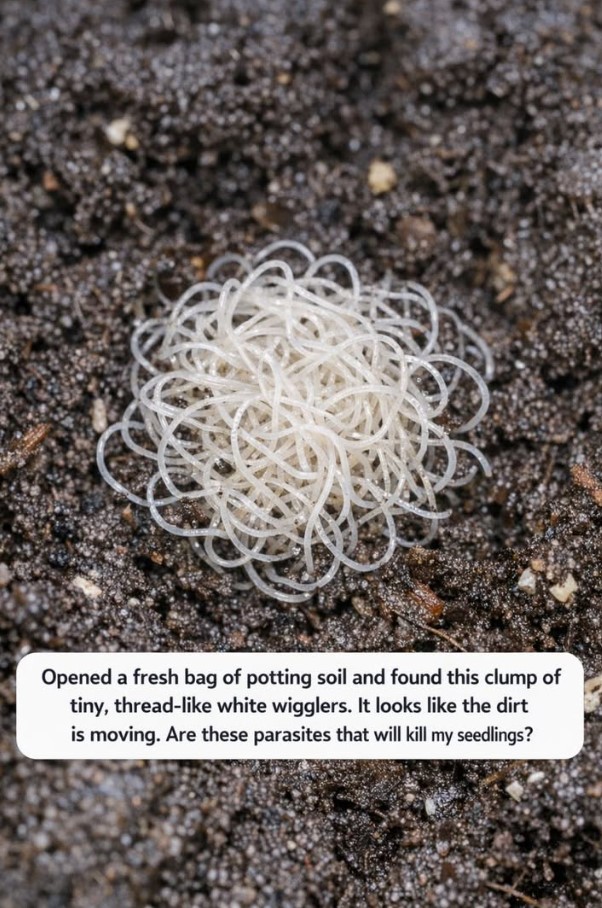
It can be alarming to open a fresh bag of potting soil and immediately notice tiny white, thread-like creatures moving inside. At first glance, it may look like the soil is “alive,” which naturally raises concerns for any gardener. Many people worry that these are harmful parasites that could damage seedlings, spread through pots, or ruin their plants before they even get started.
However, what you’re seeing is actually a very common situation in gardening. Potting soil is not a sterile product — it is a living environment made up of organic matter, moisture, and microorganisms. Because of this, it can sometimes contain small soil-dwelling organisms that appear right when the bag is opened or watered.
In most cases, these tiny white wigglers are not dangerous. In fact, many of them are completely harmless or even helpful to the soil ecosystem. The key is understanding what they are, why they appear, and when (rarely) they might become a problem.
What Are the Tiny White Wigglers in Potting Soil?
The most common explanation for these thread-like white creatures is that they are soil-dwelling decomposers, especially organisms known as pot worms (enchytraeids). These are small, thin, white worms that live in moist, organic-rich soil.
They are often mistaken for pests because:
- They are small and wriggling
- They appear in clusters
- They are most visible in wet soil
- They look unusual in a sealed bag of potting mix
But despite their appearance, they are usually harmless and are part of a natural soil ecosystem.
Pot Worms: The Most Common and Harmless Cause
Pot worms are the most likely explanation in many cases. These tiny organisms are relatives of earthworms and play a role in breaking down organic material in soil.
They typically:
- Feed on decaying plant matter
- Thrive in moist environments
- Improve soil structure over time
- Do not attack healthy plant roots
Their presence usually means the soil is rich in organic content and moisture — not that something is wrong.
Fungus Gnat Larvae: The One to Watch For
In some cases, the white wigglers may actually be fungus gnat larvae, which are also small, worm-like organisms that live in soil.
These are slightly different because they:
- Often have a darker head
- Prefer very wet soil
- Feed on fungi and sometimes root hairs
- Can become harmful in large numbers
Unlike pot worms, fungus gnat larvae can sometimes damage young seedlings if their population grows too large.
They are usually associated with overwatered soil conditions, especially indoors or in containers that stay damp for long periods.
Why They Appear in Fresh Potting Soil
Seeing these organisms in a new bag of soil can feel surprising, but it actually makes sense. Potting soil often contains:
- Organic compost materials
- Moisture retained during storage
- Air pockets that support microbial life
- Nutrients that encourage decomposition
If conditions inside the sealed bag are warm and slightly damp, small organisms can already be present or begin developing before the bag is opened.
This is not necessarily a sign of poor-quality soil — it simply means the soil is biologically active.
Are They Dangerous to Plants?
In most home gardening situations, these tiny white organisms are not harmful.
- Pot worms: beneficial or neutral
- Fungus gnat larvae: only problematic in large infestations
Healthy, well-drained soil usually keeps populations balanced naturally. Problems typically arise only when soil stays too wet for long periods.
When You Should Be Concerned :
You only need to take action if you notice:
- Large numbers of flying gnats around plants
- Seedlings wilting or failing to grow
- Soil staying wet for too long
- Visible root damage when repotting
Otherwise, a small number of soil organisms is normal and even expected.
How to Prevent Issues in the Future :
If you want to avoid unwanted soil pests, simple habits can help:
- Let soil dry slightly between watering
- Avoid overwatering indoor plants
- Ensure pots have good drainage
- Store potting soil in a dry, cool place
- Cover soil surface with dry material if needed
These steps help keep soil conditions balanced and less attractive to pest larvae.
Conclusion :
Finding tiny white wigglers in potting soil can be surprising, but in most cases, there is no reason to worry. These organisms are usually harmless decomposers that naturally exist in rich, organic soil. Even when fungus gnat larvae are present, they only become a problem under specific conditions such as excessive moisture or poor drainage.
Understanding what is happening inside your soil helps remove fear and replaces it with confidence. Instead of seeing something dangerous, you are actually witnessing a small part of a living soil ecosystem at work. With proper care and watering habits, your plants can continue to grow healthy while the soil remains balanced and active in a natural way.