Cleaning is an important part of keeping a home healthy, fresh, and organized. However, many people believe that more washing always means better cleanliness. In reality, over-washing certain items can actually damage them, shorten their lifespan, waste money, and sometimes even make them less hygienic over time.
Modern cleaning habits often encourage constant washing, scrubbing, and sanitizing, but not everything in the home needs excessive cleaning. Some fabrics wear out faster, appliances become damaged, and surfaces lose their protective coatings when cleaned too frequently or with harsh products.
Learning what should and should not be washed constantly can help save time, protect household items, and reduce unnecessary wear and tear. The goal is not to clean less, but to clean smarter.
Here are ten common things many people accidentally over-wash without realizing it.
1. Bath Towels
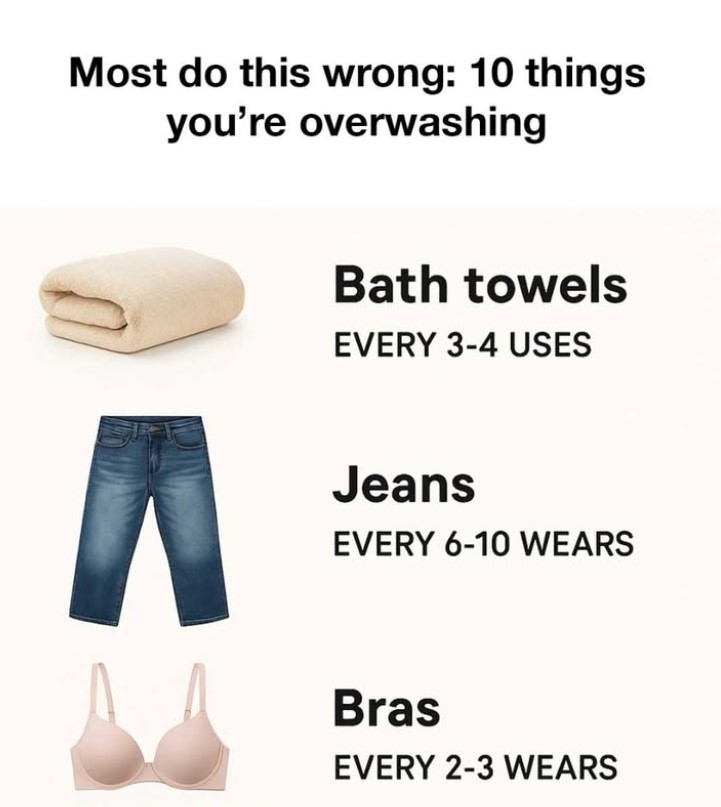
Many people wash bath towels after every single use, but this is often unnecessary if the towel is allowed to dry properly between uses.
Over-washing towels can:
- Wear down the fibers
- Reduce softness
- Cause fading
- Shorten their lifespan
Most towels can usually handle several uses before needing a wash, especially when hung up properly to dry completely between uses. Proper ventilation is important to prevent moisture buildup and odors.
2. Jeans
Jeans are one of the most commonly over-washed clothing items.
Frequent washing may:
- Fade the color
- Weaken the fabric
- Cause shrinking
- Reduce the life of the denim
Many clothing experts suggest washing jeans only when truly necessary rather than after every wear. Spot cleaning small stains and airing them out can help keep them fresh longer.
3. Hair
Washing hair too often can strip away natural oils that help protect the scalp and hair strands.
Overwashing hair may lead to:
- Dryness
- Frizz
- Scalp irritation
- Increased oil production
The ideal washing frequency depends on hair type, activity level, and climate, but daily washing is not always necessary for everyone.
4. Cast Iron Pans
Cast iron cookware is durable, but excessive washing with soap or soaking in water can damage its protective seasoning layer.
Over-cleaning cast iron may:
- Remove seasoning
- Increase rust risk
- Reduce nonstick performance
Many people simply wipe or rinse cast iron pans gently after use and reapply a light layer of oil to maintain them properly.
5. Washing Machines
Ironically, some people over-clean their washing machines using harsh chemicals too frequently.
While maintenance is important, excessive use of strong cleaners can:
- Damage seals
- Cause unnecessary wear
- Leave chemical residue
Regular basic maintenance is usually enough to keep the machine fresh and functional.
6. Bed Sheets
Although clean bedding is important, washing sheets too aggressively or too often with strong detergents may wear down the fabric faster.
Overwashing can:
- Thin the material
- Fade colors
- Reduce softness
Proper washing schedules combined with mild detergents help bedding last longer while still staying clean and comfortable.
7. Wooden Furniture
Wood furniture can become damaged from excessive cleaning products and constant wiping with wet cloths.
Too much moisture may:
- Damage finishes
- Cause discoloration
- Dry out the wood
- Create dull surfaces
Gentle dusting and occasional polishing are usually better than constant heavy cleaning.
8. Reusable Water Bottles
Reusable water bottles should absolutely be cleaned regularly, but over-scrubbing with abrasive tools or harsh chemicals may damage the interior surface over time.
This can:
- Create scratches
- Trap odors
- Affect insulation in some bottles
Gentle cleaning with warm water and mild soap is often enough for daily maintenance.
9. Nonstick Pans
Nonstick cookware is designed to reduce sticking, but aggressive washing and abrasive scrubbers can ruin the protective coating.
Over-cleaning may:
- Scratch the surface
- Reduce nonstick performance
- Shorten the pan’s lifespan
Soft sponges and gentle cleaning methods help preserve the coating much longer.
10. Carpets
Many people think frequent deep carpet shampooing keeps carpets cleaner, but excessive wet cleaning may actually create problems.
Overwashing carpets can:
- Leave moisture trapped underneath
- Encourage mold or mildew
- Wear down fibers
- Cause discoloration
Regular vacuuming combined with occasional deep cleaning is often the best balance.
Why Over-Washing Happens
Many people associate frequent cleaning with responsibility and hygiene. Advertising, social habits, and fear of germs often encourage people to clean more aggressively than necessary.
However, excessive cleaning can sometimes:
- Waste water and energy
- Damage belongings
- Increase costs
- Reduce product lifespan
Understanding proper cleaning frequency helps maintain both cleanliness and durability.
The Difference Between Clean and Over-Clean
Healthy cleaning habits focus on:
- Hygiene
- Maintenance
- Practicality
- Preservation
Over-cleaning happens when items are cleaned more often than necessary or with methods that damage them over time.
The goal is balance rather than constant washing.
Tips for Smarter Cleaning Habits
Read Care Labels
Manufacturers often provide the safest cleaning instructions for fabrics and materials.
Use Gentle Products
Harsh chemicals are not always necessary for effective cleaning.
Avoid Excess Moisture
Too much water can damage many household surfaces and materials.
Clean Based on Use
Items used heavily may need more cleaning than lightly used items.
Focus on Maintenance
Regular light care is often better than aggressive deep cleaning.
Conclusion :
Keeping a clean home is important, but more washing does not always mean better care. In many cases, overwashing clothing, cookware, furniture, fabrics, and household items can actually reduce their lifespan and create unnecessary wear.
Understanding how different materials respond to moisture, soap, scrubbing, and repeated washing helps people care for their belongings more effectively. Smarter cleaning habits save time, money, energy, and effort while still maintaining a clean and healthy environment.
The key is finding the right balance between cleanliness and preservation. Sometimes cleaning less aggressively — and more thoughtfully — is actually the better choice in the long run.