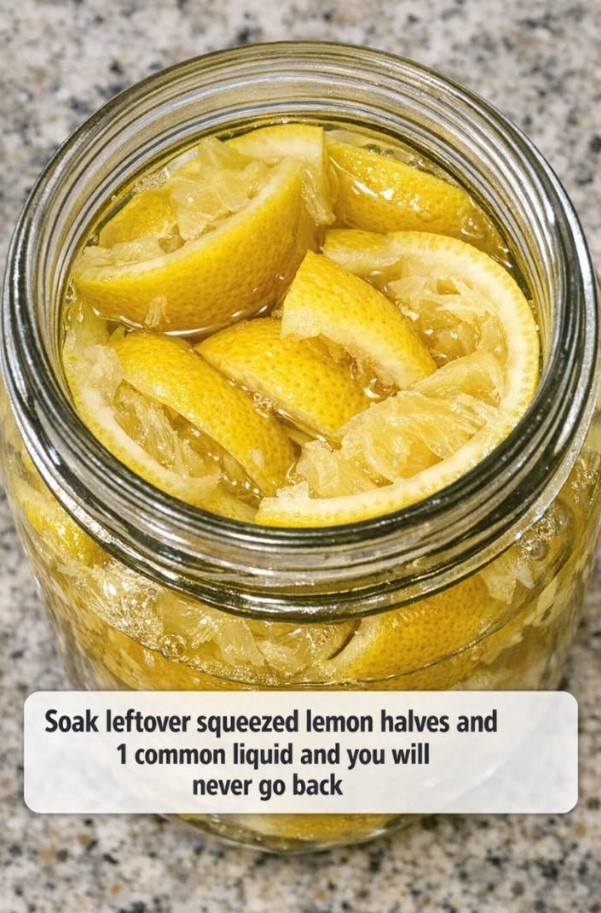
Lemons are one of the most commonly used fruits in kitchens around the world. They are used for cooking, baking, cleaning, and even natural home remedies. However, once a lemon has been squeezed, most people simply throw away the leftover halves without thinking twice.
What many do not realize is that these leftover lemon halves still contain useful oils, flavor, and natural properties even after juicing. Instead of discarding them, they can be reused in simple and practical ways that help reduce waste and add extra value in the home.
One popular idea that has been shared widely online involves soaking squeezed lemon halves in a common household liquid to extract even more usefulness from them before disposal.
WHY LEFTOVER LEMONS STILL HAVE VALUE
1. Natural oils remain in the peel
Even after a lemon has been juiced, the peel still contains essential oils. These oils are responsible for the strong citrus scent and many of the cleaning and refreshing properties lemons are known for.
Because of this, used lemon halves are far from useless.
2. Strong natural cleaning properties
Lemons are often used in natural cleaning because of their acidity and antibacterial-like properties. Even after juicing, the remaining peel can still contribute to light cleaning and deodorizing effects.
3. Waste reduction benefits
Reusing lemon leftovers helps reduce kitchen waste. Small habits like this contribute to more sustainable living by making full use of food items instead of discarding them too early.
THE SIMPLE SOAKING METHOD
1. Why soaking lemon halves is used
Soaking leftover lemon halves in a common liquid—often water or vinegar—is believed to help release remaining oils and juices trapped in the peel.
This allows the lemon to continue being useful even after it has already been squeezed.
2. How the process works
When lemon halves are submerged, the liquid helps draw out citrus oils and residue from the peel. This creates a mildly infused solution that can be used for light cleaning or freshening purposes.
The process is simple and requires no special tools.
3. What the infused liquid can be used for
The resulting liquid is often used for household cleaning tasks such as wiping surfaces, deodorizing sinks, or freshening kitchen areas. The citrus scent also helps create a cleaner-smelling environment.
PRACTICAL USES FOR LEFTOVER LEMON HALVES
1. Natural surface cleaner
Even after soaking, lemon peels can be used to scrub light stains or wipe surfaces, especially in kitchens where grease or odors are common.
2. Refrigerator deodorizer
Lemon peels can help reduce unwanted odors when placed in the fridge temporarily. Their natural scent helps freshen enclosed spaces.
3. Garbage bin freshness
Placing or rubbing lemon halves inside trash bins can help reduce strong smells and improve overall freshness.
4. Sink and drain refresh
Rubbing lemon peels in sinks can help reduce odors and leave a clean citrus smell behind.
WHY PEOPLE ARE INTERESTED IN THIS METHOD
1. Simple and low-cost
This method uses something most people already have at home, making it an easy and affordable household trick.
2. Eco-friendly approach
Instead of throwing lemon halves away immediately, this method encourages reuse and waste reduction, which appeals to environmentally conscious habits.
3. Practical everyday benefit
Small cleaning hacks like this are popular because they fit easily into daily routines without requiring extra effort or expensive products.
LIMITATIONS TO KEEP IN MIND
1. Not a substitute for strong disinfectants
While lemons can help with freshness and light cleaning, they are not a replacement for proper disinfectants when deep cleaning is required.
2. Effectiveness depends on freshness
The longer a lemon has been used or stored, the less natural oil and strength it will have.
3. Temporary results
The cleaning and scent effects are usually short-term and may need to be repeated regularly.
Conclusion :
Leftover squeezed lemon halves are often underestimated and thrown away without a second thought, even though they still contain useful natural oils and properties. Instead of discarding them immediately, simple methods like soaking them in a common liquid can help extend their usefulness in practical and environmentally friendly ways.
This approach allows people to get more value out of something that would normally become waste. From light cleaning tasks to odor removal and surface freshening, reused lemon halves can still play a helpful role in everyday household routines.
At the same time, it is important to understand that these methods are best suited for light cleaning and freshness rather than deep sanitation. They work as helpful natural support rather than complete replacements for stronger cleaning products.
In the end, small habits like reusing lemon leftovers reflect a smarter and more sustainable way of living. By making use of what we already have, we reduce waste, save money, and find simple solutions that make everyday household tasks a little easier and more efficient.