You’re brushing your teeth, you’re barely awake, and suddenly something tiny, shiny, and unbelievably fast shoots across the bathroom floor.
You freeze.
For a second, you wonder what you just saw. Then the little creature disappears beneath the cabinet before you can get a good look.
If you have experienced this before, you may already know the culprit: a silverfish.
Silverfish are small, silvery insects that move with a strange, wiggling motion. They can appear almost like tiny fish swimming across the floor, except they are doing it inside your house.
Finding one can certainly be unpleasant, but seeing a silverfish does not automatically mean your home is dirty or that you have a serious infestation. These insects are usually attracted to particular environmental conditions, especially moisture, darkness, and access to materials they can feed on.
However, if you keep seeing them, it is worth paying attention.
Repeated sightings can indicate that your home has areas that are humid, poorly ventilated, or providing plenty of hiding places and food sources.
So what exactly are silverfish, why are they entering your home, what can they damage, and what should you do if they keep appearing?
What Are Silverfish?
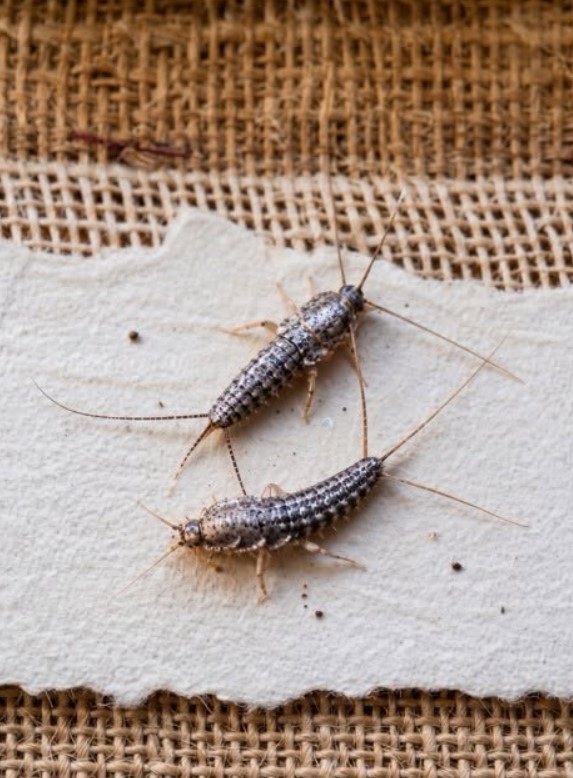
Silverfish are small, wingless insects with flattened, elongated bodies covered in silvery scales.
They have long antennae at the front and three distinctive tail-like appendages at the back. These features give them an appearance that is difficult to confuse with many other household insects.
Their movement is another obvious clue.
Instead of walking in a straightforward way like an ant, silverfish move rapidly with a wiggling motion. When they suddenly cross a bathroom floor or disappear beneath a piece of furniture, they can almost look as though they are swimming.
Silverfish are generally active at night. Because they prefer darkness and quiet surroundings, many people don’t notice them until they turn on a bathroom light in the middle of the night or walk into a basement after dark.
They may be found in bathrooms, basements, laundry rooms, kitchens, closets, storage areas, and other places where moisture and shelter are available.
They are also extremely quick.
That speed is one reason a person may see a silverfish for only a second before it disappears into a crack or underneath an object.
Why Are Silverfish Coming Into Your House?
If silverfish are appearing indoors, your home is probably providing at least some of the conditions they need to survive.
That doesn’t necessarily mean your house is unclean.
A clean, well-maintained home can still have silverfish if certain rooms are humid or if insects can find suitable hiding places.
1. High Humidity
Moisture is one of the biggest factors associated with silverfish.
Bathrooms are particularly attractive because showers and baths temporarily increase humidity. If the room doesn’t have enough ventilation, that moisture can remain in the air and on surrounding surfaces.
Basements can also be attractive because they may naturally have higher humidity levels, especially if there is condensation, poor ventilation, or water entering through the foundation.
Laundry rooms can provide similar conditions.
Even a small plumbing leak can create a damp area that remains unnoticed for a long time.
This is why finding silverfish can sometimes be a useful reason to inspect areas around sinks, pipes, toilets, washing machines, and other plumbing fixtures.
The insect isn’t necessarily causing the moisture problem.
It may simply be taking advantage of it.
2. Dark, Quiet Hiding Places
Silverfish don’t want attention.
They prefer places where they can remain undisturbed during the day.
Cracks, gaps, closets, cabinets, spaces beneath furniture, areas behind baseboards, and storage boxes can all provide shelter.
A cluttered storage area can therefore give them plenty of opportunities to hide.
Old cardboard boxes stored in a damp basement are particularly worth checking.
So are piles of paper, newspapers, magazines, and books that have been sitting undisturbed for long periods.
You don’t need to turn your house upside down every time you see one silverfish, but repeated sightings should encourage you to inspect the darker areas of the home.
3. Food Sources
This is one of the more surprising things about silverfish.
Although they are tiny, they can feed on a variety of materials containing starches, sugars, and cellulose.
That can include paper products, cardboard, book bindings, wallpaper paste, certain fabrics, and other materials containing substances they can consume.
They may also encounter suitable food sources around stored pantry products.
This means that a stack of old cardboard boxes sitting in a humid storage room can provide both shelter and food.
A damp collection of old books can do the same.
Keeping paper products dry and reducing unnecessary cardboard storage can therefore make your home less appealing to these insects.
Are Silverfish Dangerous?
The good news is that silverfish are generally not considered dangerous to people.
They are not known for biting or stinging humans, and their presence is not typically associated with the transmission of diseases to people.
So if you suddenly see one racing across the bathroom floor, there is no need to panic.
However, that doesn’t mean silverfish should always be ignored.
Their presence can become a nuisance, and larger populations may cause damage to certain household belongings.
The biggest concern is usually not your health.
It is your property.
What Can Silverfish Damage?
Silverfish may feed on or damage materials containing starch, sugar, cellulose, or adhesives.
Items that can potentially be affected include:
- Books and book bindings
- Newspapers and magazines
- Cardboard
- Important documents
- Stored photographs
- Wallpaper and wallpaper adhesive
- Clothing
- Linens and fabrics
- Certain pantry products
- Items containing glue or starch
This doesn’t mean that every silverfish will destroy your belongings.
In fact, seeing one insect does not automatically mean that significant damage is occurring.
But repeated sightings are a reason to investigate.
If silverfish have found a quiet, humid area with plenty of food, there may be more hiding nearby.
How Can You Tell If You Have a Silverfish Problem?
The most obvious sign is, of course, seeing silverfish.
But there are other clues worth watching for.
Look for small holes or irregular damage on paper and fabrics.
You may also notice yellowish stains on stored materials, shed skins, or small dark droppings in areas where silverfish hide.
Wallpaper seams and corners can also show signs of damage.
Another important clue is repetition.
Seeing one silverfish once is very different from seeing several silverfish every few nights.
If they repeatedly appear in the same room, especially in a dark and humid area, it’s worth investigating what conditions are attracting them.
Where Should You Look?
If you spot a silverfish in your bathroom, don’t assume the bathroom floor is the entire problem.
The insect may be hiding somewhere nearby.
Check:
- Under bathroom sinks
- Around plumbing
- Behind toilets
- Inside bathroom cabinets
- Along baseboards
- Behind furniture
- Inside closets
- In basements
- Around laundry equipment
- Inside storage boxes
- Near books and paper products
- Around areas with visible moisture
Look for both insects and environmental clues.
Is there condensation?
Is a pipe slowly leaking?
Does the room stay humid for hours after a shower?
Are cardboard boxes being stored directly against a damp wall?
These questions can help you identify the reason silverfish are appearing instead of simply treating the insects you happen to see.
How to Get Rid of Silverfish
Getting rid of silverfish usually starts with changing the conditions that make your home attractive to them.
Simply killing the insects you see may not solve the underlying problem if moisture and hiding places remain.
1. Reduce Moisture
Start with humidity.
Use bathroom ventilation during showers and for a while afterward so moisture doesn’t remain trapped inside the room.
If you have a damp basement or another consistently humid area, a dehumidifier can help reduce excess moisture.
Check for leaking faucets, pipes, toilets, washing machine connections, or other plumbing problems.
Even a small leak can create a consistently damp environment.
Dry wet surfaces when possible, and avoid leaving damp towels or clothing piled on the floor.
The goal isn’t to make your home completely dry.
It is to prevent unnecessary moisture from accumulating in the places where silverfish are most likely to hide.
2. Remove Their Food Sources
Take a look at what is stored in damp areas.
Old newspapers, cardboard boxes, magazines, and unnecessary paper products should not be allowed to accumulate in humid rooms.
If you have books or important documents stored in a basement, consider moving them to a dry location.
Pantry foods should be kept in sealed containers, especially products such as flour, cereal, oats, and other dry goods.
Regular vacuuming can also help remove crumbs, dust, dead insects, and other potential food sources.
Pay particular attention to corners, along baseboards, underneath furniture, and other areas that don’t receive much daily cleaning.
3. Reduce Clutter
Silverfish need places to hide.
The more cluttered an area is, the more hiding spots are available.
This doesn’t mean your house needs to look perfect.
Instead, focus on areas where moisture and clutter exist together.
For example, a basement filled with cardboard boxes may deserve attention if silverfish are repeatedly appearing there.
Plastic storage containers with secure lids can be a better option for many items than ordinary cardboard boxes in damp areas.
4. Seal Cracks and Gaps
Inspect areas around baseboards, windows, doors, plumbing openings, and other potential entry or hiding points.
Small gaps can provide insects with places to move through and hide.
Appropriate caulk or sealant can help close many ordinary gaps around a home.
Also check door frames and window screens for obvious openings.
Sealing these areas isn’t just about silverfish. Reducing unnecessary openings can help limit the entry of other unwanted insects as well.
5. Use Traps to Monitor Activity
If you’re trying to determine how widespread the problem is, traps designed for crawling insects can help you monitor activity.
Place them in areas where you’ve repeatedly seen silverfish, such as near baseboards, underneath sinks, or in storage areas.
Monitoring is useful because it can show whether sightings are becoming less frequent after you’ve addressed moisture and clutter.
If activity continues despite these changes, that may be a sign that further investigation is needed.
6. Be Careful With Pest-Control Products
It can be tempting to reach immediately for a strong insecticide when you see a bug in your home.
But spraying randomly doesn’t address the reason silverfish are there.
If the room remains humid and full of hiding places, killing a few visible insects may not solve the problem.
If you decide to use a pesticide or insect-control product, always follow its label directions carefully and keep products away from children and pets as instructed.
For a persistent or significant infestation, professional pest-control advice can be more appropriate than repeatedly applying household chemicals.
How Can You Prevent Silverfish From Coming Back?
Once you’ve reduced silverfish activity, prevention becomes important.
Keep bathrooms properly ventilated.
Repair leaks as soon as you discover them.
Avoid storing large amounts of cardboard in damp areas.
Keep paper products and books in dry locations.
Store pantry foods in sealed containers.
Vacuum regularly, especially along edges and underneath furniture.
Reduce unnecessary clutter in basements, closets, and storage areas.
Inspect areas around pipes and plumbing from time to time.
These steps may sound simple, but together they make your home considerably less attractive to moisture-loving insects.
Does Finding Silverfish Mean Your Home Is Dirty?
No.
This is an important point.
Finding silverfish does not automatically mean that you have poor housekeeping.
They are primarily attracted to environmental conditions such as moisture, shelter, and accessible food sources.
A spotless home can still have a plumbing leak, high humidity, condensation, or an entry point that allows insects inside.
Instead of feeling embarrassed, treat the sighting as information.
Ask yourself:
Where did I see it?
Was the area humid?
Are there leaks nearby?
Are there cardboard boxes or paper products stored there?
Have I seen more than one?
Those questions are more useful than simply assuming the problem is caused by dirt.
When Should You Consider Professional Help?
One silverfish doesn’t necessarily require professional pest control.
However, you may want professional assistance if you regularly see multiple silverfish despite addressing moisture and storage conditions.
Professional help may also be appropriate if you notice ongoing damage to books, wallpaper, clothing, documents, or other belongings.
Another reason to call for assistance is if you suspect there is hidden moisture behind walls, under floors, or in another inaccessible area.
A pest professional can help identify where the insects are coming from and determine whether there is a larger issue.
If the insects you’ve found aren’t actually silverfish, professional identification can also prevent you from using the wrong treatment.
Correct identification matters because different household pests have different behaviors and require different approaches.
Don’t Panic When You See One
The sight of a silverfish racing across your bathroom floor can certainly be unpleasant.
It’s fast.
It’s strange-looking.
And because it disappears so quickly, it can leave you wondering whether there are dozens more hiding somewhere nearby.
But one sighting doesn’t automatically mean your home has a major infestation.
Instead, use it as a reason to look around.
Check the humidity.
Inspect plumbing.
Look underneath sinks.
Examine storage areas.
Move damp cardboard away from walls.
Keep paper products in dry locations.
And pay attention to whether you continue seeing them.
The goal isn’t simply to kill the insect you can see.
The goal is to understand why it found your home comfortable in the first place.
Final Thoughts
Silverfish may look alarming when they suddenly appear from underneath a cabinet, but these tiny insects are usually more of a household nuisance than a direct threat to people.
Their presence can, however, tell you something useful about your home.
If you keep seeing them, look for moisture, humidity, dark hiding places, clutter, and accessible sources of starch or cellulose.
Addressing those conditions can make your home less inviting to silverfish while also helping protect books, clothing, documents, wallpaper, and other belongings.
Most importantly, don’t assume that seeing a silverfish means your home is dirty.
Even well-kept homes can experience occasional pest problems.
What matters is how you respond.
Identify what you’re seeing, investigate the area where it appeared, reduce unnecessary moisture, store vulnerable items properly, seal obvious gaps, and monitor for additional activity.
That tiny silver flash running across the floor may be unpleasant, but it can also be a useful warning to take a closer look at your home’s environment.
Sometimes the best way to get rid of an unwanted insect isn’t simply to chase it away.
It’s to make your home a place where it no longer has a reason to stay.