
The Conversation He Never Expected
Julian stared at the two folders sitting on the coffee table.
For several seconds, neither of us said anything.
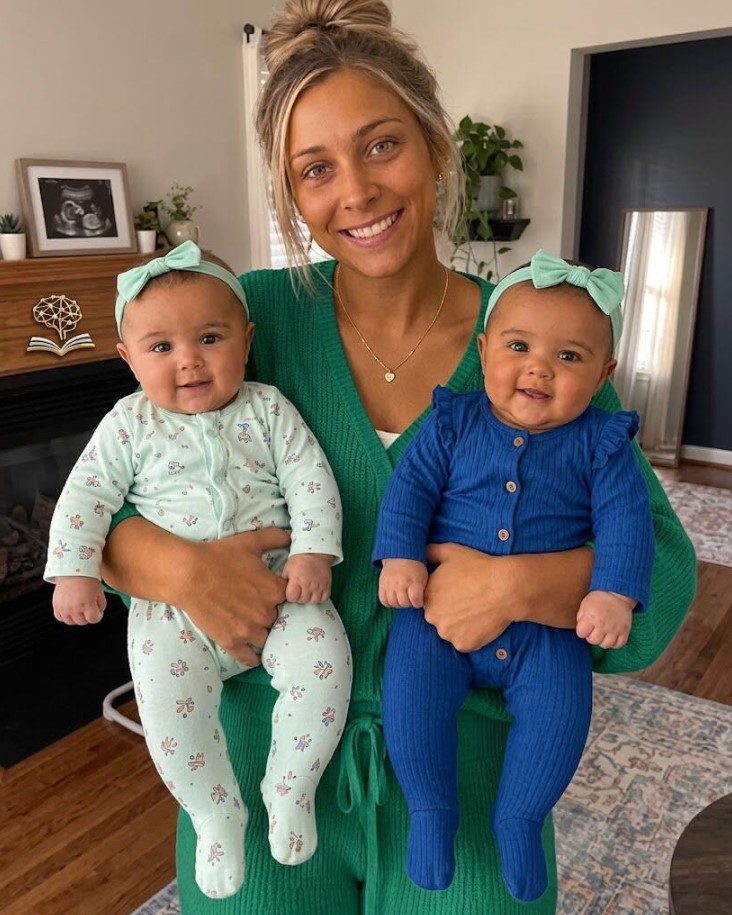
The twins were still sleeping upstairs, completely unaware that their father had just walked back into a marriage that was no longer exactly the same one he had left four days earlier.
He picked up the first folder.
“Budgets?”
“Yes.”
He opened it.
Inside were pages of handwritten notes, printed statements, household expenses, childcare costs, and a list of responsibilities.
He flipped through them slowly.
“What is all this?”
I folded my hands in my lap.
“It’s everything we need to change.”
His eyebrows pulled together.
“Change?”
“Yes.”
He looked at me as though he had expected me to greet him with a hug, tell him how difficult the four days had been, and then quietly return to the way things were.
That wasn’t going to happen.
“You left four days ago,” I said. “And while you were gone, I had a lot of time to think.”
Julian lowered himself onto the sofa.
“I know you were upset.”
“I wasn’t just upset.”
He looked at me.
“I was exhausted. I was hurt. And I was beginning to realize that I had accepted something in our marriage that I should never have accepted.”
“What?”
“That caring for our children had somehow become my responsibility alone.”
He opened his mouth.
I raised my hand.
“Please let me finish.”
He nodded.
“For six months, I’ve been waking up at night. I’ve been feeding them, changing them, washing bottles, doing laundry, cleaning, making appointments, shopping, and trying to keep this house functioning.”
“I know.”
“No,” I said quietly. “You knew I was doing those things. That’s different from understanding what they required.”
He looked down at the papers.
I continued.
“When you left, you thought you were proving that I could handle motherhood.”
I paused.
“But you actually proved something else.”
His eyes lifted.
“What?”
“That I had been carrying far more than I realized.”
The List
I turned the first page toward him.
“I wrote down everything I do in an average week.”
Julian looked at the list.
There were columns.
Morning responsibilities.
Nighttime responsibilities.
Baby care.
Household work.
Appointments.
Shopping.
Laundry.
Meal preparation.
And another section simply labeled Personal Time.
There was almost nothing written beneath it.
Julian noticed.
“You barely have any time for yourself.”
“Exactly.”
He leaned back.
“I didn’t realize it was that bad.”
“You didn’t ask.”
The room became quiet.
That sentence seemed to hit him harder than anything else I’d said.
He rubbed his forehead.
“I thought you were managing.”
“I was surviving.”
He looked at the floor.
“I should have noticed.”
“You should have asked.”
He nodded slowly.
“You’re right.”
It was the first time he had said it without trying to defend himself.
The Words He Couldn’t Take Back
I looked at him.
“There is something else.”
“What?”
“What you said before you left.”
His expression changed.
He knew exactly what I meant.
“You wanted to be a mother, so act like one.”
Julian looked away.
“I was angry.”
“I know.”
“I was exhausted.”
“I know.”
“I shouldn’t have said it.”
“No,” I replied. “You shouldn’t have.”
He swallowed.
“I’m sorry.”
The apology sounded different from the excuses I had imagined he’d make.
He wasn’t blaming his friends.
He wasn’t blaming work.
He wasn’t telling me that I was too sensitive.
He was simply admitting that he had been wrong.
But I wasn’t ready to let one apology erase four days of realization.
“You’re their father, Julian.”
“I know.”
“Then act like one.”
He gave a small, painful smile.
“That was fair.”
The Choice
He looked at the second folder.
“What is this?”
“Our new plan.”
“For what?”
“For everything.”
I opened it.
“I don’t want another marriage where we assume things. I don’t want you assuming I’ll handle the babies because I’m home. And I don’t want to keep waiting until I’m completely exhausted before asking you for help.”
Julian nodded.
“So what do you want?”
“I want us to divide the responsibilities.”
“Okay.”
“I want you to take part in nighttime care.”
“Okay.”
“I want you to know the girls’ appointments, routines, medications if they’re ever prescribed, favorite foods, everything.”
He nodded again.
“I can do that.”
“And I want time for myself.”
“You should have that.”
“Not because you are allowing me to have it.”
He looked at me.
“Because it’s necessary.”
He took a breath.
“Okay.”
For the first time since he came home, I felt some of the tension leave my shoulders.
Not because everything was suddenly fixed.
It wasn’t.
But because we were finally talking about the actual problem.
The Months That Followed
The changes didn’t happen overnight.
There were difficult evenings.
There were nights when one baby cried while the other needed a bottle.
There were mornings when neither of us had slept enough.
But something was different.
Julian started getting up.
At first, he was clumsy.
He didn’t know where everything was.
He mixed up bottles.
He sometimes put diapers in the wrong place.
Once, he spent nearly ten minutes searching for a pacifier that was sitting directly beside him.
I laughed.
He looked offended.
“You could help.”
“I thought you wanted to act like a father.”
He smiled.
“Fair enough.”
He learned.
Slowly.
Then quickly.
He learned how to hold one baby while preparing something for the other.
He learned the bedtime routine.
He learned which songs calmed them.
He learned that when one twin started crying, the other often followed.
And he learned that caring for two babies wasn’t something you could simply squeeze into the empty spaces of your day.
It required attention.
Patience.
Energy.
And commitment.
I Learned Something Too
While Julian learned to become more involved, I had to learn something of my own.
I had to stop believing that asking for help meant I wasn’t doing enough.
For months, I had tried to prove that I could handle everything.
I thought being a good mother meant keeping the house clean, keeping the babies happy, preparing meals, and somehow looking like none of it was difficult.
But motherhood wasn’t a competition.
The house could be messy.
Laundry could wait.
Dinner could be simple.
And I could still be a good mother.
One afternoon, I sat on the floor with the twins while Julian was at work.
One of the girls grabbed my finger.
The other started laughing.
I suddenly realized something.
I wasn’t enjoying enough of these moments because I was always thinking about the next task.
The next bottle.
The next load of laundry.
The next feeding.
The next diaper.
I had been so busy trying to keep everything under control that I was missing pieces of the childhood I was working so hard to protect.
That had to change too.
Six Months Later
The house was louder now.
The twins were older.
They crawled everywhere.
They pulled themselves up on furniture.
They laughed at things that made absolutely no sense to either of us.
And Julian had changed.
One morning, I walked into the kitchen and found him standing at the counter preparing their bottles.
He checked everything carefully before carrying them toward the girls.
“Morning,” he said.
“Morning.”
“They slept until six.”
I smiled.
“That sounds like a miracle.”
“Don’t celebrate yet.”
I laughed.
The girls were already making noise from the play area.
Julian walked over and picked one of them up.
She immediately grabbed his shirt.
“See?” he said. “She’s trying to destroy my clothes.”
“She gets that from you.”
He laughed.
There was no bitterness in the room anymore.
There was teamwork.
Not perfection.
Teamwork.
The New Routine
We had divided the mornings.
Julian handled the early routine on certain days while I prepared for work.
On other mornings, I handled breakfast while he packed the daycare bags.
Evenings were shared.
One of us prepared dinner while the other played with the girls.
Bath time became a team effort.
And bedtime wasn’t automatically my responsibility anymore.
Sometimes Julian put them down while I sat quietly with a book.
Other nights, I handled bedtime while he cleaned the kitchen.
We weren’t keeping score.
We were simply participating.
That was the difference.
The Moment I Knew Things Had Changed
One evening, I came home later than expected.
I opened the door and heard laughter coming from the living room.
I walked inside.
Julian was sitting on the floor with both girls.
One was climbing onto his lap.
The other was trying to pull a toy away from him.
He was laughing.
The living room was covered with toys.
There were blankets everywhere.
A half-empty bottle sat on the coffee table.
The house wasn’t spotless.
But for the first time, I didn’t feel responsible for fixing everything.
I just stood there and watched them.
Julian looked up.
“You’re home.”
“Yes.”
“We already ate.”
“Good.”
“The girls had their bath.”
“Good.”
“And I washed all the bottles.”
I smiled.
“Very impressive.”
He grinned.
“I’ve learned.”
I walked over and sat beside them.
For a moment, nobody spoke.
Then Julian reached for my hand.
“I really am sorry.”
I squeezed his fingers.
“I know.”
“I thought you needed to be stronger.”
I looked at him.
“I needed you to be beside me.”
He nodded.
“I understand that now.”
The Lesson That Stayed With Me
Years later, I still remember the night Julian packed that fishing bag.
At the time, I thought those four days would be one of the hardest periods of my life.
In some ways, they were.
But they also forced me to see something I had been avoiding.
I was capable of caring for my children.
I was stronger than I believed.
But being capable didn’t mean I should have to do everything alone.
There is a difference between strength and being unsupported.
I had confused the two.
I thought if I could survive without asking for help, I was proving something.
Instead, I was simply becoming exhausted.
Those four days changed that.
They made me recognize my own value.
They made Julian recognize his responsibilities.
And they changed the way we approached our marriage.
Our Daughters Never Knew
The twins grew up without remembering the argument that started it all.
They never knew about the suitcase.
They never heard the words their father said.
They never knew how tired I had been.
And that’s okay.
They didn’t need to carry those memories.
They simply grew up with parents who learned to work together.
They grew into two energetic little girls who filled our home with noise.
First came crawling.
Then walking.
Then words.
Then endless questions.
The house became messier than ever.
But somehow, it felt happier too.
One day, Julian came home from work, looked at the toys scattered across the living room, and laughed.
“I remember when this used to bother me.”
I looked at him.
“Now?”
“Now I just step over them.”
I smiled.
“Good.”
He picked up one toy.
Then another.
And the girls came running toward him.
What Motherhood Taught Me
Motherhood taught me patience.
It taught me love.
It taught me how much a person can give when someone depends on them.
But it also taught me that mothers are people too.
We get tired.
We need breaks.
We need sleep.
We need support.
We need to be heard.
Being a mother doesn’t mean disappearing.
It doesn’t mean accepting every responsibility simply because you are capable of handling it.
And loving your children doesn’t mean you have to carry everything alone.
Julian learned his own lesson.
Fatherhood isn’t just about providing money.
It isn’t just about taking photographs with your children.
It isn’t just about saying you love them.
It’s about showing up.
It’s about changing diapers.
Washing bottles.
Getting up at night.
Attending appointments.
Listening.
Helping.
And being present even when you’re tired.
The Doorway I Still Remember
Sometimes I think about that doorway.
The same doorway where Julian once stood with his fishing bag in his hand.
He had walked out believing he was entitled to four days of freedom while I stayed behind with our babies.
When he came back, he expected to find the same exhausted woman he had left.
Instead, he found someone who had finally understood that her voice mattered.
That was the real change.
Not the clean house.
Not the organized schedule.
Not the lists.
Not even the conversations.
It was me.
I had stopped silently accepting everything.
I had learned to say what I needed.
And I had learned that a marriage could only work if both people were willing to carry it.
Julian eventually understood that too.
The twins are older now.
They don’t remember the sleepless nights.
They don’t remember the bottles.
They don’t remember the four-day fishing trip.
But I remember.
Because those four days taught me something I will never forget.
Being a mother doesn’t mean doing everything.
Being strong doesn’t mean refusing help.
And loving your family doesn’t mean losing yourself.
A family works when the responsibility is shared.
When one person is tired, the other steps in.
When one person needs a break, the other makes space.
And when life becomes difficult, neither person walks away expecting the other to simply handle it.
Julian once told me, “You wanted to be a mother, so act like one.”
Years later, I finally understood the answer I should have given him.
I did act like one.
I loved our daughters.
I protected them.
I cared for them.
I stayed when things were difficult.
But I also learned that being their mother did not mean being alone.
And Julian eventually learned the other half of the lesson.
He wasn’t just the man who helped create our family.
He was their father.
And fathers have to show up too.
That was the change that saved our family—not one dramatic apology, but the hundreds of ordinary moments that came afterward.
The bottles washed.
The diapers changed.
The late-night feedings.
The shared breakfasts.
The quiet conversations.
The messy living room.
The tired laughter.
The decision, every single day, to carry the responsibility together.
And that was the life I had wanted all along.