There are plenty of household tricks that sound strange until you understand the reason behind them.
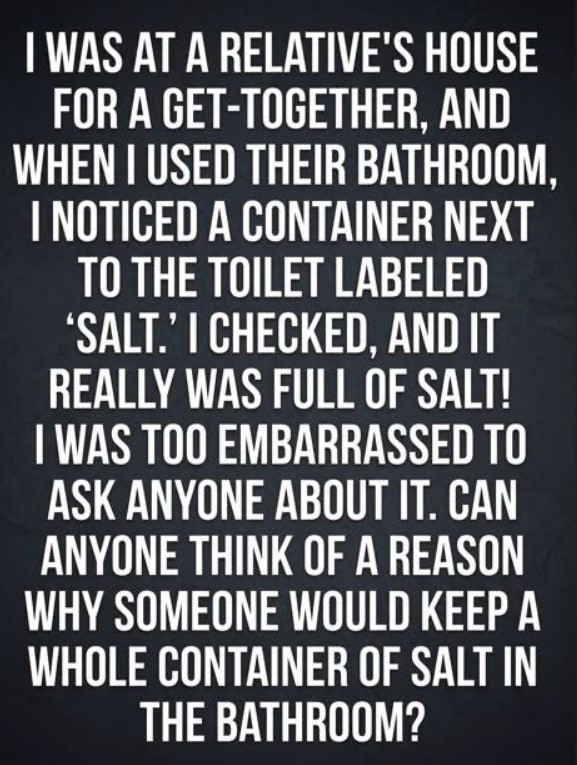
Putting salt in your toilet is one of them.
At first, it may seem completely unnecessary. Salt belongs in the kitchen, after all. Why would anyone intentionally pour it into a toilet?
The answer has less to do with cleaning the toilet bowl and more to do with a problem that can develop deep inside your plumbing system: tree roots growing into underground pipes.
Homeowners with trees, shrubs, or other large plants near their sewer lines may eventually encounter slow drains, strange gurgling sounds, unpleasant odors, or even sewage backups. In some situations, roots growing into damaged or aging pipes can contribute to these problems.
That’s where the unusual salt trick comes in.
Rock salt has traditionally been suggested as a simple way to discourage or damage roots that have entered plumbing lines. But before reaching for the bag of salt, it’s important to understand what the trick can and cannot do.
Why Tree Roots Can Become a Problem for Your Plumbing
Tree roots are constantly looking for moisture and nutrients.
That is completely normal. A tree doesn’t know that a sewer pipe is part of your home’s plumbing system. If roots encounter moisture around a small crack, loose joint, or damaged section of an underground pipe, they can gradually grow toward it.
Once a root finds its way through an opening, the problem can become worse over time.
The root may continue growing inside the pipe, and additional roots can branch out from it. As they develop, they can catch toilet paper, dirt, grease, and other material moving through the plumbing.
What began as a tiny opening can eventually become a significant obstruction.
This is one reason a toilet can seem perfectly normal for months or even years and then suddenly begin draining slowly.
What Are the Warning Signs of Root Intrusion?
A plumbing problem caused by roots doesn’t always appear suddenly.
There can be warning signs.
One of the first things you might notice is that the toilet doesn’t flush quite as quickly as it used to. The water may take longer to disappear from the bowl.
You might also hear unusual gurgling noises.
Another possible warning sign is an unpleasant sewage-like smell coming from drains.
In more serious cases, several drains in the home may begin draining slowly at the same time. You could eventually experience repeated clogs or a sewage backup.
Of course, these symptoms can have many different causes.
A slow toilet doesn’t automatically mean tree roots are inside your sewer line.
There could be a simple toilet clog, a buildup somewhere in the drainage system, a venting problem, or another plumbing issue.
That’s why persistent symptoms shouldn’t simply be blamed on roots without an inspection.
So Why Would Anyone Put Salt in a Toilet?
This is where the unusual household tip comes from.
Rock salt has been suggested as a way to help deal with roots that have entered underground plumbing.
Salt can draw water out of plant tissue through a process known as osmosis. In sufficiently concentrated conditions, that loss of water can damage vegetation.
The idea behind the traditional plumbing trick is that salt traveling through the drain system may come into contact with roots growing inside the pipe.
It is therefore sometimes used as a preventative or temporary measure when root intrusion is suspected.
However, it’s important not to think of salt as a guaranteed cure.
If a root has already created a serious obstruction or the pipe itself is damaged, pouring salt into the toilet isn’t going to repair the pipe.
The underlying plumbing problem still needs to be addressed.
Rock Salt and Table Salt Are Not Exactly the Same
If you’ve heard about using salt for this purpose, you may wonder whether ordinary table salt from the kitchen is enough.
Many versions of this household tip specifically recommend rock salt or coarse salt rather than ordinary fine table salt.
The reasoning is that coarse salt dissolves differently and is traditionally used in larger quantities for this type of application.
However, homeowners should be cautious about treating online household tips as universal plumbing instructions.
Different plumbing systems have different materials, designs, and conditions.
Before putting a large quantity of any substance into your plumbing, especially if you have a septic system, it’s worth checking with a qualified plumber or following the manufacturer’s recommendations for your system.
Salt Is Not a General Toilet Cleaner
One of the biggest misunderstandings about this trick is assuming that salt will solve every toilet problem.
It won’t.
If your toilet bowl has mineral stains, hard-water deposits, bacteria, or ordinary grime, salt isn’t a substitute for proper toilet cleaning.
Likewise, if a toy, excessive toilet paper, wipe, or other object has created a physical blockage, salt isn’t going to magically remove it.
The salt idea is specifically associated with root-related plumbing problems, particularly as a preventative or temporary measure.
Understanding that distinction is important.
Otherwise, you could waste time treating the wrong problem while a plumbing issue continues to get worse.
What About a Slow-Flushing Toilet?
If your toilet has recently started flushing slowly, don’t immediately pour salt into it.
Start by considering the simplest possibilities.
Is there a partial clog?
Has the toilet been flushed with something that shouldn’t have gone down the drain?
Are other drains in the house working normally?
Does the toilet make unusual sounds?
Is the water level behaving differently?
If the problem is isolated to one toilet, the cause may be relatively simple.
But if multiple fixtures are affected, especially toilets, sinks, showers, or floor drains, the problem could be farther down the drainage system.
That’s when professional advice becomes much more important.
What Happens When Tree Roots Enter a Pipe?
Imagine a small root finding its way through a tiny crack in an underground sewer pipe.
At first, it may be barely noticeable.
But roots don’t necessarily stop growing once they enter the pipe.
As they expand, they can create a tangled mass.
That mass can interfere with wastewater flow and collect other materials moving through the pipe.
Over time, the opening may become increasingly restricted.
This explains why some root-related plumbing problems gradually become more frequent.
You might first notice an occasional slow drain.
Then it happens once a month.
Eventually, you may find yourself dealing with repeated blockages.
At that point, simply treating the symptoms isn’t enough.
The condition of the pipe needs to be investigated.
Can Salt Solve an Existing Root Problem?
This is where homeowners need realistic expectations.
Salt may be discussed as a simple method for discouraging or damaging roots, but it isn’t a replacement for professional root removal or pipe repair when the problem is severe.
If roots have significantly invaded a sewer line, a plumber may need to inspect the pipe using specialized equipment.
A camera inspection can help identify where the roots are located and whether the pipe has cracks, separated joints, or other damage.
Depending on the situation, professionals may use mechanical equipment or other specialized methods to clear the obstruction.
If the pipe itself is damaged, clearing the roots alone may only provide temporary relief.
The roots may return if the opening remains.
Why Prevention Matters
One of the most frustrating things about plumbing problems is that they can become expensive when ignored.
A small drainage problem may seem like something you can deal with later.
But if the underlying cause is damaged sewer piping, delaying an inspection can allow the problem to become more serious.
Preventative maintenance is especially worth considering if your property has mature trees close to underground plumbing.
You don’t necessarily need to remove healthy trees just because they’re near your home.
Instead, knowing where your sewer lines are located and watching for warning signs can help you react earlier if something changes.
Be Careful If You Have a Septic System
This is an especially important consideration.
Not every home sends wastewater into a municipal sewer system.
Some properties use septic systems.
If you have a septic tank, you shouldn’t automatically assume that a household plumbing trick designed around sewer-line roots is appropriate for your system.
Anything you introduce into your plumbing can eventually reach the septic system.
Because septic systems rely on biological processes, homeowners should be careful about routinely introducing large amounts of substances into them.
If you’re considering using salt or any other homemade treatment and you have a septic system, checking with a septic professional first is a sensible precaution.
Don’t Ignore Gurgling Sounds
A gurgling toilet may sound like a minor annoyance.
Sometimes it is.
But repeated gurgling can also indicate that water and air aren’t moving through the drainage system normally.
If the sound keeps returning, pay attention to what else is happening.
Is the toilet draining slowly?
Does the bathtub drain more slowly?
Are there unpleasant smells?
Do other fixtures make bubbling sounds when the toilet is flushed?
When several symptoms appear together, it is worth investigating rather than simply trying one home remedy after another.
Keep the Wrong Things Out of Your Toilet
Regardless of whether you ever use salt, one of the easiest ways to protect your plumbing is to be careful about what you flush.
Toilets are designed primarily for human waste and toilet paper.
Items such as wipes, paper towels, feminine hygiene products, cotton products, and other household materials can create blockages.
Even products labeled as flushable may behave differently from ordinary toilet paper once they enter the plumbing system.
Grease and cooking oils should also never be treated as something that belongs in the toilet or household drains.
Keeping inappropriate materials out of your plumbing can prevent many avoidable problems.
What If the Problem Keeps Coming Back?
Suppose you’ve cleared a clog, but the toilet becomes slow again a few days or weeks later.
That repeated pattern is worth paying attention to.
A recurring blockage may mean that something deeper is causing the problem.
If roots are involved, removing the visible blockage may not solve the underlying issue.
Likewise, a damaged pipe can continue collecting debris even after a temporary blockage has been removed.
Repeated problems are a good reason to stop experimenting with household remedies and have the system professionally evaluated.
Salt Is Best Thought of as a Traditional Tip, Not a Miracle Cure
The biggest lesson behind the salt trick is not that salt can magically repair your plumbing.
It can’t.
The interesting part is that an ordinary household substance has historically been used in attempts to discourage plant roots from becoming a bigger problem inside drainage pipes.
That makes the tip worth understanding, but it also makes it important to use common sense.
A slow toilet doesn’t automatically mean you have roots.
A clogged drain doesn’t automatically mean you need salt.
And a serious sewer-line problem won’t disappear simply because a bag of rock salt was flushed down the toilet.
The correct solution depends on what is actually happening inside the plumbing.
When You Should Call a Plumber
There are situations where professional help is clearly the safer choice.
Call a qualified plumber if you experience repeated sewage backups, multiple slow drains, persistent gurgling, foul sewage odors, recurring toilet blockages, or other symptoms that don’t improve.
A professional can determine whether the problem is inside the toilet, in the home’s drainage system, or farther underground.
Modern plumbing inspections can also help identify problems without immediately requiring extensive excavation.
That’s particularly useful when tree roots are suspected.
Finding the location of the problem is the first step toward choosing the right solution.
Simple Plumbing Habits Can Make a Difference
You don’t need complicated tricks to take better care of your home’s plumbing.
Pay attention to changes.
If a toilet suddenly flushes differently, don’t ignore it.
If several drains become slow at the same time, don’t assume each drain has a separate problem.
If you have large trees near your sewer line, be aware that roots can sometimes become an issue.
And most importantly, don’t wait until wastewater is backing up into your home before taking a recurring plumbing problem seriously.
Early attention can often prevent a small issue from becoming a much larger one.
Conclusion :
Putting salt in the toilet sounds strange at first, but there is a reason this unusual plumbing tip has become popular.
The idea is mainly connected to tree roots that grow into underground drain or sewer pipes. Roots naturally search for moisture, and damaged or aging pipes can sometimes provide an opportunity for them to enter. Once inside, roots can grow, collect debris, restrict wastewater flow, and contribute to recurring drainage problems.
Rock salt has traditionally been suggested as a simple way to discourage or damage roots, but it should not be viewed as a guaranteed solution. It won’t repair a cracked pipe, remove every type of blockage, or fix a serious sewer problem.
If your toilet is slow, gurgling, repeatedly clogging, or producing unusual odors, pay attention to those warning signs. A simple household remedy may not be enough, especially when several plumbing fixtures are affected at the same time.
And if you have a septic system, it’s particularly important to check whether introducing salt or other substances is appropriate before trying the trick.
In the end, the smartest approach to plumbing is to understand why a problem is happening rather than relying on a remedy simply because it is popular online.
Salt may have a place in traditional plumbing maintenance, particularly when root intrusion is suspected, but good maintenance, careful flushing habits, early attention to warning signs, and professional inspection when necessary are what can truly help keep a home’s plumbing system working properly.
Sometimes the smallest household tips can teach us something useful. But knowing when a simple trick is no longer enough can be even more valuable.