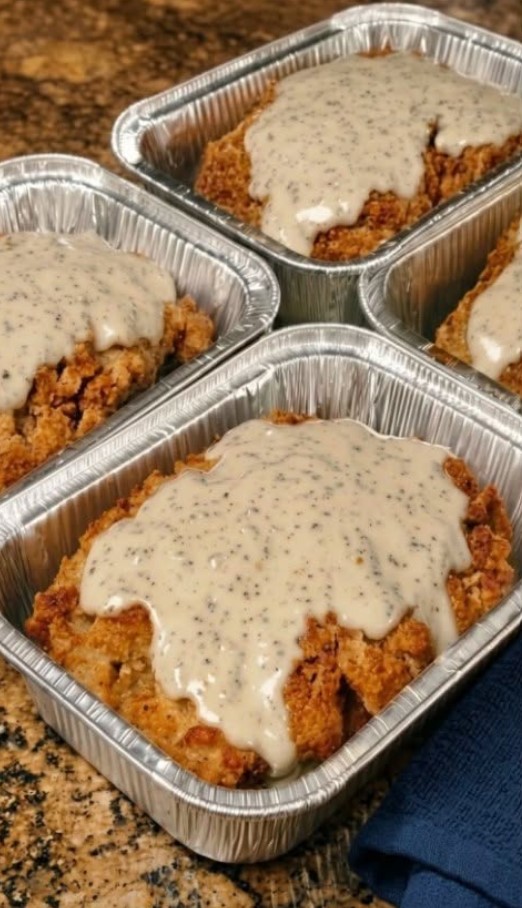
There are some dinners that feel like comfort food from the very first bite, and Southern chicken-fried steak is definitely one of them.
Imagine tenderized beef covered in a beautifully seasoned, crispy coating, fried until golden brown, and then covered with a generous spoonful of creamy, peppery gravy. Add mashed potatoes and a simple vegetable on the side, and you have the kind of hearty meal that feels right at home on a Sunday dinner table.
Despite its name, chicken-fried steak doesn’t actually contain chicken. The name comes from the cooking method. The beef is breaded and fried in a way that’s similar to fried chicken, creating that crisp, golden exterior that makes this dish so special. Cube steak is commonly used because it has already been tenderized, making it a practical choice for this style of cooking.
The best part is that you don’t need complicated ingredients or advanced cooking skills. With a few pantry staples and the right technique, you can make a restaurant-style comfort meal right in your own kitchen.
What Makes Southern Chicken-Fried Steak So Good?
Chicken-fried steak brings together several textures and flavors that work beautifully together.
The outside should be crisp and well-seasoned.
The inside should remain tender.
And the gravy should be smooth, creamy, and rich enough to coat the steak without completely hiding that crunchy crust.
The contrast is what makes the dish so satisfying.
A properly fried steak gives you a crisp bite first, followed by tender beef. Then the creamy gravy adds another layer of flavor and texture.
The gravy is also one of the reasons you should never be too quick to discard everything left in the skillet after frying. Those browned bits and flavorful drippings can become the foundation of an incredibly tasty sauce.
Ingredients for the Chicken-Fried Steak
For the Steak
- 4 cube steaks, about 4 to 6 ounces each
- 2 cups all-purpose flour
- 1 teaspoon salt
- 1 teaspoon black pepper
- 1 teaspoon paprika
- 1 teaspoon garlic powder
- 1 teaspoon onion powder
- 1/2 teaspoon cayenne pepper, optional
- 2 large eggs
- 1/2 cup buttermilk
- Vegetable oil, for frying
For the Creamy Gravy
- 1/4 cup all-purpose flour
- About 2 to 3 cups whole milk
- 2 to 3 tablespoons reserved frying drippings
- Salt, to taste
- Freshly ground black pepper, to taste
- A small pinch of garlic powder, optional
The combination of flour, eggs, and buttermilk creates the foundation for the crispy coating. Buttermilk also adds a slight tang that works especially well with the richness of the fried steak.
If you don’t have buttermilk available, regular milk can be used in a pinch, although buttermilk gives the coating a particularly nice flavor.
Choosing the Right Steak
Cube steak is one of the most convenient choices for this recipe.
It is generally made from a tougher cut of beef that has been mechanically tenderized, leaving the surface with its characteristic textured appearance. That tenderizing process makes the steak much more suitable for quick cooking.
If you purchase steaks that haven’t been tenderized, you can use a meat mallet to gently pound them to an even thickness.
The goal isn’t to completely flatten the meat.
You simply want the steak to be tender enough to cook quickly and evenly.
Before beginning the breading process, pat the steaks dry with paper towels. Excess moisture can make it more difficult for the coating to adhere properly.
Prepare the Seasoned Flour
Start by placing the flour in a wide, shallow bowl.
Add the salt, black pepper, paprika, garlic powder, onion powder, and cayenne pepper if you’re using it.
Mix everything thoroughly.
The flour isn’t just there to create the crispy coating. It’s also one of the main sources of seasoning, so make sure the spices are distributed evenly.
If you prefer a milder chicken-fried steak, simply leave out the cayenne.
For a little extra heat, you can add a small amount of cayenne or another mild ground pepper.
Prepare the Buttermilk Mixture
In a second shallow bowl, whisk together the eggs and buttermilk.
The eggs help the flour coating stick to the steak, while the buttermilk adds flavor and helps create the foundation for a crisp exterior.
Whisk until the mixture is smooth and the egg whites and yolks are fully incorporated.
Now you’ll have two stations ready:
One bowl for the seasoned flour.
One bowl for the buttermilk and egg mixture.
Keeping these close together makes the breading process much easier.
How to Bread the Steaks
Take one cube steak and place it into the seasoned flour.
Turn it over and gently press the flour onto both sides.
Shake off any excess flour.
Next, dip the steak into the egg and buttermilk mixture.
Make sure both sides are coated.
Allow the excess mixture to drip back into the bowl.
Then return the steak to the seasoned flour.
Coat it a second time, gently pressing the flour onto the surface.
This second coating is what helps create that substantial, crunchy crust that chicken-fried steak is known for.
Repeat the process with the remaining steaks.
Once they’re breaded, let them rest for several minutes before frying. This gives the coating time to adhere to the surface instead of immediately sliding away when the steak enters the oil.
Heat the Oil Carefully
Pour enough vegetable oil into a large heavy skillet to provide a shallow layer for frying.
A cast-iron skillet is an excellent choice because it holds heat well, although another heavy skillet can also work.
Heat the oil over medium to medium-high heat.
You want the oil hot enough that the coating begins frying immediately when the steak enters the skillet.
However, don’t let it become excessively hot.
If the oil is too cool, the breading can absorb too much oil and become greasy.
If the oil is too hot, the outside may become dark before the steak has cooked properly.
A steady frying temperature is one of the keys to getting that beautiful golden crust.
Fry the Chicken-Fried Steaks
Carefully place the breaded steaks into the hot oil.
Don’t overcrowd the skillet.
Depending on the size of your pan, you may need to cook the steaks in batches.
Fry each steak until the underside is golden brown and crisp.
Then carefully turn it over and cook the other side.
The exact cooking time will depend on the thickness of the steaks and the temperature of your oil, so watch the color and make sure the beef reaches a safe internal temperature.
Once cooked, transfer each steak to a wire rack or paper towel-lined plate.
A wire rack is particularly useful because it allows excess oil to drain away while helping air circulate around the crust.
Avoid stacking the hot steaks directly on top of each other.
Stacking can trap steam and make the crispy coating softer.
Don’t Throw Away Those Skillet Drippings
This is where the magic really begins.
Once the steaks are cooked, carefully remove most of the frying oil from the skillet while leaving a small amount behind along with the browned bits.
Those little browned pieces contain plenty of flavor.
They can help transform a simple flour-and-milk gravy into something much richer and more savory.
Be careful when handling the hot skillet and oil.
Once you’ve reduced the amount of oil, lower the heat to medium.
How to Make the Creamy Gravy
Sprinkle the flour into the reserved drippings.
Whisk continuously as the flour cooks.
You want to create a smooth roux without allowing the flour to burn.
After about a minute or two, gradually begin adding the milk.
Don’t pour everything in at once.
Add a little milk while whisking, allowing it to blend smoothly with the flour mixture before adding more.
Continue whisking until the mixture becomes smooth.
As the milk heats, the gravy will gradually thicken.
Season it with salt and plenty of freshly ground black pepper.
The pepper is particularly important because it gives the gravy that familiar Southern country-gravy character.
If the gravy becomes thicker than you want, simply whisk in a little more milk.
If it seems too thin, allow it to simmer gently for another minute or two.
Remember that gravy will also thicken slightly as it cools.
Keep the Steak Crispy
One of the biggest challenges with chicken-fried steak is keeping the crust crisp after frying.
The easiest approach is to avoid covering the steaks tightly while they’re waiting.
If you have several steaks to cook, place the finished ones on a wire rack set over a baking sheet.
You can keep them warm in a low oven while you finish frying the remaining pieces and prepare the gravy.
Avoid pouring the gravy over the steaks too early.
The longer the crispy coating sits underneath a thick layer of sauce, the softer it will become.
For the best contrast, prepare the gravy shortly before serving.
How to Serve Southern Chicken-Fried Steak
There are plenty of ways to serve this classic dish, but mashed potatoes are one of the most popular choices.
The creamy potatoes provide the perfect place for extra gravy.
You can also serve chicken-fried steak with:
- Buttered biscuits
- Green beans
- Corn
- Collard greens
- Roasted vegetables
- Macaroni and cheese
- Buttered rice
- A simple green salad
If you’re preparing a particularly hearty Southern-style dinner, biscuits are especially useful for soaking up any gravy left on the plate.
And don’t be shy with the gravy.
A little over the steak is delicious, but having extra gravy at the table means everyone can add more to their potatoes or biscuits.
Tips for a Better Chicken-Fried Steak
Don’t Skip the Second Flour Coating
A second pass through the seasoned flour helps create a thicker, more textured crust.
If you prefer a lighter coating, you can use a single dredge, but the double-dredging method is especially helpful when you want that classic crispy exterior.
Let the Breaded Steak Rest
Allowing the breaded steaks to sit for several minutes before frying gives the coating a chance to settle.
This can help prevent the flour from immediately separating when the meat enters the oil.
Don’t Overcrowd the Pan
Too many steaks in the skillet at once can cause the oil temperature to drop.
That can lead to a greasy coating instead of a crisp one.
Cook in batches if necessary.
Don’t Constantly Flip the Steak
Once the steak is frying, give the crust time to develop.
Flipping it repeatedly can disturb the coating.
Let one side become golden and crisp before carefully turning it over.
Season Every Layer
Don’t rely entirely on the gravy for flavor.
The steak coating should be properly seasoned as well.
Salt, pepper, paprika, garlic powder, and onion powder provide a simple but flavorful base.
Taste the Gravy Before Serving
The gravy is easy to adjust.
If it tastes flat, it may simply need more salt or black pepper.
If it’s too thick, add a little milk.
If it’s too thin, allow it to simmer a little longer.
Make small adjustments until you reach the consistency you want.
Can You Make Chicken-Fried Steak Ahead of Time?
You can prepare some components ahead of time, although chicken-fried steak is at its best when served fresh.
You can tenderize and season the steaks ahead of time and keep them refrigerated until you’re ready to bread and fry them.
You can also prepare the dry seasoning mixture in advance.
The gravy is best made close to serving time because it can thicken as it sits.
If it becomes too thick after cooling, gently reheat it and whisk in a small amount of milk until it returns to a smooth consistency.
How to Store Leftovers
If you have leftover chicken-fried steak, allow it to cool before placing it in an airtight container.
For the best texture, keep the steak and gravy separate.
Stored properly in the refrigerator, leftovers can generally be kept for several days.
When reheating the steak, an oven or air fryer is usually a better choice than the microwave if your goal is to restore some of the crisp texture.
The microwave is convenient, but it can make fried breading softer.
Reheat the gravy separately over low heat, adding a small splash of milk if necessary.
Why This Recipe Makes Such a Great Family Dinner
Chicken-fried steak is the kind of meal that doesn’t require expensive ingredients to feel special.
Cube steak is relatively affordable, and the rest of the ingredients are simple staples that many people already have in the kitchen.
Flour, eggs, milk, seasonings, and oil come together to create something much more satisfying than the individual ingredients might suggest.
That’s part of what makes Southern comfort food so appealing.
It doesn’t always need complicated techniques or unusual ingredients.
Sometimes a simple skillet and a little patience are enough.
Conclusion :
Southern Chicken-Fried Steak with Gravy is the kind of meal that brings together everything people love about classic comfort food: tender beef, a crisp golden coating, and rich, creamy gravy.
The secret isn’t one complicated ingredient.
It’s the technique.
Using tenderized cube steak gives you a good starting point. Seasoning the flour well builds flavor into the crispy coating. Dipping the steak in an egg and buttermilk mixture before returning it to the flour helps create a substantial crust, while careful frying gives that coating its beautiful golden color.
And then there’s the gravy.
Made from the flavorful drippings left behind in the skillet, the creamy pepper gravy brings everything together. Spoon it over the crispy steak, add a generous helping of mashed potatoes, and you have a meal that feels warm, filling, and wonderfully old-fashioned.
The best results come from taking your time with the small details. Don’t overcrowd the skillet, keep an eye on the frying temperature, allow the breaded steaks to rest briefly, and avoid covering them in a way that traps steam.
When you’re ready to serve, don’t wait too long. Chicken-fried steak is at its best when the crust is still crisp and the gravy is warm and creamy.
Whether you’re making it for Sunday dinner, a family gathering, or simply because you’re craving something hearty after a long day, this Southern classic is a recipe worth keeping.
Once you get that golden crust and creamy gravy just right, you may find yourself making it again and again.