The Trap Finally Closes
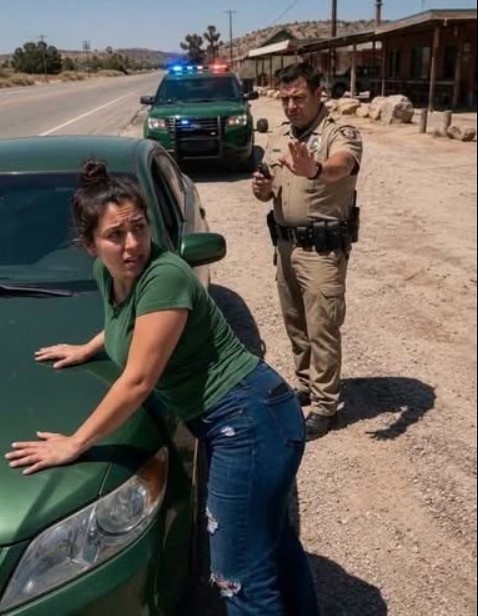
The second vehicle stopped behind Quill’s cruiser.
For several seconds, nobody moved.
Quill kept his gun pointed at Delaney, but his eyes had shifted toward the vehicle behind him.
That was the first mistake.
The second was assuming the people inside had come to help him.
A door opened.
Then another.
Two men stepped out, followed by a woman carrying a slim evidence case.
They weren’t local officers.
Quill’s face changed the moment he saw them.
Delaney noticed.
So did the agents.
“Officer Quill,” one of the men called, “put the weapon down.”
Quill tightened his grip.
“You have no authority here.”
The man continued walking.
“We have plenty.”
Delaney slowly turned her head toward him.
He gave her the smallest nod.
That was all she needed.
The operation was underway.
Quill’s breathing became heavier.
“You set me up.”
“No,” Delaney replied. “You set yourself up.”
She pointed toward the camera mounted inside the SUV.
“Everything you’ve said since you walked up to my window is recorded.”
Quill glanced toward the vehicle.
For the first time, genuine panic appeared in his eyes.
“You can’t record a police officer during an investigation.”
Delaney almost smiled.
“That’s not going to be your biggest problem.”
The agent behind Quill spoke again.
“Put the weapon on the ground.”
Quill hesitated.
Then another vehicle appeared in the distance.
This time, it was a marked patrol car.
Then another.
Quill looked toward them.
“Backup,” he whispered.
But Delaney immediately understood what he was thinking.
He believed his colleagues would rescue him.
He believed the local department was still his shield.
He didn’t understand that the FBI had already spent weeks building a case against the department.
The first patrol car stopped.
A senior officer stepped out.
Captain Vance.
Quill looked relieved.
“Captain!”
Vance raised one hand.
“Put the gun down, Harlon.”
Quill stared at him.
“You’re going to let them take me?”
Vance’s expression was unreadable.
“You made a serious mistake.”
Quill’s face hardened.
“You knew.”
Nobody answered.
“You all knew!” he shouted.
Delaney watched Vance carefully.
The captain looked at the camera.
Then at Quill.
Then at her.
His expression finally changed.
He knew the game was over.
“Harlon,” he said quietly, “put the weapon down.”
Quill’s hand trembled.
“You said nobody would touch us.”
Vance didn’t answer.
That was when Quill realized something much worse than being arrested.
He had become expendable.
He had spent years believing the people above him would protect him because they were all benefiting from the same system.
But corruption has one rule that never changes:
When the walls start collapsing, everyone looks for someone else to blame.
Quill lowered the gun.
It hit the pavement.
The federal agents moved immediately.
Within seconds, he was handcuffed.
Delaney finally stepped away from the SUV.
She looked at Quill.
“You should have taken the citation from my brother and walked away.”
Quill stared at her.
“I didn’t know who he was.”
“That was the problem.”
An agent approached Quill’s cruiser.
“Agent Voss, you need to see this.”
Delaney followed him.
The trunk was open.
Inside was a locked metal case.
They forced it open.
Stacks of envelopes filled the container.
Cash.
Hundreds of dollars.
Thousands.
Each envelope had a name written on it.
Delaney recognized some immediately.
People from traffic complaints.
Small business owners.
College students.
Delivery drivers.
Ordinary people.
People who had probably believed they were the only ones.
She picked up one envelope.
Inside was a handwritten amount.
$2,800.
Another said $1,500.
Another said $700.
Then she saw one that made her stop breathing.
RONAN VOSS — $4,200
Her brother’s tuition money.
The money Quill had stolen three days earlier.
She closed her eyes for a moment.
“That’s it,” she whispered.
An agent opened a black notebook found beneath the envelopes.
It contained dates.
License plates.
Names.
Amounts.
And percentages.
Forty percent.
Ten percent.
The remaining money went to Quill.
Delaney looked at the agent.
“Who gets the other percentages?”
“We’re finding out.”
She turned toward Captain Vance.
He was being questioned by another federal agent.
“You already know,” she said.
Vance looked at her.
For several seconds, he said nothing.
Then he smiled.
It wasn’t a friendly smile.
“You have no idea how deep this goes.”
Delaney stepped closer.
“Then help me understand.”
Vance looked toward Quill.
“You think Harlon built this?”
“He didn’t?”
“No.”
Vance’s expression became serious.
“He was just collecting.”
“Collecting for whom?”
Vance didn’t answer.
But his silence told her enough.
The investigation expanded overnight.
Quill wasn’t the entire operation.
He was one piece.
Investigators found similar patterns in neighboring jurisdictions.
Traffic stops that resulted in unexplained cash seizures.
Missing property records.
Cases that mysteriously disappeared.
Body-camera footage that had been deleted.
Complaints that never reached internal affairs.
And bank accounts that didn’t match the salaries of the officers using them.
But the most important evidence came from Quill himself.
Once he realized the department wasn’t going to protect him, he started talking.
He named officers.
Then supervisors.
Then people outside the department.
And eventually, he mentioned someone Delaney had never expected.
Her own father.
Delaney froze when she heard the name.
Her father had supposedly died ten years earlier.
A car accident.
At least, that was what she had been told.
Quill claimed otherwise.
“He wasn’t dead,” he said.
Delaney stared at him.
“What did you say?”
Quill leaned back.
“He disappeared.”
“Where?”
“Dallas.”
Her heart began pounding.
“Why?”
“Because he was connected to the people funding the operation.”
Delaney refused to believe it.
But Quill continued.
“Your father knew about the money. He helped move it. When things got dangerous, he disappeared.”
Delaney walked out of the room.
She stood alone in the hallway, staring at the floor.
For years, she had believed she had lost her father.
Now she wasn’t sure whether she had lost him at all.
Her phone rang.
Ronan.
She answered.
“Hey.”
“Del?”
“Yeah?”
“I got an email from the university.”
“What does it say?”
“They said my tuition was paid.”
Delaney stopped breathing.
“What?”
“They said an anonymous donor covered it.”
“When?”
“Three days ago.”
The same day Quill had stolen the money.
Delaney looked back toward the interrogation room.
Something didn’t make sense.
She had recovered Ronan’s cash.
So who had paid the university?
And why?
She called the financial investigator immediately.
Within an hour, they traced the payment.
The money had come through several accounts.
Each account belonged to a different company.
But eventually, the trail led to one holding company in Dallas.
The company had no obvious connection to Quill.
No connection to Cedar Ridge.
No connection to Ronan.
But there was one name buried in its registration documents.
Voss.
Delaney stared at the screen.
Her father’s name.
She felt a chill despite the Texas heat.
The case had started with a nineteen-year-old losing his tuition money on the side of a highway.
It had become a federal corruption investigation.
And now it was connected to the man Delaney had believed was dead.
She drove to Dallas the next morning.
Not as a sister.
Not as a daughter.
As an FBI agent.
The address led her to an old office building downtown.
She entered the lobby alone.
The receptionist looked at her.
“Can I help you?”
Delaney showed her badge.
“I’m looking for a man named Charles Voss.”
The woman’s expression changed.
She looked toward the elevators.
Then back at Delaney.
“He’s expecting you.”
Delaney’s heart stopped.
“Expecting me?”
The receptionist nodded.
“He told us you would eventually come.”
The elevator doors opened.
Delaney stepped inside.
When they reached the top floor, she walked down a quiet hallway.
At the end was a glass office.
The door was open.
A man stood beside the window with his back toward her.
Older.
Gray hair.
One hand resting on a cane.
Delaney knew the posture before she saw the face.
“Dad?”
The man slowly turned.
For ten years, Delaney had imagined this moment in a thousand different ways.
She had imagined anger.
Grief.
Questions.
Instead, she felt numb.
Her father looked at her.
“Hello, Delaney.”
She couldn’t move.
“You’re alive.”
“Yes.”
“You let me believe you were dead.”
“I had to.”
“No.”
Her voice broke.
“You chose to.”
He lowered his head.
“I was trying to protect you.”
She laughed bitterly.
“That’s what everyone says when they lie.”
He didn’t argue.
Instead, he walked toward a desk and opened a folder.
“This is why I disappeared.”
Inside were photographs.
Bank records.
Names.
Dates.
And documents connecting the corruption operation to people far more powerful than Harlon Quill.
“I discovered the network years ago,” her father explained. “When I tried to expose it, they threatened your mother. Then they threatened you.”
Delaney looked at him.
“And Ronan?”
“I never knew they would target him.”
“Why did you pay his tuition?”
“Because I knew Quill had taken his money.”
“Then why didn’t you come forward?”
Her father looked exhausted.
“Because I knew they were watching.”
Delaney stared at the documents.
“You could have trusted me.”
“I should have.”
That sentence was harder to hear than any excuse.
For years, Delaney had believed her father abandoned the family.
Now she understood that fear had destroyed his judgment.
But she wasn’t ready to forgive him.
Not yet.
She picked up the folder.
“You’re going to testify.”
He looked at her.
“I know.”
“And you’re going to give everything to the investigators.”
“Yes.”
“Even if it destroys your life?”
He nodded.
“Especially then.”
Months later, Cedar Ridge looked completely different.
The police department underwent a major investigation.
Officers were suspended.
Others were arrested.
Financial records were subpoenaed.
Victims who had once been ignored were finally invited to speak.
Ronan received his money back.
More importantly, he returned to school.
He finished his first semester with grades even Delaney was proud of.
As for Quill, his badge was gone.
His courtroom appearances replaced the traffic stops where he once felt untouchable.
The hidden camera footage became one of the most important pieces of evidence against him.
The moment he pointed his weapon at Delaney.
The moment he lied about the supposed marijuana smell.
The moment he demanded she obey.
The moment he discovered she was a federal agent.
Everything was there.
Nothing could be rewritten.
Nothing could be explained away as a misunderstanding.
One evening, Delaney watched the sunset from her apartment balcony.
Ronan called.
“Hey, FBI girl.”
She smiled.
“What’s up?”
“I wanted to thank you.”
“For what?”
“For believing me.”
Delaney looked across the city.
“You never needed me to believe you.”
“I did.”
She shook her head.
“No. You needed someone to listen.”
There was silence.
Then Ronan said:
“You know what the weirdest part is?”
“What?”
“If Quill hadn’t pulled you over, none of this would have happened.”
Delaney thought about the hot Texas road.
The weapon.
The hidden camera.
The second vehicle appearing behind Quill’s cruiser.
She smiled faintly.
“He thought he was pulling over an easy target.”
“And instead?”
Delaney looked down at the federal badge resting on her table.
“Instead, he pulled over the wrong woman.”
She had once believed justice meant catching one bad person.
Now she understood that corruption survived because ordinary people were taught to stay quiet.
One stolen envelope became a complaint.
One complaint became an investigation.
One investigation became evidence.
And eventually, the people who believed they were untouchable had nowhere left to hide.
Harlon Quill had spent years believing the badge made him powerful.
It didn’t.
The badge had only given him more opportunities to reveal who he really was.
He thought the hidden camera was his greatest problem.
It wasn’t.
His greatest problem was that, for once, someone was watching.
And this time, she had the power, the evidence, and the determination to make sure the truth could not disappear.