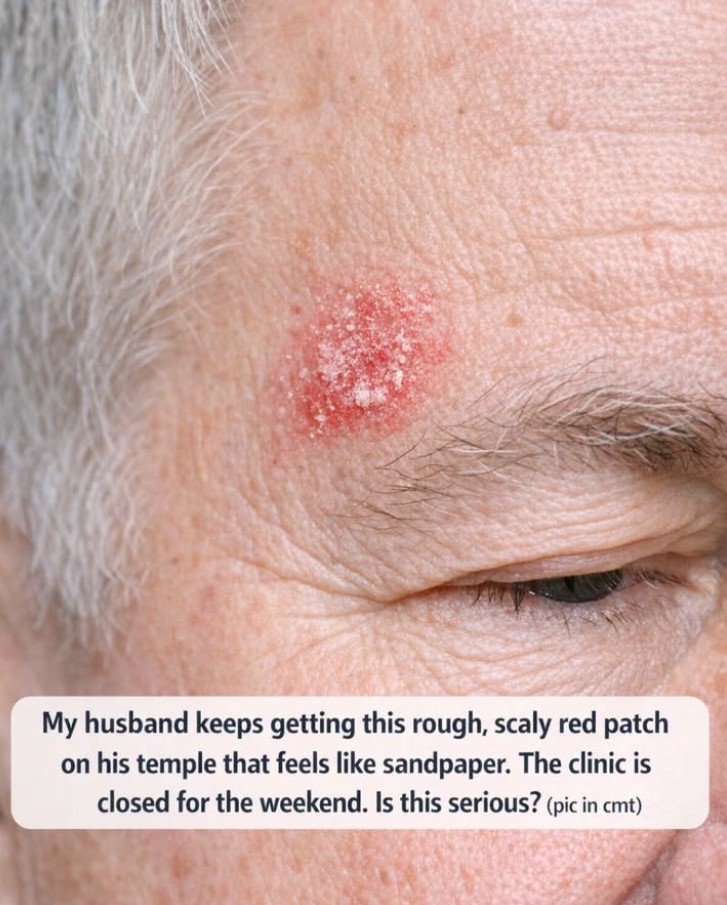
Finding a rough, red patch on your husband’s temple can be worrying, especially when it keeps returning and the doctor’s office is closed for the weekend. At first, it might seem like nothing more than dry skin or a small area of irritation. But when a patch feels like sandpaper, repeatedly flakes, or never seems to disappear completely, it deserves closer attention.
One possible explanation is actinic keratosis, a common skin condition caused by years of ultraviolet (UV) exposure. It often appears as a rough, dry, scaly spot on areas that receive a lot of sunlight, including the temples, forehead, ears, scalp, and backs of the hands.
Actinic keratosis is not the same as skin cancer, but it is considered a precancerous skin change because some lesions can develop into squamous cell carcinoma. Other conditions, including eczema, seborrheic dermatitis, and certain skin cancers, can produce similar symptoms.
So, should you be worried if the clinic is closed? The most sensible approach is to stay calm, avoid trying to remove the patch yourself, and arrange an appropriate medical examination. Understanding what to watch for over the weekend can help you decide whether it is reasonable to wait for a regular appointment or whether you should seek care sooner.
1. What This Rough, Scaly Patch Could Be
A persistent red or pink patch that feels rough to the touch is one of the common ways actinic keratosis presents. Some spots are so small that they are easier to feel with a fingertip than to see clearly in a mirror.
The affected skin may feel dry, gritty, flaky, or slightly raised. It can sometimes itch, sting, or feel tender, especially after washing or exposure to sunlight. The color varies, ranging from pink and red to tan, brown, or a shade close to the surrounding skin.
The patch may appear to improve when the surface flakes away, only to return days or weeks later. This repeated pattern can make it seem like an ordinary dry-skin problem.
However, the temple is a common location for sun-related skin damage. If your husband has spent many years driving, gardening, working outdoors, fishing, or participating in other outdoor activities, cumulative UV exposure may be relevant.
Actinic keratosis is one possibility, but appearance alone cannot establish a diagnosis. A healthcare professional needs to examine the area and determine whether further testing is necessary.
2. Why the Sandpaper Texture Matters
The description of skin feeling like sandpaper is particularly useful because actinic keratoses often develop a rough, uneven surface.
UV radiation can damage the DNA of skin cells over time. As these cells change, the affected area may develop a thin layer of adherent scale that feels coarse even when the patch looks relatively flat.
This is why someone might notice the texture before noticing a distinct change in color. Running a finger gently over the area may reveal a rough spot that is difficult to see under ordinary lighting.
Unfortunately, the same texture can occur with several other skin conditions. Eczema, irritation from skincare products, psoriasis, and other inflammatory problems can also cause dry, scaly patches.
A rough surface does not automatically mean that a lesion is precancerous or cancerous. Nevertheless, a patch that repeatedly returns to the same place should not be dismissed as dry skin without an examination.
Ordinary moisturizer may soften the surface and make it feel more comfortable, but improvement in texture does not necessarily mean that the underlying cause has disappeared.
3. Is It Serious Enough to Worry About Over the Weekend?
If the patch is stable and there are no alarming symptoms, a short delay until the clinic opens is often reasonable. A typical actinic keratosis does not usually require a trip to the emergency department simply because it has been noticed on a Saturday or Sunday.
However, this does not mean that every persistent skin lesion can safely be ignored.
Actinic keratosis is considered precancerous because some lesions may progress to squamous cell carcinoma. Although not every lesion develops into cancer, it is difficult to predict at home which spots will remain unchanged and which may become more concerning.
A recurring patch on the face should therefore be assessed by a healthcare professional, particularly if it has persisted for several weeks, repeatedly returns after peeling, or changes in appearance.
If the clinic is closed, contact the office when it reopens and request an appointment. A primary care clinician may be able to assess the lesion and determine whether a dermatology referral is needed.
If the patch has concerning features, ask for advice about whether it should be examined sooner rather than accepting a routine appointment without discussing the symptoms.
4. Warning Signs That Mean He Should Be Seen Sooner
Certain changes make a persistent skin patch more concerning. These include:
- Bleeding without an obvious injury or repeated bleeding during ordinary washing.
- Rapid growth or a noticeable change in size over a short period.
- Increasing pain or tenderness.
- A firm, raised area developing beneath the rough surface.
- An open sore that does not heal or repeatedly breaks down.
- A thick, hard crust or horn-like growth.
- A change in color, shape, or texture that is clearly different from the surrounding skin.
These signs do not prove that the patch is cancerous, but they warrant prompt medical assessment. If the lesion is changing quickly, bleeding repeatedly, or becoming increasingly painful, seek medical advice sooner instead of waiting for a routine appointment.
Redness, warmth, swelling, or pus-like drainage may suggest an infection or another problem that also needs assessment.
People who have previously had skin cancer, have received an organ transplant, or take medicines that significantly suppress the immune system should mention this when contacting a healthcare professional.
If the area develops rapidly spreading redness accompanied by fever, or if he becomes seriously unwell, urgent medical care is appropriate.
5. Other Conditions That Can Look Similar
Actinic keratosis is not the only possible explanation for a rough patch on the temple. Several conditions can look alike, especially during their early stages.
Eczema: This inflammatory skin condition can cause dryness, redness, itching, and scaling. It may improve and worsen repeatedly, particularly when the skin encounters irritating products or environmental triggers.
Seborrheic dermatitis: This condition often causes flaky, inflamed skin around the hairline, eyebrows, sides of the nose, and scalp. The flakes may appear white or yellowish, and the affected area can feel irritated.
Psoriasis: Psoriasis can produce well-defined patches covered with thicker scales. It commonly affects the scalp and other parts of the body, although its appearance varies.
Irritant or contact dermatitis: Skin may become red and scaly after contact with soaps, fragrances, hair products, or other irritating substances. Friction from glasses or headwear may also contribute to irritation.
Basal cell carcinoma: This type of skin cancer may appear as a persistent pink patch, a shiny bump, or a sore that repeatedly crusts and heals incompletely.
Squamous cell carcinoma: This can sometimes resemble a persistent rough or scaly patch, a firm bump, or a sore that bleeds or fails to heal.
Some benign growths can also produce rough or crusty surfaces. Because these conditions may overlap in appearance, an in-person examination is important when a lesion keeps returning.
6. Why the Temple Is a Common Place for Sun Damage
The temples receive more sunlight than many people realize. Years of ordinary outdoor activities can expose this area to UV radiation, even when someone does not deliberately spend time sunbathing.
Driving is one example. Depending on the vehicle’s windows and the amount of time spent on the road, the sides of the face may receive considerable cumulative sunlight exposure.
Gardening, walking, playing sports, fishing, and working outdoors can add to that exposure over the years. Occasional sunburns are not the only concern; repeated everyday exposure also matters.
As people age, hair may thin around the temples and scalp, leaving areas with less natural protection from the sun.
Risk is generally higher among people with fair skin, a history of frequent sunburns, previous actinic keratoses, or substantial lifetime UV exposure. However, people with darker skin can also develop sun-related skin damage.
A patch on the temple does not automatically indicate sun damage, but its location is one reason a clinician may consider actinic keratosis among the possible explanations.
7. What to Do at Home Until the Clinic Opens
If the patch is stable and your husband otherwise feels well, a few gentle measures can help protect the skin while you arrange an appointment.
Clean the area gently. Use lukewarm water and a mild, fragrance-free cleanser. Avoid vigorous scrubbing, rough washcloths, or products that cause stinging.
Moisturize if the skin feels dry. A small amount of plain petroleum jelly or a simple fragrance-free moisturizer may help reduce surface dryness and irritation. This can improve comfort, but it will not diagnose or treat the underlying cause of a suspicious lesion.
Protect the area from sunlight. Use shade and a wide-brimmed hat when outdoors. A broad-spectrum sunscreen with SPF 30 or higher can help protect exposed skin, provided the skin tolerates it.
Take a photograph. A clear photograph in natural daylight can help document the patch’s appearance. If possible, include a ruler nearby without pressing it against the lesion. Record when you first noticed the patch and whether it has changed.
Arrange medical assessment. Contact the clinic when it reopens and explain that the patch is recurring, rough, scaly, and located on the temple. Mention any bleeding, pain, rapid growth, or other changes.
These steps can help protect the skin, but they should not replace an examination.
8. What Not to Do This Weekend
It can be tempting to scrape off a rough patch or apply a strong treatment to make it disappear. Resist that temptation, especially on the face.
Do not pick at the scale, cut the patch, or try to remove it with tweezers or a blade. These actions can cause bleeding, irritation, infection, and additional inflammation.
Avoid wart removers, harsh exfoliating acids, chemical peels, and other products intended to remove unwanted growths. They may damage the surrounding skin and make the lesion harder to assess.
Do not apply leftover prescription creams, including steroid creams, unless a healthcare professional has specifically advised using them for this particular problem. A medication that helped a previous rash may not be appropriate for a different skin condition.
Also avoid assuming that a patch is harmless simply because it becomes less red or appears to peel away. Surface changes do not reliably identify the cause.
The safest weekend plan is to keep the area clean, protect it from the sun, avoid unnecessary treatment, and arrange an appropriate examination.
9. What a Doctor May Look For
During the appointment, the clinician will usually ask when the patch first appeared, whether it disappears completely, how often it returns, and whether it has changed in size, color, or thickness.
They may ask whether it itches, hurts, bleeds, or develops a crust. Information about previous skin conditions, sun exposure, medications, immune-system problems, and any personal history of skin cancer may also be relevant.
The clinician will examine the lesion’s color, surface, edges, thickness, and surrounding skin. They may look for other suspicious spots on sun-exposed areas.
A handheld magnifying instrument called a dermatoscope can help a clinician examine structures that are difficult to see with the naked eye.
If the lesion has the typical appearance of actinic keratosis, the clinician may be able to make a diagnosis through examination. If the spot looks unusual, feels unusually firm, has concerning symptoms, or cannot be confidently identified, a skin biopsy may be recommended.
A biopsy involves removing a small sample of tissue, usually after numbing the area, so it can be examined in a laboratory. It helps determine what the lesion is and whether abnormal or cancerous cells are present.
10. Common Treatments if It Is Actinic Keratosis
Treatment depends on the diagnosis, the number of lesions, their location, and the patient’s medical history.
One common treatment is cryotherapy, which uses liquid nitrogen to freeze an individual lesion. The treated skin may sting briefly, become red, blister, or form a crust before healing.
For people with several actinic keratoses or widespread sun-damaged skin, a clinician may recommend a prescription cream or gel that treats a broader area. Depending on the situation, options can include fluorouracil, imiquimod, diclofenac, or tirbanibulin.
These medications have different instructions and potential side effects. Some cause temporary redness, scaling, irritation, or inflammation during treatment, so they should be used only according to professional guidance.
Photodynamic therapy is another option in certain settings. It uses a light-sensitive medication followed by a particular light treatment to target abnormal cells.
Not every rough patch requires the same treatment. If a lesion is suspicious for skin cancer, the clinician may recommend a biopsy or another approach before deciding how to manage it.
The important point is not to choose a treatment at home before knowing what the patch actually is.
11. How Serious Is Actinic Keratosis?
Actinic keratosis falls into an important middle ground: it is not automatically a medical emergency, but it should not be dismissed as an ordinary dry patch.
It develops when long-term UV exposure damages skin cells. Some lesions remain stable, while others may progress to squamous cell carcinoma. There is no reliable way to determine at home which individual lesion will progress.
Having an actinic keratosis can also indicate that the surrounding skin has experienced significant sun damage. A clinician may therefore recommend checking other exposed areas for additional lesions.
Early assessment allows suspicious spots to be identified and appropriate treatment to be considered. It can also help distinguish actinic keratosis from other conditions that need different care.
The goal is not to assume the worst. It is to recognize that a persistent, recurring skin change deserves attention before it has the opportunity to become more complicated.
12. Who Is More Likely to Develop Actinic Keratosis?
Although anyone can develop skin changes, certain factors increase the likelihood of actinic keratosis.
These include:
- Older age, particularly after decades of accumulated sun exposure.
- Fair skin that burns easily or freckles readily.
- A history of frequent sunburns.
- Long periods spent outdoors for work or recreation.
- Previous actinic keratoses or non-melanoma skin cancer.
- Use of tanning beds.
- A weakened immune system or certain immune-suppressing medications.
Men who have spent many years working outdoors may develop lesions on the face, ears, scalp, and hands. However, actinic keratosis is not limited to men or outdoor workers.
People with darker complexions can also develop sun-related skin damage, so skin color alone should never be used to dismiss a persistent or changing lesion.
If your husband has several of these risk factors, mention them when booking his appointment. They may help the clinician determine how urgently the lesion should be assessed.
13. A Practical Weekend Checklist
When a skin concern appears just before the weekend, it can be difficult to decide what to do next. A straightforward checklist can help you focus on the important details.
First, look at the patch in good lighting without scraping or rubbing it. Note its approximate size, color, and location. Take a clear photograph so you can compare its appearance later.
Next, consider how long it has been present. Has it disappeared completely between episodes, or does it simply become less noticeable before returning? Has it become larger, thicker, more painful, or more likely to bleed?
Then protect the area from further irritation. Clean it gently, use a plain moisturizer if needed, and avoid harsh products or attempts to remove the scale.
Finally, contact the clinic when it opens. Explain that the patch is recurring and feels rough like sandpaper. Ask for an appointment and describe any concerning changes. If the lesion is rapidly changing, bleeding repeatedly, or becoming significantly painful, seek medical advice sooner.
If there are no warning signs and the lesion remains stable, a short wait for a regular appointment may be reasonable. However, do not let repeated episodes lead to months of postponing an examination.
14. The Bottom Line: Don’t Panic, but Don’t Ignore It
A rough, scaly red patch on the temple that feels like sandpaper could be actinic keratosis, especially if it occurs on sun-exposed skin and repeatedly returns. However, eczema, dermatitis, and certain skin cancers can produce similar changes, so the appearance alone cannot establish a diagnosis.
If your husband is otherwise well and the patch is stable, it will often be reasonable to contact the clinic when it reopens rather than automatically going to the emergency department. The important thing is to arrange an examination instead of continuing to treat the spot as ordinary dry skin.
Seek assessment sooner if it grows rapidly, bleeds without an obvious injury, becomes significantly painful, develops a firm raised area, or forms a persistent open sore. Follow urgent medical advice if the area shows signs of infection or if other concerning symptoms develop.
Until then, keep the skin clean, moisturize gently if necessary, protect it from sunlight, and avoid picking at the patch or applying unprescribed treatments.
A recurring spot on the temple is not a reason to assume the worst, but it is a good reason to pay attention. Getting it checked can provide clarity, identify any treatment that may be needed, and help protect your husband’s long-term skin health.
Disclaimer: This article is for general informational purposes only and does not provide a medical diagnosis or replace advice from a qualified healthcare professional.
Conclusion :
A rough, scaly red patch on the temple that feels like sandpaper may be caused by actinic keratosis, a skin condition associated with long-term sun exposure. However, other skin conditions can look similar, and it is impossible to determine the exact cause from appearance alone. Because some persistent skin lesions can develop into skin cancer, a recurring patch should never be ignored.
If your husband’s patch remains stable and he has no concerning symptoms, contact the clinic when it reopens to arrange an examination. In the meantime, keep the area clean, protect it from sunlight, and avoid scratching, scraping, or applying strong treatments without medical advice. If the patch grows quickly, bleeds repeatedly, becomes increasingly painful, or develops into a sore that does not heal, seek medical assessment sooner.
There is no need to assume the worst, but getting the patch checked is an important step toward understanding what is happening and choosing the right treatment. When it comes to persistent skin changes, early attention and professional advice are always better than guessing.