
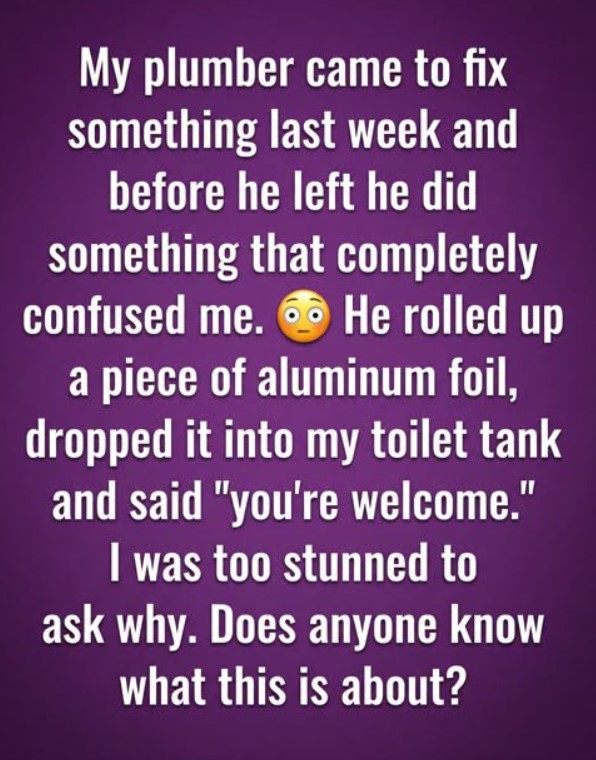
Have you ever come across a household trick that seems so simple you wonder why you never tried it before? One unusual idea circulating online involves placing a small ball of aluminum foil inside a toilet tank. Some videos claim this inexpensive kitchen item can prevent rust, reduce water bills, stop leaks, and even keep the toilet bowl cleaner.
At first, the idea sounds appealing. Aluminum foil is inexpensive, easy to find, and already has several uses around the home. Why not try putting a little inside the toilet tank if it promises to solve several common bathroom problems?
However, before reaching for your roll of foil, there are a few important things you should understand. Although the trick has attracted attention on social media, there is no reliable evidence that placing aluminum foil in a toilet tank provides the advertised benefits. In some situations, adding an unnecessary object could even interfere with the toilet’s internal mechanisms.
Let’s look at why this unusual trick became popular, what aluminum foil actually does inside a toilet tank, and which practical alternatives can help you maintain your bathroom.
Why Did the Aluminum Foil Toilet Hack Become So Popular?
The appeal of this trick is easy to understand. People are always looking for inexpensive ways to solve everyday household problems without purchasing special products or calling a professional.
Aluminum foil is already used for many different purposes. It wraps food, protects baking dishes, and can sometimes help clean particular metal surfaces when used with an appropriate method.
Because aluminum participates in certain chemical reactions, some people assume that placing it in toilet tank water might help prevent rust or remove mineral buildup.
Social media has helped spread this idea through short videos showing someone rolling foil into a ball and dropping it into the tank. These demonstrations often make the process look surprisingly effective.
But there is an important difference between showing that a toilet still flushes after adding foil and proving that the foil actually improves its performance.
A video cannot establish that the tank is cleaner, that a leak has been repaired, or that the household is using less water. Those claims would require proper testing.
What Does Aluminum Foil in a Toilet Tank Actually Do?
The short answer is that it generally does nothing useful for normal toilet maintenance.
A toilet tank contains several components that work together to make flushing possible. Although the exact design varies, most traditional toilets include:
- Fill valve: Refills the tank with water after each flush.
- Float: Helps regulate the amount of water entering the tank.
- Flush valve: Releases water from the tank into the toilet bowl.
- Flapper or sealing mechanism: Prevents water from escaping into the bowl when the toilet is not being flushed.
- Overflow tube: Helps prevent the tank from filling beyond its intended level.
Every component has a specific purpose, and none of these parts needs aluminum foil to function correctly.
A small ball of foil may simply settle at the bottom of the tank or move around when the water enters and leaves. It does not repair worn parts, adjust the float, improve a damaged seal, or clean the toilet bowl.
The bigger concern is that a loose object could become caught near a moving component and interfere with normal operation. Although this will not happen in every toilet, introducing unnecessary objects into the tank creates a risk without providing a proven advantage.
1. Does Aluminum Foil in the Toilet Tank Prevent Rust?
One of the most common claims is that aluminum foil can prevent rust from forming inside the toilet tank.
This idea may sound scientific because aluminum behaves differently from iron and steel when exposed to moisture and oxygen. However, simply placing a ball of foil in a tank does not create a reliable rust-prevention system.
Rust forms when iron or steel reacts with oxygen and moisture under suitable conditions. The process depends on the materials involved and the surrounding water chemistry.
A loose piece of aluminum foil does not change those conditions in a dependable way. It cannot repair corroding metal components, remove existing rust, or prevent iron-containing water from leaving reddish or brownish stains.
If you notice rust-colored marks in your toilet, it is better to identify their source rather than rely on a household trick.
The discoloration may be related to minerals in the water supply, corrosion in plumbing components, or deposits on the toilet’s surfaces. The appropriate solution depends on the actual cause.
2. Can Aluminum Foil Stop a Running Toilet?
Another claim suggests that aluminum foil can help stop a toilet from running continuously.
Unfortunately, there is no good reason to expect this method to work.
A running toilet usually has a mechanical problem. Common causes include:
- A worn or damaged flapper that no longer seals properly.
- A fill valve that is not shutting off correctly.
- A float that is incorrectly adjusted.
- Mineral deposits interfering with a valve or sealing surface.
- A damaged or poorly fitted component.
A ball of aluminum foil cannot repair any of these problems.
In fact, if foil moves into the wrong position and interferes with a valve, it could make normal operation more difficult.
How to Check for a Possible Toilet Leak
There is a simple test you can perform without immediately taking the toilet apart.
- Remove the toilet tank lid carefully.
- Add a few drops of food coloring to the water inside the tank.
- Do not flush the toilet.
- Wait approximately 10–15 minutes.
- Look inside the toilet bowl.
If colored water appears in the bowl, water may be escaping through the flapper or another part of the flush valve.
This test can help identify a possible leak, although it does not diagnose every type of plumbing problem.
If the toilet continues running, inspect the relevant components according to the manufacturer’s instructions or contact a qualified plumber.
3. Does Aluminum Foil Reduce Your Water Bill?
Some online videos suggest that placing aluminum foil inside the tank can reduce the amount of water used during each flush.
The reasoning appears to be that an object inside the tank takes up space, leaving less room for water.
While objects can theoretically displace water, a small ball of foil is not a reliable water-saving solution. Its actual effect would be negligible, and it is not designed to control the amount of water needed for an effective flush.
There is also a potential downside. Toilets are designed to use an appropriate volume of water to remove waste effectively. Reducing the available water without considering the toilet’s design can result in incomplete flushing and additional flushes.
If your goal is to lower your water bill, consider more reliable options:
- Repair leaking toilets promptly.
- Check whether the fill valve and float are adjusted correctly.
- Consider a modern low-flow or dual-flush toilet.
- Use a manufacturer-approved water-saving device if your toilet supports one.
- Avoid flushing unnecessarily.
These measures address water consumption more directly than placing aluminum foil in the tank.
4. Can Aluminum Foil Keep the Toilet Bowl Cleaner?
Another attractive promise is that the foil will somehow help keep the toilet bowl clean for longer.
Unfortunately, aluminum foil is not a toilet-cleaning product.
It does not contain the cleaning ingredients needed to dissolve mineral deposits, remove ordinary bathroom grime, or disinfect surfaces. Simply leaving it submerged in tank water does not give it a reliable way to clean the bowl.
Toilet stains can develop for several reasons, including:
- Hard-water mineral deposits.
- Iron or other minerals in the water.
- Organic residue.
- Bacterial growth in damp areas.
- Infrequent or ineffective cleaning.
The right cleaning method depends on the type of stain. A product designed for toilet bowls can help with ordinary buildup when used according to its label instructions.
For stubborn deposits, choose a suitable descaling product and follow the manufacturer’s directions. Never mix bleach with acidic cleaners, vinegar, or other cleaning chemicals, because dangerous gases can be produced.
Regular cleaning and proper maintenance are much more dependable than relying on aluminum foil.
5. Can Aluminum Foil Prevent Bad Odors?
Some versions of this household trick also suggest that foil can help keep the bathroom smelling fresh.
There is no reliable evidence that a ball of aluminum foil in the tank neutralizes unpleasant odors or disinfects the toilet.
Bad smells can have several possible sources. They may come from an unclean bowl, buildup around the toilet, a problem with the drain, or an issue with the plumbing seal.
Instead of adding foil to the tank, start by cleaning the toilet thoroughly and checking the surrounding area.
Make sure the bathroom has adequate ventilation, and investigate persistent odors rather than simply covering them with fragrance.
If a sewage-like smell continues despite regular cleaning, it may indicate a plumbing or drainage problem that deserves professional attention.
6. Could Putting Aluminum Foil in the Tank Cause Problems?
Although the trick may appear harmless, placing foreign objects inside a toilet tank is generally unnecessary.
Depending on the size and position of the foil, possible problems include:
Interference with moving parts: A loose piece could become caught near the flapper, fill valve, or another component.
Problems with the seal: If an object prevents the flapper from closing properly, water may continue flowing into the bowl.
Small fragments: Foil can become damaged or break into smaller pieces over time, creating additional unwanted material inside the tank.
False confidence: Believing that foil has fixed a leak or prevented rust may cause someone to ignore a real maintenance problem.
Some toilet manufacturers also advise against placing unapproved objects or cleaning products inside their tanks. Always check the instructions for your particular model before adding anything.
The simplest approach is to keep the tank free of unnecessary objects and allow its original components to work as intended.
7. What Should You Do Instead?
If you are trying to improve toilet performance, prevent leaks, reduce stains, or save water, there are several practical steps that are more dependable.
For a Running Toilet
Check the flapper, fill valve, and float. A worn flapper or faulty fill valve may need adjustment or replacement. If you are unsure which component is responsible, a plumber can identify the problem.
For Rust-Colored Stains
First, determine whether the discoloration comes from the water supply or from corrosion in the plumbing. Use an appropriate cleaner for the affected surface, following its instructions.
For Mineral Buildup
Use a toilet-safe descaling product suitable for the type of deposit. Regular maintenance can help prevent heavy buildup from becoming difficult to remove.
For Water Savings
Repair leaks as soon as possible and consider a water-efficient toilet. If your existing toilet has an adjustable fill valve, follow the manufacturer’s instructions to ensure the tank fills to the correct level.
For a Cleaner Toilet Bowl
Clean the bowl regularly with an appropriate product and a toilet brush. Pay attention to the areas beneath the rim, where deposits can accumulate.
These simple habits provide more dependable results than an untested aluminum foil trick.
Frequently Asked Questions
Does putting aluminum foil in a toilet tank really work?
There is no reliable evidence that it prevents rust, repairs leaks, reduces water bills, cleans the bowl, or eliminates unpleasant odors. It is not an established toilet-maintenance method.
Why do people put aluminum foil in toilet tanks?
The idea has spread through social media videos and household-tip posts. These videos often claim that foil can solve several common bathroom problems using an inexpensive material, but the promised benefits have not been demonstrated reliably.
Can aluminum foil remove rust from a toilet tank?
Simply leaving foil inside the tank is not a proven rust-removal method. Rust-colored stains may have different causes, so identifying the source is important before choosing a treatment.
Will aluminum foil help a toilet use less water?
A small ball of foil is not a meaningful or reliable water-saving device. Properly maintaining the toilet and using manufacturer-approved water-saving solutions are better options.
Can aluminum foil damage a toilet?
It may cause problems if it moves into a position where it interferes with the tank’s internal components. Not every piece of foil will cause damage, but there is no established benefit that makes adding it worthwhile.
What is the safest way to maintain a toilet tank?
Keep unnecessary objects out of the tank, inspect the internal components periodically, and follow the manufacturer’s cleaning and maintenance recommendations. Replace worn parts when necessary and seek professional help for persistent problems.
Conclusion: Is the Aluminum Foil Toilet Tank Trick Worth Trying?
The idea of placing aluminum foil inside a toilet tank is certainly unusual, and it is easy to understand why the trick attracts attention. It promises to solve several everyday problems with something most people already have in their kitchens. Preventing rust, stopping leaks, saving water, and keeping the toilet clean all sound like useful benefits.
However, there is no reliable evidence that a simple ball of aluminum foil can deliver these results. It does not repair worn toilet components, control the water level, remove mineral deposits, disinfect the bowl, or eliminate unpleasant odors.
More importantly, placing an unnecessary object inside the tank could interfere with the mechanisms responsible for flushing and refilling. If a valve or flapper cannot operate correctly, the result could be a running toilet and wasted water rather than savings.
The better approach is to understand what is actually causing the problem. Check for leaks, replace damaged parts, use suitable cleaning products, and follow the maintenance instructions for your toilet. If you want to reduce water consumption, choose a proven water-saving solution rather than relying on an internet trend.
Aluminum foil has plenty of useful applications around the home, but maintaining a toilet tank is not one of its established uses. Sometimes the smartest household trick is knowing when not to try a viral hack. Keeping your plumbing simple, clean, and properly maintained is far more valuable than experimenting with something that has no proven benefit.