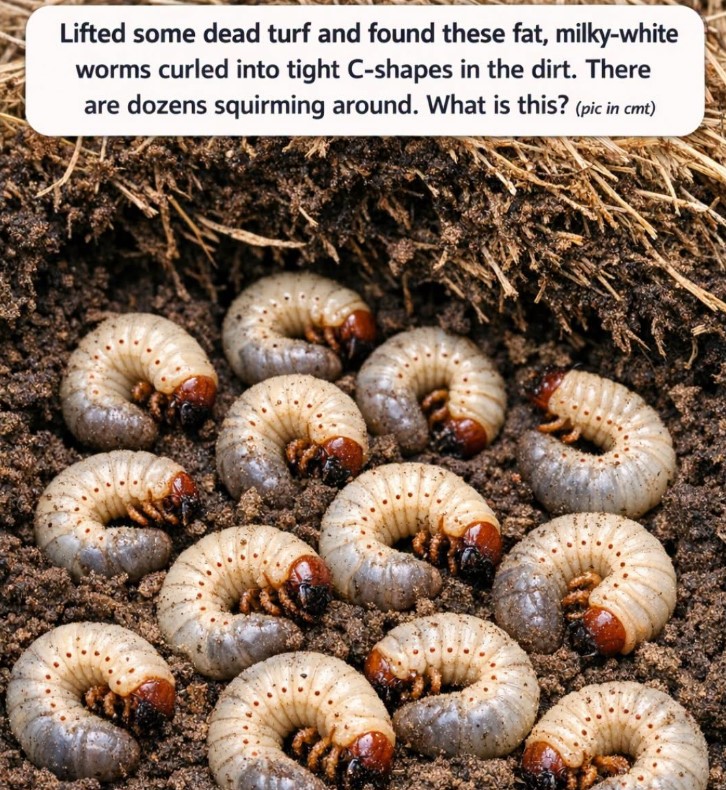
Finding dozens of thick, milky-white worms curled into tight C-shapes beneath a patch of dead grass can be a surprising and even unsettling experience. At first, you might think they are ordinary worms, but their unusual shape, pale bodies, and the fact that so many are gathered in one place can make you wonder whether something is seriously wrong with your lawn.
These creatures are most likely grubs, the larval stage of certain beetles, including Japanese beetles, June beetles, and other scarab beetles. They commonly live underground, where they feed on grass roots and organic matter. Although they may look harmless when uncovered, large numbers of these larvae can cause considerable damage to lawns, gardens, and other grassy areas.
If you have recently lifted a piece of dead turf and discovered dozens of these curled-up creatures, understanding what they are, why they are there, and what they could mean for your yard can help you decide what to do next.
1. What You Found Is Most Likely Lawn Grubs
Those thick, creamy-white creatures are probably lawn grubs, the immature stage of certain beetles. Depending on the species, they may eventually develop into Japanese beetles, June beetles, European chafers, or other types of scarab beetles.
White grubs are usually about half an inch to an inch long. They have soft, pale bodies, brownish heads, and six tiny legs located near the front of the body. Their shape and appearance make them easy to recognize once you know what to look for.
Unlike earthworms, grubs have thicker bodies and tend to remain curled up when disturbed. Finding several of them beneath a single patch of dead grass could indicate that they have been feeding on the roots below the surface.
2. Why They Curl Into a C-Shape
The distinctive C-shaped position is one of the most recognizable characteristics of white grubs. When disturbed by movement, digging, or exposure to light, they often curl their bodies into this shape as a natural response.
If you gently pick one up or move the soil around it, you may notice it briefly stretching before curling back up again.
This behavior, combined with their creamy-white color, brown head, and tiny legs, helps distinguish them from other organisms living in the soil. If you are unsure what you have discovered, examining these characteristics closely can help you avoid mistaking beneficial earthworms for lawn pests.
3. What They Are Doing Under Your Lawn
The main concern with lawn grubs is their appetite for grassroots. As they feed beneath the surface, they gradually damage the root system that allows grass to absorb water and nutrients and remain firmly attached to the soil.
A small number of grubs may not cause noticeable damage, especially if your lawn is healthy and well-established. However, a large population can consume enough roots to weaken entire sections of grass.
As the roots deteriorate, the lawn may become soft, spongy, or unusually loose. Even when you water regularly, the grass may struggle to recover because its damaged roots can no longer absorb enough moisture.
Eventually, affected patches may turn brown and become easy to lift. In severe cases, the grass can peel away from the soil almost like a loose carpet.
4. The Classic Signs of a Grub Problem
Brown grass alone does not automatically mean you have grubs. Drought, disease, poor drainage, and other lawn problems can create similar symptoms. However, several warning signs may point toward grub damage.
Look for irregular brown or yellow patches that gradually become larger. The grass may feel loose underfoot, and the roots underneath may appear damaged or almost completely eaten away.
Another clue is increased activity from animals. Skunks, raccoons, birds, and other wildlife may dig into your lawn searching for grubs because they are an easy food source.
If you suddenly notice holes, torn turf, or sections of lawn being flipped over overnight, the animals may be revealing a problem that was already developing underground.
Sometimes a lawn can deteriorate surprisingly quickly. A patch that looked slightly dry or unhealthy a few days earlier may suddenly become brown and loose, especially during periods of hot weather.
5. How to Confirm the Problem With a Simple Square-Foot Check
Before treating your lawn, it is important to determine whether grubs are actually present in large enough numbers to cause damage.
One simple method is to cut and lift a section of turf measuring approximately 12 inches by 12 inches. Carefully examine the upper 2 to 3 inches of soil, where grubs are often found while actively feeding.
Count how many grubs you find in that square-foot area. As a rough guide:
- Five or fewer grubs per square foot may not require treatment if the lawn is otherwise healthy.
- Six to ten grubs per square foot may require closer monitoring, depending on the condition of the grass.
- More than ten grubs per square foot may indicate a population capable of causing significant damage, especially when the lawn is already stressed.
These numbers are only general guidelines, since damage thresholds vary depending on grub species, grass type, soil conditions, climate, and lawn health.
It is also a good idea to inspect several different locations. Check the worst-looking patch, the boundary between healthy and damaged grass, and a few areas that still appear green. This will give you a more accurate idea of how widespread the infestation is.
6. When Grubs Are Most Active
The life cycle of lawn grubs explains why damage often appears at certain times of the year.
Adult beetles generally lay their eggs in the soil during warmer months. Depending on the species and climate, this may happen during the summer. After the eggs hatch, young grubs begin feeding on grass roots near the surface.
Late summer and early fall are often periods when grub damage becomes especially noticeable. By then, the larvae may have grown larger and consumed enough roots to weaken the grass.
As temperatures drop, many grubs move deeper into the soil to survive colder conditions. When spring arrives, they may move upward again, feed for a short period, and eventually develop into pupae before emerging as adult beetles.
This seasonal cycle is important because treatments may work better at certain stages of development. A product designed to prevent newly hatched grubs may not be equally effective against larger larvae that are already feeding heavily.
7. Why Some Lawns Get Hit Harder Than Others
Not every lawn attracts the same number of beetles, and not every lawn suffers the same amount of damage even when grubs are present.
Adult beetles may prefer certain conditions for laying their eggs. Moist soil during summer can provide favorable conditions for eggs and young larvae, which is one reason well-watered lawns may sometimes attract beetles.
The health of the grass also makes a difference. A thick, well-rooted lawn may tolerate some grub activity without showing serious symptoms. A lawn already weakened by poor soil, shallow roots, drought, compacted ground, or heavy foot traffic may deteriorate much faster.
Grass varieties, sunlight exposure, soil moisture, and local climate can all influence how severely a lawn is affected.
That is why two neighboring properties can have similar grub populations but very different results. One may remain relatively green, while the other develops large brown patches that are easy to pull away from the ground.
8. What Not to Confuse Them With
Several lawn problems can look similar to grub damage, so it is worth confirming what is happening before spending money on treatments.
Drought stress, fungal diseases, chinch bugs, billbugs, sod webworms, compacted soil, and even damage from pets can produce brown patches or weakened grass.
If you find only a few grubs during your inspection, they may not be responsible for the damage. For example, a lawn that is dry, brittle, and discolored across a large area may be suffering primarily from water stress rather than root feeding.
It is also important to distinguish grubs from earthworms. Earthworms are long, segmented, and legless, and they generally benefit the soil by helping improve its structure and movement of organic matter.
White grubs, on the other hand, have thicker bodies, a brown head, and small legs near the front. If the creatures you uncovered are pale, stocky, and curled into C-shapes, they are much more likely to be beetle larvae than earthworms.
9. If You Need to Act Now, Choose the Right Treatment
If you confirm that your lawn has a significant grub population, the next step is to determine which type of treatment is appropriate.
Grub-control products generally fall into two broad categories: preventive treatments and curative treatments.
Preventive treatments are designed to target young grubs before they become large enough to cause substantial root damage. They are typically applied before or during the period when eggs hatch, depending on the product and local conditions.
Curative treatments are intended for lawns where grubs are already present and actively feeding. However, their effectiveness can vary depending on the size and development stage of the larvae.
If you have lifted dead turf and found dozens of grubs, choosing the right approach is important. A treatment intended for prevention may not be the best solution for an established infestation.
Always read the product label carefully, including the recommended application timing, dosage, watering instructions, and safety precautions. Using more product than recommended will not necessarily improve the results and may create unnecessary risks.
10. Watering After Treatment Matters More Than People Think
Some grub-control treatments need to be watered into the soil after application. This helps move the product through the grass and thatch and into the area where the grubs are feeding.
Depending on the product, the instructions may recommend a specific amount of irrigation. A common example is approximately half an inch of water, but you should always follow the label rather than assume every product requires the same amount.
One easy way to measure how much water your sprinkler delivers is to place several straight-sided containers around the lawn. Run the sprinkler and check how much water collects in each container.
This simple technique can help you avoid watering too little or too much. Proper irrigation is important not only when applying certain treatments but also when helping a weakened lawn recover.
11. Natural and Lower-Chemical Options
If you prefer to reduce the use of conventional pesticides, there are biological options worth investigating.
Beneficial nematodes are microscopic organisms that can help target certain soil-dwelling pests, including some types of grubs. They are typically applied with water and work by searching for susceptible hosts in the soil.
Their effectiveness depends on several factors, including the species of nematode, the grub species, soil moisture, temperature, and application timing. They generally need suitable conditions to survive and work effectively.
They are often best applied when the soil is moist and temperatures are suitable. Applying them during cooler parts of the day and following the supplier’s storage and application instructions can help improve their chances of success.
Certain biological products may also help manage specific grub species, although their effectiveness and timing can vary.
Natural approaches are not necessarily immediate solutions. They tend to work best when combined with proper lawn maintenance, regular inspection, and realistic expectations rather than being treated as a guaranteed fix.
12. Repairing the Lawn After Grub Damage
Even after you have addressed the grub problem, the damaged grass may not recover on its own. If the roots have been destroyed, repairing the lawn may be necessary.
Start by removing dead grass, loose roots, and debris. For smaller damaged areas, loosen the surface of the soil and add a thin layer of compost or suitable topsoil if needed.
Spread grass seed suitable for your climate and lawn type, then gently rake it into the soil. Keep the surface consistently moist while the seeds germinate, without allowing it to become waterlogged.
The best time to reseed depends on the type of grass you have and your local climate. Some grasses establish better during cooler seasons, while others grow more successfully during warmer weather.
If the grass still has some healthy roots, it may recover with proper watering and improved growing conditions. But when the turf lifts away easily and has almost no roots left, reseeding or replacing the damaged patch may be the most practical option.
13. How to Prevent a Repeat Next Season
Once you have dealt with a grub problem, it is worth taking a few steps to reduce the chances of another infestation becoming severe.
Regular inspection is one of the simplest ways to stay ahead of the problem. If your lawn suffered significant damage this year, check it again during the next beetle activity and egg-laying period.
Maintaining healthy grass can also improve its ability to tolerate minor grub activity. Avoid cutting the grass too short, and choose a mowing height appropriate for your grass variety.
Water deeply when needed rather than watering lightly and constantly. Proper watering encourages stronger root development, while excessive irrigation can create conditions that are favorable for certain lawn pests.
You should also avoid overfertilizing. Apply nutrients according to your grass type, soil conditions, and seasonal needs.
A healthy, thick lawn is generally better equipped to withstand stress. Consistent maintenance, good watering habits, and occasional inspections can make a significant difference over time.
14. When It Is Worth Calling a Lawn Professional
Sometimes, a grub problem becomes too extensive to manage comfortably on your own.
If large portions of your lawn are turning brown, if animals are repeatedly digging it up, or if you cannot determine whether the damage is caused by grubs or another issue, contacting a lawn-care professional may be worthwhile.
An experienced professional can inspect the soil, identify the likely pest, evaluate the severity of the damage, and recommend treatment options suited to your local conditions.
This can be particularly helpful if you have already tried a treatment without seeing improvement. The problem may involve incorrect timing, a different pest, poor application, or more than one issue affecting the lawn.
Getting an accurate diagnosis before buying additional products can save money and prevent unnecessary treatments.
15. The Bottom Line
If you lifted a patch of dead turf and discovered dozens of fat, milky-white creatures curled into tight C-shapes, you are most likely looking at lawn grubs. These are beetle larvae that live underground and feed on grass roots, sometimes causing serious damage when their numbers become too high.
Although the discovery can be alarming, it is not necessarily a reason to panic. A few grubs may be harmless to a healthy lawn, but a large population combined with brown patches, weakened roots, and turf that pulls away easily deserves closer attention.
Take the time to inspect several areas, count the grubs, and check how much damage has been done to the roots. Understanding the severity of the problem will help you decide whether treatment is necessary or whether your lawn simply needs better growing conditions.
The most important thing is not to rush into buying products before knowing what you are dealing with. A proper diagnosis, the right timing, and consistent lawn care can help you prevent further damage and restore the grass.
Finding dozens of strange creatures beneath your lawn may not be the most pleasant gardening surprise, but at least you now know what they are, why they are there, and how to protect your lawn from becoming their next meal.